
 Our Centers
 Select City


 Select City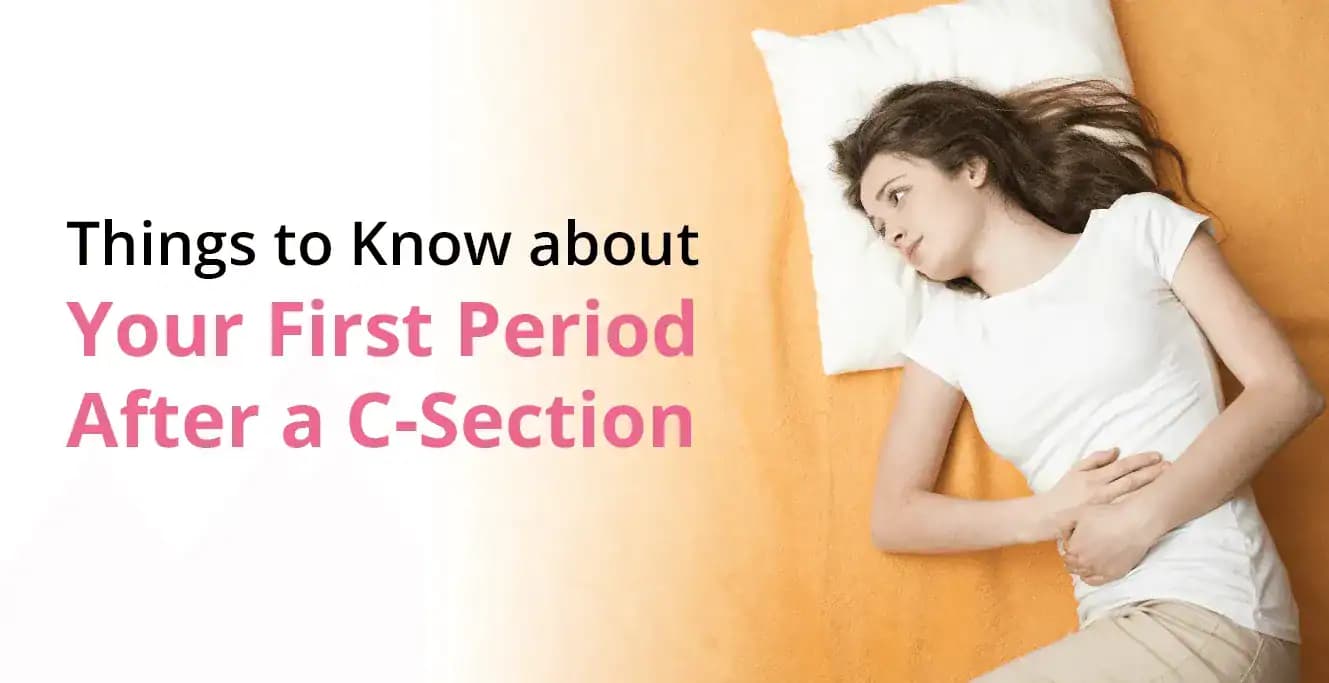
First Period After C-Section: What To Expect & How To Prepare
Table of Contents
- When to Expect Your First Period After a C-section
- Breastfeeding and Its Impact on Menstruation
- Other Factors Influencing the First Period after C-Section
- Symptoms of the Postpartum Period
- How Long Will Your First Postpartum Period Last?
- Tips for Managing Postpartum Symptoms
- Distinguishing Postpartum Bleeding From Your Menstrual Period
- Final Takeaway
- FAQs
After a C-section, many women find themselves wondering, “When will our periods come?” C-section or cesarean section is a procedure where the child is delivered by surgery. There are changes in delayed, heavier, or irregular cycles after a C-section. If you are also dealing with the same, then you are not alone. And, it is completely normal to have questions.
Your body has gone through major changes during pregnancy, surgery, and recovery. It takes time for hormones to return to a normal rhythm. If you are also thinking, “When do periods start after a C-section?”, then this blog will walk you through what to expect.
Let’s start.
When to Expect Your First Period After a C-section
Many women worry when their periods will start following a C-section. This period is also called the postpartum period. If you are not breastfeeding, your periods usually return in 6–8 weeks, but exclusive breastfeeding can postpone them for several months. More details are discussed in the next section.
Since hormones need time to regulate, it is quite usual for the initial period following a C-section to be erratic. As the uterus continues to repair, you may experience slight cramping or clotting, and your first few periods may be heavier, lighter, or longer than normal. Timing is also affected by variables like stress, sleep deprivation, and recuperation from surgery. Within three to six months, the majority of women discover that their periods are becoming regular.
Breastfeeding and Its Impact on Menstruation
Your hormones are the only factor that determines when your periods will resume following a caesarean section. Following delivery, progesterone, oestrogen, and human chorionic gonadotropin (hCG) levels are typically decreased. Breastfeeding is one important factor that determines when your periods will resume following a C-section.
- If you are breastfeeding, then your hormone levels will be affected. It delays ovulation by raising prolactin levels. As a result, it can take you at least six months to get your period back if you are nursing. Additionally, the periods could be erratic.
- If you’re not breastfeeding, then your body produces less prolactin, which causes your periods to start earlier. Sometimes, though, the firstmenstrual cycle starts as soon as six weeks following a caesarean section.
Other Factors Influencing the First Period after C-Section
In addition to breastfeeding, several other factors can impact the timing and characteristics of your periods after a C-section:
- Stress and lifestyle: Stress can also be a reason that can influence periods after c C-section delivery. It can be due to a changed routine with the newborn or simply to adjusting to motherhood. Prioritise self-care by practising morning yoga, deep breathing, and a balanced diet to support overall well-being during this transitional period.
- Surgical recovery: The recovery process from a C-section can impact your menstrual cycle. Factors such as overall health, stress levels, and complications during or after surgery can affect how quickly the body recovers.
- Age and pre-existing conditions: A woman’s age and any pre-existing health conditions may also influence the return of her menstrual cycle post-delivery. Women with irregular cycles before pregnancy may experience more pronounced irregularities afterwards.
Symptoms of the Postpartum Period
Your first period after a C-section may feel quite different from your pre-pregnancy menstrual cycles. Here are some common symptoms of periods after C-section delivery:
- Flow: The flow of your first postpartum phase may differ. Depending on the woman, it may be lighter or heavier than your regular periods.
- Duration: The first few postpartum periods are frequently erratic. Hormonal changes are often the cause of longer or shorter cycles. Also, as your body adjusts, your first period after giving birth may last longer or shorter than usual.
- Cramping: It is common, as with regular periods. Your uterus contracts in order to expel the lining of your uterus.
- Mood Swings: During their postpartum periods, some women report experiencing variations in PMS symptoms, such as mood swings or breast soreness.
- Soreness: You may feel some soreness or have a different menstrual flow sensation in the scar location if you had an episiotomy or C-section.
How Long Will Your First Postpartum Period Last?
The duration of your first period after a C-section generally aligns with typical menstrual cycles but may vary based on individual circumstances.
- On average, the first period lasts 3-7 days, similar to pre-pregnancy durations.
- Some women might experience shorter periods lasting only a couple of days or longer ones extending beyond a week.
- It is also common for initial postpartum periods to be irregular as the body readjusts hormonally over several months following delivery
It’s crucial to monitor the duration and intensity of your period. If it is excessively long or heavy, or contains large clots, consult your doctor to rule out complications.
Tips for Managing Postpartum Symptoms
Here are some of the tips that can help you manage postpartum symptoms:
1. Pain Management
A doctor might recommend some over-the-counter pain relievers such as ibuprofen or acetaminophen. They are immensely effective for managing cramping and discomfort. These medications work by reducing inflammation and blocking pain signals, providing significant relief for many women.
2. Hydration
Though basic, staying well-hydrated is crucial during this time. One must drink enough fluid to help mitigate bloating and can ease some of the discomfort associated with menstrual cramps. You should aim to drink plenty of water throughout the day, which also supports overall health and recovery.
3. Rest
Fatigue is common after childbirth, especially following a C-section. Prioritising rest can significantly enhance your recovery process. Listen to your body; if you’re feeling tired, allow yourself time to relax and recuperate. This may involve taking short naps or simply resting when your baby sleeps.
4. Nutrition
It is said that a balanced diet can help with managing menstrual symptoms. Adding iron-rich foods, such as leafy greens, lean meats, and legumes, can help replenish nutrients that are generally lost during menstruation. In addition, foods high in magnesium can help alleviate cramps and improve mood stability during your period.
5. Gentle Exercise
Walking is a gentle form of exercise that can greatly speed up healing and ease menstrual discomfort. Bloating and cramping may be lessened by gentle movements that increase circulation. It’s critical to listen to your body and avoid physically demanding activities until you’re fully healed. Before starting an exercise regimen again, especially after surgery, always speak with your doctor.
6. Warm Baths or Heat Therapy
Taking warm baths or using a heating pad on your abdomen can provide soothing relief from cramps and discomfort. The warmth helps to relax the muscles in the pelvic area, which can alleviate pain associated with menstruation. If opting for a bath, ensure that the water level is shallow enough to keep your C-section incision above the water.
If symptoms of the first period after your caesarean delivery become unmanageable or if you notice significant changes in your cycle over time (such as prolonged irregularity), consult your doctor for personalised advice and potential treatment options
Distinguishing Postpartum Bleeding From Your Menstrual Period
A natural and crucial aspect of the postpartum experience is lochia, a term you may not have heard of before becoming pregnant. Your body uses the vaginal discharge that follows childbirth as a means of recuperating from the amazing experience of pregnancy and labour. It can seem similar to the menstrual period. Lochia typically starts out red and heavy, gradually changing to a pinkish or brownish colour and tanning off over several weeks.
If you’re unsure whether you’re experiencing lochia or your first postpartum period, consider these differences:
| Factor | Locia | Normal Menstrual |
| Timing | Begins right after deliver | Happens several weeks later |
| Duration | Up to 6 weeks | 4-7 days |
| Flow | Heavy but gradually tapers off | Starts light, becomes heavier, and then tapers off. |
Final Takeaway
In conclusion, every woman’s recovery is unique, and understanding when after a C-section I will get my period can help reduce anxiety during the postpartum phase. Whether your cycles return early or are delayed, some irregularity or even a heavy period after pregnancy C-section is common as hormones stabilise. Many women also worry, No period after C-section, can I get pregnant? The answer is yes, as ovulation can occur before your first period. Tracking symptoms and listening to your body is key. If periods remain extremely heavy, painful, or absent for a long time,consult your doctor to ensure your recovery is on the right track.
FAQs
Is the first period after the C-section painful?
Yes, the first period after the C-section can be painful or crampy than usual cycles. It is because your uterus is still healing and contracting. Though the intensity can vary for women.
How to confirm postpartum bleeding or lochia?
Lochia or postpartum bleeding usually starts right after delivery. It is heavy and red at first, then gradually turns pink, brown, and finally white over a few weeks. If bleeding increases suddenly, smells foul, or lasts beyond 6 weeks, you must consult your healthcare provider to rule out other caused.
How long does the period last after a C-section?
After a C-section, the first period usually lasts 3–7 days, similar to a normal cycle. However, the initial few periods may be longer or irregular as your hormones gradually settle.
What are the signs of the first period after pregnancy?
Common signs include vaginal bleeding (light to heavy), mild cramps, back pain, bloating, and mood changes. The flow or duration may feel different from pre-pregnancy periods, especially in the first few cycles.
Is the first period after the C-section heavy?
Yes, the first period after a C-section is generally heavy.
Our Fertility Specialists
To know more
Birla Fertility & IVF aims at transforming the future of fertility globally, through outstanding clinical outcomes, research, innovation and compassionate care.


Had an IVF Failure?
Talk to our fertility experts