
 Our Centers
 Select City


 Select City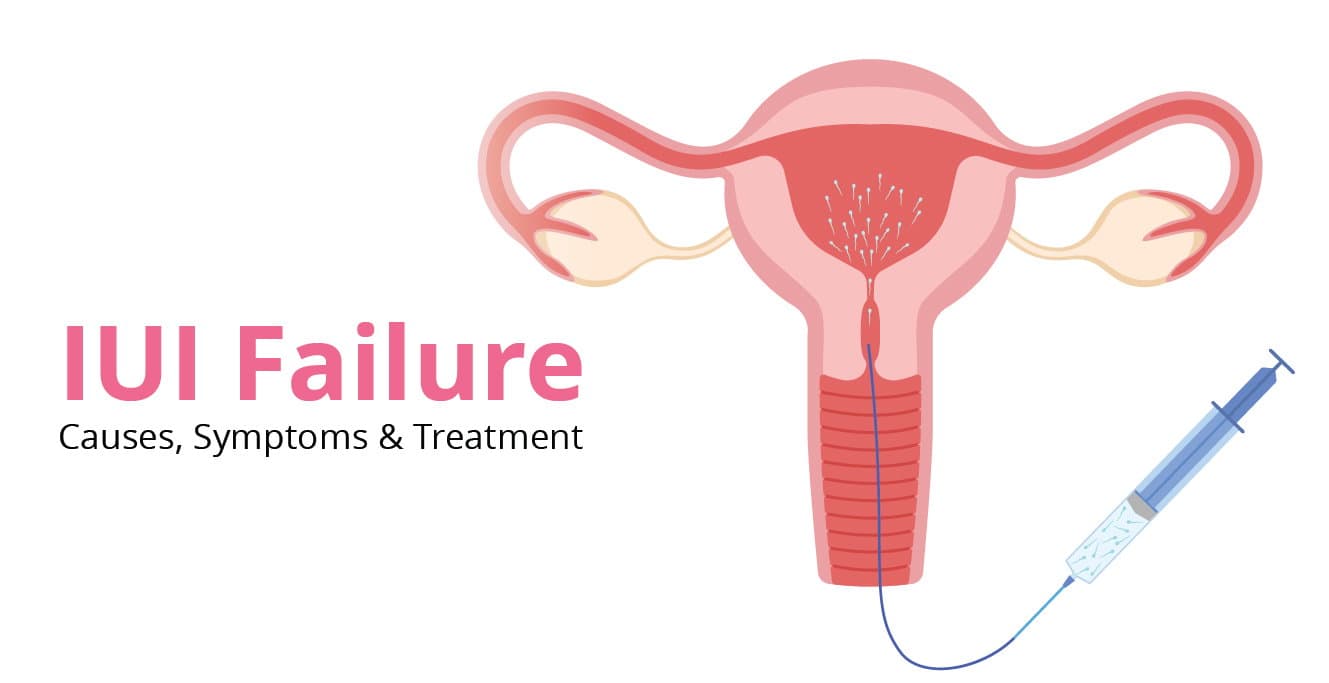
IUI failure: Causes, Symptoms & Treatment

Table of Contents
- What is IUI?
- IUI failure reasons – Reasons Why IUI Treatment Failed?
- IUI Failure Symptoms Day by Day
- Facts About IUI Success Rates in India
- Coping With an Unsuccessful IUI Treatment Cycle
- Post-Failed IUI: What’s Next?
- Conclusion
- FAQs
- Is IUI less effective for couples with secondary infertility?
- Can dietary changes improve IUI success rates?
- What should I expect from my period after a failed IUI?
- First IUI failed should I try again?
- How many IUI cycles should you try before IVF?
- Is IVF recommended after 3 failed IUI cycles?
- Can I skip IUI and go directly to IVF?
- What happens after 2 failed IUI cycles?
- Can you get pregnant naturally after a failed IUI?
Starting IUI often comes with hope, planning, and a lot of emotional investment. So, when a cycle fails, it can feel confusing and discouraging.
Many couples wonder what went wrong in their cycle. Was it the timing, egg quality, sperm health, or something else entirely?
The truth is, IUI failure is more common than many couples realise, and it doesn’t mean that the parenthood journey ends here. It is essential to understand the possible causes, signs, and next steps to help you move forward with clarity and confidence.
What is IUI?
Before we discuss the reasons IUI failed, let’s review what IUI is and what happens during the procedure.
Intrauterine Insemination (IUI) stands out as a minimally invasive option for couples who struggle to have children and is also less expensive than other advanced treatments like IVF. IUI serves as the first-line intervention for people dealing with problems of infertility. A specially prepared sperm is placed directly into the uterus as part of this procedure to improve the chances of pregnancy.
IUI failure reasons – Reasons Why IUI Treatment Failed?
After undergoing an IUI, it typically takes 14 days to determine if the procedure was successful. Many factors impact the success and failure of this treatment. Some common reasons for IUI failure include:
Poor Sperm Quality
One of the causes of IUI failures is low sperm count, sperm motility (the ability of sperm to move), or morphology (the size and shape of sperm) can reduce the chances of fertilisation.
Poor Quality of Eggs
Eggs that are not healthy or of good quality can result in abnormal embryo development, increasing the risk of miscarriage or congenital disabilities.
Ovulation Issues
Irregular ovulation or failure to ovulate can hinder the success of IUI.
Endometrial Receptivity
There are factors affecting the uterine lining that can impact the implantation of a fertilised egg.
Age
More age usually implies fewer chances of successful IUI.
Severe Cases of Infertility
One of the reasons behind IUI failure is underlying issues like endometriosis or blocked fallopian tubes.
Unexplained Infertility
In some cases, the cause of infertility may be unknown, making it challenging to determine the best course of treatment.
Lifestyle Factors
Smoking, alcohol consumption, and high stress can impact the success of the treatment.
If you have recently undergone an IUI procedure and it was unsuccessful, it is natural to feel frustrated, confused, and disheartened. However, it is important to know that you are not alone!
IUI Failure Symptoms Day by Day
Here is a detailed IUI failure symptoms day by day to understand when to reach out to your healthcare provider:
Day 1 ( Insemination)- On this day, if you experience mild lower abdominal cramping or slight spotting due to catheter insertion, then it can be a sign of IUI failure.
Day 2-3- If you experience light cramps that are similar to period pain, breast tenderness, and mild bloating, then it can direct you towards IUI failure. It is especially true if you are taking progesterone support. In many cases, women may not notice any symptoms at all.
Day 4-6- There are no clear symptoms during this phase. Some women may feel mild pelvic discomfort, bloating, or emotional mood swings due to hormonal changes. You can also feel anxious during the waiting period.
Day 7-9- If by this time there is no implantation, then mild period-like cramps follow. You might also feel heaviness in the lower abdomen; however, symptoms can still be very subtle.
Day 10-12- You can experience backache, fatigue, breast soreness, irritability, or a sensation that your period is about to start.
Day 13-14- Brown spotting, light bleeding, stronger cramps, or full menstrual bleeding may occur, which generally indicates IUI failure.
Facts About IUI Success Rates in India
These are some facts that can help you understand why IUI is a simple and effective option and how it affects success rates in India:
- The IUI success rates vary in India. They typically range between 10-20% per cycle, depending on individual factors.
- IUI Success rates are dependant on age, especially after the age of 35, egg quality, and ovarian reserve are reduced.
- Cumulative success improves over multiple cycles, with many pregnancies occurring by the third IUI attempt.
- The success rate increases with IUI is paired with ovulation induction medications.
- Male partner sperm quality has a significant impact, and better sperm count and motility are linked to higher IUI success rates.
Coping With an Unsuccessful IUI Treatment Cycle
Why does IUI fail the first time is a common question many couples ask, and the answer often lies in biological factors like egg quality, sperm health, ovulation timing, or uterine conditions, not personal mistakes.
What to do to care for yourself?
- Accept that IUI has a limited success rate per cycle, and a first-cycle failure is medically common.
- Allow yourself to feel disappointed, but avoid self-blame, as most outcomes are beyond your direct control.
- Schedule a follow-up consultation with your fertility specialist to review the cycle and discuss possible improvements.
- Focus on emotional well-being by talking openly with your partner or a trusted support system.
- Consider taking a short mental break before the next cycle if you feel overwhelmed.
- Remember that cumulative success rates improve over multiple cycles, and many couples conceive in their second or third attempt.
Post-Failed IUI: What’s Next?
A failed IUI procedure can cause emotional upheaval. It is only natural to feel disappointment, frustration, and sadness if the treatment is unsuccessful. Allow yourself to grieve and seek support from your loved ones and doctors to help you cope with this hurdle in your fertility journey. Most importantly, consulting your doctor can help you understand what to do after IUI failure because this is not the end of the road.
If 3-4 cycles have failed, it might be time to consider other options. Some steps that you can take once you understand the reasons for the IUI treatment failure include:
- Consult your fertility specialist to reevaluate the causes of the failed IUI.
- The doctor might recommend additional tests to accurately identify the causes before recommending other ART options.
- In-Vitro Fertilisation (IVF) and Intracytoplasmic Sperm Injection (ICSI) are techniques that can help improve chances of conception. Discuss these options with your doctor.
- Make healthy lifestyle changes, such as ensuring a balanced diet, regular exercise, stress management, quitting smoking and drinking, and preventing exposure to environmental pollutants.
How Many IUI Cycles Should You Try Before IVF?
There is no fixed number of IUI cycles that applies to every couple. In many cases, fertility specialists may consider around 3 to 4 IUI cycles before discussing IVF, particularly when there are no major fertility factors that would make IUI less suitable.
The decision depends on several factors, including age, ovarian reserve, egg quality, sperm health, fallopian tube function, the cause of infertility, and the response to previous IUI cycles.
After one failed IUI cycle, couples may be advised to try again if their fertility specialist believes another cycle has a reasonable chance of success. If two IUI cycles have failed, the doctor may review the response to previous treatment before deciding whether to continue.
After three unsuccessful IUI cycles, it may be appropriate to discuss IVF, especially when the chances of success with further IUI appear limited. However, the decision should be personalised rather than based only on the number of failed cycles.
What to Do After 3 Failed IUI Cycles?
Three failed IUI cycles do not necessarily mean that there is no possibility of pregnancy. However, repeated unsuccessful cycles may indicate that it is time to reassess the treatment approach.
Your fertility specialist may review factors such as:
- Ovulation and follicular development
- Ovarian reserve
- Sperm count and motility
- Fallopian tube function
- Uterine health
- Age and egg quality
- The underlying cause of infertility
- Response to fertility medications during previous cycles
Based on this evaluation, your doctor may recommend another IUI cycle or discuss IVF as the next treatment option.
When Should You Consider IVF After Failed IUI?
IVF may be considered after multiple unsuccessful IUI cycles, particularly when there are factors that may reduce the likelihood of IUI success.
A fertility specialist may recommend considering IVF earlier in certain situations, such as advanced maternal age, reduced ovarian reserve, blocked fallopian tubes, severe male-factor infertility, or certain fertility conditions.
IVF may also be considered when repeated IUI cycles have not resulted in pregnancy despite appropriate treatment and timing.
IUI Failed but Period Has Not Started: What Does It Mean?
A period may not start immediately after a failed IUI cycle. The timing can vary depending on ovulation, progesterone supplementation, hormonal medications, and the individual menstrual cycle.
A delayed period does not necessarily confirm pregnancy or IUI failure. If your period has not started around the expected time, your fertility specialist may recommend taking a pregnancy test rather than relying on symptoms alone.
If you experience unusual or heavy bleeding, severe abdominal pain, dizziness, or other concerning symptoms, contact your healthcare provider promptly.
When to Take a Pregnancy Test After IUI?
A pregnancy test is generally performed around 14 days after IUI, although your fertility specialist may recommend a specific testing date based on your treatment and medications.
Testing too early can sometimes produce an unclear or inaccurate result, particularly when fertility medications containing hCG have been used.
Waiting until the recommended testing time can provide a more reliable result and help avoid unnecessary confusion during the two-week wait.
IUI Success Rate After 35: What Are the Chances?
Age is one of the factors that can influence IUI success. As women age, changes in egg quantity and quality can affect the likelihood of conception.
For women over 35, the fertility specialist may consider age alongside ovarian reserve, egg quality, sperm health, fallopian tube function, and the cause of infertility when recommending IUI or IVF.
There is no single IUI success rate that applies to every woman over 35. Your individual fertility assessment can provide a more meaningful understanding of your chances and treatment options.
Conclusion
A failed or unsuccessful IUI cycle can feel overwhelming, but it is important to remember that one attempt cannot define your entire fertility journey. Hence, it is important to understand the reasons behind IUI failure, whether related to egg quality, sperm healt,h age, or other factors. These can help you and your doctor plan the next steps more effectively.
Instead of losing hope, focus on informed decision-making, open communication with your fertility specialist, and taking care of your emotional well-being. With the right guidance, timely intervention, and a personalised treatment approach, your path toward parenthood can still move forward with clarity and confidence.
FAQs
Is IUI less effective for couples with secondary infertility?
No, IUI i not necessarily less effective for couples with secondary infertility. Success rate mostly depends on factors like age, sperm health, egg quality, and overall reproductive condition, rather than whether it’s primary or secondary infertility.
Can dietary changes improve IUI success rates?
No, dietary changes alone cannot improve IUI success rates; however, they can support the success story of your IUI cycle.
What should I expect from my period after a failed IUI?
After a failed IUI, your period will start within a few days of stopping progesterone or about two weeks after ovulation. It may be slightly heavier, more painful, or a bit delayed due to hormonal medications.
First IUI failed should I try again?
Yes, absolutely. You should try after your first IUI fails.
How many IUI cycles should you try before IVF?
There is no fixed number of IUI cycles that is suitable for everyone. In many cases, 3 to 4 IUI cycles may be considered before IVF. However, factors such as age, ovarian reserve, sperm quality, fallopian tube health, and the cause of infertility can influence whether another IUI cycle or IVF is recommended.
Is IVF recommended after 3 failed IUI cycles?
IVF may be considered after 3 failed IUI cycles, particularly when the likelihood of success with additional IUI attempts is low. Your fertility specialist can assess your previous cycles and recommend the most appropriate next step based on your individual fertility factors.
Can I skip IUI and go directly to IVF?
Yes, IVF may be recommended without several IUI attempts when certain fertility factors are present, such as blocked fallopian tubes, severe male-factor infertility, reduced ovarian reserve, or age-related fertility concerns. The recommended treatment depends on your individual fertility assessment.
What happens after 2 failed IUI cycles?
After two failed IUI cycles, your fertility specialist may review your response to treatment, ovulation, sperm parameters, ovarian reserve, and other fertility factors. Depending on the findings, another IUI cycle or IVF may be considered.
Can you get pregnant naturally after a failed IUI?
Yes, natural pregnancy can still occur after an unsuccessful IUI cycle if ovulation, sperm health, fallopian tube function, and other fertility factors allow conception. A failed IUI does not necessarily mean that natural conception is impossible.
Our Fertility Specialists
To know more
Birla Fertility & IVF aims at transforming the future of fertility globally, through outstanding clinical outcomes, research, innovation and compassionate care.


Had an IVF Failure?
Talk to our fertility experts