
 Our Centers
 Select City


 Select City
Early Signs of Pregnancy Before a Missed Period

Table of Contents
- Key Takeaways
- The Conception to Implantation Timeline: What Happens 1 Week Before Your Period?
- Is Vaginal Dryness a Sign of Period or Pregnancy?
- 10 Common Signs of Pregnancy Before a Missed Period
- 1. Implantation Bleeding and Mild Uterine Twinges
- 2. Breast Changes: Tenderness, Heaviness, and Darkening Areolas
- 3. Progesterone-Induced Fatigue & Exhaustion
- 4. Nausea, Queasiness, and Food Aversions
- 5. Heightened Sense of Smell (Hyperosmia) and Metallic Taste (Dysgeusia)
- 6. Frequent Urination
- 7. Elevated Basal Body Temperature (BBT)
- 8. Bloating, Gas, and Digestive Slowdown
- 9. Changes in Cervical Position and Texture (Goodell’s Sign)
- 10. Mood Swings, Headaches, and Mild Dizziness
- Distinguishing Between PMS and Early Pregnancy
- When and How to Test for Pregnancy Accurately
- Red-Flag Symptoms: When to Contact a Doctor Immediately
- Frequently Asked Questions (FAQs)
- 1. Can you feel pregnancy symptoms 1 week after ovulation (7 DPO)?
- 2. Why am I experiencing vaginal dryness if I think I might be pregnant?
- 3. What does early pregnancy discharge look and feel like?
- 4. Can you have early pregnancy symptoms and still get a negative pregnancy test?
- 5. Can implantation bleeding be heavy like a normal period?
Key Takeaways
- Earliest Detection Window: True biological symptoms can begin 6 to 12 days after ovulation (DPO), coinciding with blastocyst implantation and the initial secretion of human Chorionic Gonadotropin (hCG).
- The Dryness vs. Discharge Truth: Vaginal dryness is most commonly a premenstrual sign triggered by dropping estrogen levels. Early pregnancy is far more likely to cause an increase in thin, milky-white, odorless cervical discharge known as leukorrhea.
- PMS vs. Early Pregnancy Overlap: Progesterone dominates the second half of your menstrual cycle whether you are pregnant or not, causing identical symptoms (bloating, tender breasts, fatigue). However, distinct signs like implantation twinges, areola darkening, metallic taste, and a sustained basal body temperature (BBT) can point to pregnancy.
- Testing Accuracy: While ultra-sensitive home tests (10 mIU/mL) can detect pregnancy 4–6 days before a missed period, testing too early increases the risk of a false negative. A quantitative Beta-hCG blood test is the most sensitive confirmation method available.
When you are trying to conceive, the “Two-Week Wait” (the days between ovulation and your expected period) can feel overwhelming. Every slight sensationa sudden wave of fatigue, a dull twinge in your lower abdomen, or an unexpected change in vaginal moisture can leave you wondering: Am I pregnant, or is my period on its way?
While a missed period remains the most reliable primary indicator, your body begins undergoing profound endocrinological transformations within days of conception. Below, we break down the earliest signs of pregnancy before a missed period, the biological timeline behind your symptoms, the clinical facts about vaginal dryness, and how to test for pregnancy accurately.
The Conception to Implantation Timeline: What Happens 1 Week Before Your Period?
To understand why and when early pregnancy symptoms appear, it helps to look at the day-by-day biological journey occurring inside your reproductive tract:
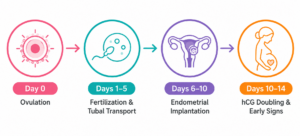
- Days 0–5 Post-Ovulation (Fertilization & Cellular Division): After ovulation, fertilization takes place in the fallopian tube. The fertilized egg develops into a blastocyst as it travels toward the uterus. During this early window, no pregnancy symptoms are physically possible because the blastocyst has not yet connected to your bloodstream.
- Days 6–10 Post-Ovulation (The Implantation Window): The blastocyst embeds into the nutrient-rich uterine lining (endometrium). Once burrowed, the developing placenta begins producing human Chorionic Gonadotropin (hCG). This is the earliest point at which mild implantation spotting or localized uterine twinges can occur.
- Days 10–14 Post-Ovulation (The Late Luteal Phase / 1 Week Before Period): hCG signals the corpus luteum to continue producing progesterone and estrogen, preventing the uterine lining from shedding. As hCG concentrations double roughly every 48 hours, early systemic symptoms like breast hypersensitivity, smell aversions, and fatigue begin to emerge.
Is Vaginal Dryness a Sign of Period or Pregnancy?
One of the most common questions women ask during the late luteal phase is whether feeling “dry down there” indicates pregnancy or an approaching period.
The Short Answer
Vaginal dryness is primarily a sign of an approaching period (PMS), not early pregnancy.
The Hormonal Science
- Why You Feel Dry Before a Period: If conception does not occur, the corpus luteum breaks down, causing both estrogen and progesterone levels to drop sharply 2 to 4 days before your period starts. Because estrogen is directly responsible for stimulating natural lubrication and maintaining healthy vaginal blood flow, this sudden hormonal drop often leads to noticeable vaginal dryness, reduced discharge, or a sticky, pasty sensation.
- Why Early Pregnancy Increases Discharge (Leukorrhea): If implantation succeeds, estrogen and progesterone do not dropthey rapidly rise. Increased pelvic blood flow and rising estrogen stimulate the cervical and vaginal glands to produce leukorrhea. This is a normal, thin, milky-white, and odorless (or mild-smelling) discharge designed to create a protective barrier against ascending vaginal infections.
| Clinical Feature | Premenstrual Dryness (PMS) | Early Pregnancy Discharge (Leukorrhea) |
| Dominant Hormone Profile | Dropping Estrogen & Progesterone | Surging Estrogen & Progesterone |
| Moisture Sensation | Dry, tight, or slightly pasty | Increased wetness and vaginal moisture |
| Discharge Consistency | Minimal, thick, or sticky | Thin, watery, milky, or lotion-like |
| Discharge Color | Clear to faint yellow | Milky white or pale creamy white |
| Typical Timing | 2 to 5 days before menstruation | Emerges around 8–12 DPO and continues |
| Associated Odor/Itching | No strong odor; mild friction possible | Mild/odorless; should not burn or itch |
Medical Note: While rare, some women may experience temporary vaginal dryness during early pregnancy due to sudden hormonal fluctuations, mild dehydration, or sensitivity to soaps. However, dryness on its own should not be interpreted as a positive sign of pregnancy. If dryness is accompanied by burning, itching, or abnormal odor, consult a doctor to rule out a yeast infection or bacterial vaginosis.
10 Common Signs of Pregnancy Before a Missed Period
Because early pregnancy symptoms are driven by rapid hormonal shifts, they often manifest as subtle physical and emotional clues:
1. Implantation Bleeding and Mild Uterine Twinges
Around 6 to 12 days after conception, the embryo implants into the vascular uterine wall, which can cause light spotting.
- How to identify it: Implantation bleeding is light pink or rusty brownnever bright red with clots. It typically lasts only a few hours to 2 days and does not require more than a panty liner.
- Cramping: Accompanied by mild “prickling,” pulling, or dull uterine twinges, often felt on one side of the pelvis rather than the heavy, throbbing cramps of a period. Learn more in our detailed guide on signs of embryo implantation.
2. Breast Changes: Tenderness, Heaviness, and Darkening Areolas
Under the influence of rising estrogen and progesterone, blood flow to the breasts increases and milk duct structures begin preparing early:
- Breasts feel heavy, swollen, and tender to the touch (even light clothing may feel uncomfortable).
- The areolas may appear darker and wider, and the tiny bumps on the areolas (Montgomery’s tubercles) may become more pronounced.
3. Progesterone-Induced Fatigue & Exhaustion
Progesterone is a natural central nervous system depressant. In early pregnancy, soaring progesterone levels, combined with lower blood pressure and increased blood production, can trigger sudden, overwhelming exhaustion. You may feel like you need a nap even after a full night of sleep.
4. Nausea, Queasiness, and Food Aversions
While classic “morning sickness” usually peaks between weeks 6 and 9, mild queasiness can begin as early as 10 to 12 DPO:
- You may wake up feeling slightly unsettled or experience waves of nausea on an empty stomach.
- Sudden aversions to everyday foods (like coffee, eggs, or fried food) often precede actual nausea.
5. Heightened Sense of Smell (Hyperosmia) and Metallic Taste (Dysgeusia)
- Hyperosmia: Estrogen increases olfactory sensitivity. Subtle odors you previously ignored such as cooking oil, garlic, perfumes, or gasoline can suddenly trigger disgust or nausea.
- Dysgeusia: Some women notice a distinct sour or metallic taste in their mouth (often described as having coins on the tongue), caused by early vascular and hormonal shifts.
6. Frequent Urination
Shortly after implantation, hCG triggers an increase in blood flow to your kidneys and pelvic organs. This causes your kidneys to process fluids more efficiently, filling your bladder more rapidly and causing you to wake up to urinate during the night.
7. Elevated Basal Body Temperature (BBT)
If you track your fertility using a basal body thermometer:
- Normally, your temperature rises after ovulation and drops sharply right before your period starts.
- If conception has occurred, progesterone keeps your BBT elevated past 14–16 days post-ovulation, often showing a sustained “triphasic” pattern on your fertility chart. You can calculate your fertile window with our ovulation calculator.
8. Bloating, Gas, and Digestive Slowdown
Progesterone relaxes the smooth muscles throughout your body, including your gastrointestinal tract. This slows digestion to maximize nutrient absorption for the embryo, leading to early abdominal bloating, gas, and mild constipation that feels similar to premenstrual swelling.
9. Changes in Cervical Position and Texture (Goodell’s Sign)
For those familiar with cervical monitoring:
- Before a period, the cervix drops lower into the vaginal vault, feels firm (like the tip of your nose), and slightly opens to let menstrual blood pass.
- In early pregnancy, high progesterone keeps the cervix positioned high, soft to the touch (like your earlobe or lips), and tightly sealed to protect the uterine cavity.
10. Mood Swings, Headaches, and Mild Dizziness
Rapid hormonal surges affect neurotransmitters like serotonin, causing unexplained weepiness, irritability, or mood swings. Additionally, blood vessels dilate rapidly in early pregnancy, which can lead to mild tension headaches or postural lightheadedness when standing up quickly.
Distinguishing Between PMS and Early Pregnancy
Because both conditions are driven by the luteal hormone progesterone, comparing their subtle differences side by side can help you evaluate your symptoms:
| Symptom | Premenstrual Syndrome (PMS) | Early Pregnancy (Before Missed Period) |
| Abdominal Cramping | Moderate to severe cramping; starts 24–48 hours before flow and peaks on day 1 of bleeding. | Mild pinching, pulling, or twinges; localized and intermittent. |
| Breast Sensations | Swollen and tender right before period; improves rapidly once bleeding begins. | Soreness intensifies; areolas darken, veins become visible, nipples stay hypersensitive. |
| Bleeding / Spotting | Red, steady flow with clots; lasts 3 to 7 days and requires sanitary pads/tampons. | Light pink or brownish spotting (1–2 days); never contains clots and does not fill a pad. |
| Fatigue & Energy | Mild tiredness; relieved by adequate rest and disappears once your period starts. | Heavy, relentless exhaustion that persists throughout the day due to progesterone. |
| Vaginal Discharge | Becomes dry, sticky, or absent in the 2–4 days leading up to menstruation. | Thickens into copious, thin, milky-white, odorless leukorrhea. |
| Nausea / Appetite | Cravings for salty/sweet snacks; nausea is rare without severe cramping. | Queasiness, sudden loss of appetite, strong aversion to specific smells or tastes. |
| Basal Body Temp | Drops back to baseline 1–2 days before or on the day of your period. | Stays elevated above baseline past 14–16 days post-ovulation. |
When and How to Test for Pregnancy Accurately
The only definitive way to confirm pregnancy is by measuring hCG levels. Here is how to avoid false negatives and ensure accurate results:
1. Understanding Test Sensitivity
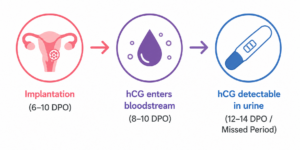
- Early Detection Tests (10 mIU/mL): High-sensitivity tests (such as First Response Early Result or Clearblue Early Detection) can detect minute amounts of hCG in urine roughly 4 to 6 days before your expected period.
- Standard Home Pregnancy Tests (25 mIU/mL): Most standard drugstore tests require higher concentrations of hCG and are most reliable on or after the first day of your missed period.
2. Tips for an Accurate Home Test
- Use First-Morning Urine: Your first urine of the day contains the highest concentration of hCG. If testing later in the day, avoid drinking excessive fluids for 4 hours beforehand, as diluted urine can lead to a false negative.
- Avoid Testing Too Early (The 8 DPO Trap): Even if implantation occurred at 8 DPO, hCG levels may only be 2–4 mIU/mLbelow the detection limit of home tests. Testing before 12–14 DPO frequently yields false negative results.
- Retest in 48 Hours: If you receive a negative test but your period has not arrived and symptoms continue, retest in 2 to 3 days. hCG levels double every 48 to 72 hours in viable early pregnancies.
3. Quantitative Beta-hCG Blood Test (Clinical Standard)
If you need definitive confirmation especially during fertility treatments like IUI or IVF your doctor can order a quantitative Beta-hCG blood test. Blood tests can detect hCG levels as low as 1 to 2 mIU/mL within 8 to 10 days of conception and confirm whether hormone levels are rising at a healthy rate.
Red-Flag Symptoms: When to Contact a Doctor Immediately
While mild twinges and light spotting can be normal early pregnancy signs, certain symptoms require immediate medical evaluation:
- Sharp, Severe, or One-Sided Pelvic Pain: Can indicate an ectopic pregnancy (where the fertilized egg implants outside the uterus, usually in the fallopian tube).
- Shoulder Tip Pain or Dizziness/Fainting: Critical warning signs of internal bleeding from an ectopic pregnancy.
- Heavy Vaginal Bleeding: Soaking a menstrual pad in an hour or passing large blood clots.
- Fever, Chills, or Foul-Smelling Discharge: Signs of a pelvic or vaginal infection requiring prompt antibiotic treatment.
If you have been trying to conceive for more than 12 months (or more than 6 months if you are over 35), consulting a reproductive specialist can help assess your ovulation patterns, tubal patency, and hormonal health. Learn more about fertility assessments through Birla Fertility & IVF’s reproductive wellness services.
Frequently Asked Questions (FAQs)
1. Can you feel pregnancy symptoms 1 week after ovulation (7 DPO)?
While some women report subtle twinges or light spotting around 7–10 DPO due to embryo implantation, full hormonal symptoms (like nausea and frequent urination) usually take several days to develop as hCG levels rise.
2. Why am I experiencing vaginal dryness if I think I might be pregnant?
Vaginal dryness is most often caused by the natural decline of estrogen in the days before your period. While early pregnancy can occasionally cause temporary dryness due to individual hormonal shifts, increased milky discharge (leukorrhea) is the typical biological response to pregnancy.
3. What does early pregnancy discharge look and feel like?
Early pregnancy discharge (leukorrhea) is thin, milky-white or pale cream, and either odorless or very mild-smelling. It should not cause itching, redness, burning, or a strong fishy odor.
4. Can you have early pregnancy symptoms and still get a negative pregnancy test?
Yes. If you test too early (e.g., 8–10 DPO), your body may not have produced enough hCG to trigger a positive result on a urine test, even if conception occurred. Wait 2 to 3 days and test again using first-morning urine.
5. Can implantation bleeding be heavy like a normal period?
No. Implantation bleeding is always light spotting (pink or brown drops) that lasts from a few hours up to 48 hours. It never produces a heavy red flow or blood clots. If you experience heavy bleeding, it is likely your period or another medical concern requiring consultation with your gynecologist.
Word from an expert:
Understanding your body’s subtle hormonal signals can help reduce anxiety during the two-week wait. While tracking symptoms offers valuable clues, remember that every woman’s hormonal response is unique. If you suspect pregnancy, confirm with a sensitive test at the appropriate time and consult your fertility specialist to guide your journey.
Dr. Prachi Benara, Senior Consultant – Reproductive Medicine, Birla Fertility & IVF
Our Fertility Specialists
To know more
Birla Fertility & IVF aims at transforming the future of fertility globally, through outstanding clinical outcomes, research, innovation and compassionate care.


Had an IVF Failure?
Talk to our fertility experts