
 Our Centers
 Select City


 Select City
Fertility Test for Males in India
If you and your partner are struggling to conceive, fertility issues can affect either partner. Male factors contribute to nearly 40–50% of infertility cases, making male fertility testing an important part of diagnosis. At Birla Fertility & IVF, our comprehensive male fertility tests may include semen analysis, blood tests, and genetic testing to assess reproductive health.
Consult an Expert
Get a free callback from our fertility specialists

What is a Male Fertility Test?
Male fertility test is a set of evaluations that are done to assess a male partner’s reproductive health and his ability to become a father. Since male factors contribute to about 50% of infertility cases, these tests are used to identify the underlying cause behind the same.
The tests give proper understanding of sperm count present in the semen, sperm motility which is how well the sperm moves and the sperm morphology which is the shape and size of the sperm. Together these give fertility specialists a clear picture of the issues and accordingly a fertility specialist can recommend a fertility treatment.
Early detection of fertility issues with accurate testing enables couples to explore treatment options sooner, whether through lifestyle modifications, medication, or advanced fertility procedures such as IUIor IVF, increasing their chances of a successful pregnancy.
Who Should Get a Male Fertility Test?
A male fertility test can assist determine sperm health and identify factors that may influence conception. Understanding the tests used to determine male fertility will help you take the correct steps at the right time.
- Men Trying to Conceive for More Than 12 Months- If you have been trying for a baby for over 12 months without success, a test can help check for male fertility.
- Men Whose Partner Is Above 35 Years and Has Been Trying for 6 Months- When the female partner is above 35, there can be age related issues. Hence, if you have been trying for 6 months, both partners should go for an early fertility evaluation. A male fertility profile test can help assess sperm-related factors.
- Men with Previous Infertility or Fertility Problems- Men with a history of infertility or reproductive issues should get tested to determine whether the current sperm health is an issue or not.
- Men with Abnormal Semen Analysis Results- If previous semen analysis gave abnormal results, then specialists can ask for additional testing to understand the issues better.
- Men with a History of Testicular Injury or Surgery- Previous testicular injury, surgery, or specific medical procedures can all have an impact on sperm production and reproductive function. A male fertility test can help determine whether these factors are influencing fertility.
- Men with Varicocele or Other Testicular Conditions- There are conditions like varicocele that impacts sperm production and the quality of sperms.
- Men with Hormonal or Sexual Health Problems- Male fertility can arise due to hormonal imbalances and other sexual health issues. Men facing similar symptoms should go for a blood test for male fertility along with sperm analysis.
- Men Planning Fertility Preservation- Men who are considering freezing their sperm should go for a male fertility test to assess sperm health before preservation.
Signs That Indicate You May Need a Male Fertility Test
There are certain clear symptoms along with health factors that can signal underlying fertility issues. Understanding these during the early days is necessary so that you can seek timely diagnosis and treatment.
Difficulty Getting Your Partner Pregnant
If you and your partner have been trying to conceive for more than a year, or six months in case your partner is over 35 then male fertility test can help decide whether male factors are contributing to delaying pregnancy or not.
Low Sperm Count or Prior Abnormal Semen Analysis
If you have a history of low sperm count or an abnormal sperm analysis then the doctors may recommend you going for an in-depth analysis using genetic testing or sperm DNA fragmentation testing. This can help figure out the underlying cause and accordingly specialists and offer personalised treatment plans.
Erectile or Ejaculatory Problems
In case you are facing difficulty in achieving or maintaining an erection, or there are issues with ejaculation then Erectile or Ejaculatory Problems can affect the ability to conceive naturally. This can also point out hormonal or physical factors that need proper diagnosis.
Low Libido
Sometimes you might notice a decrease in sexual desire, this Low Libido can signal low testosterone or other hormonal imbalance that may also impact sperm production and overall fertility.
Testicular Pain, Swelling, or Lumps
If there are any pain, swelling or strange lumps in the testicals it should be diagnosed immediately. IT can be a sign of infection, varicocele or any other sperm-related issue.
Reduced Facial or Body Hair
If you are facing a decrease in facial or body hair then it can indicate low testosterone levels. These parameters have a direct influence on the sperm production and even maintaining reproductive health becomes difficult.
History of Testicular Injury or Infection
Past testicular injuries, diseases such as mumps orchitis, and sexually transmitted infections can all have an impact on sperm production and quality, making fertility testing necessary even years later.
Previous Chemotherapy or Radiation Therapy
Cancer therapies such as Chemotherapy or radiation can have a major influence on sperm production and quality, thus fertility testing is necessary for men who have had these treatments and want to start a family.
Advanced Diagnostics for Male Fertility
Accurate diagnostics are the foundation of every fertility plan we build here's what sets our testing experience apart
Testosterone Test
A testosterone test is a blood test that helps detect the testosterone levels in your body. Testosterone is traditionally described as the ‘male hormone’, but the hormone has a significant function for both men and women. The testosterone test helps assess your hormonal health, sexual health, any issues relating to fertility, reason for delayed or earlier puberty as well as find out some specific medical conditions affecting the reproductive system. Doctors may suggest a testosterone blood test if a person is experiencing symptoms such as low sex drive, fatigue, erectile dysfunction, irregular menstrual cycles, excessive facial hair growth or fertility challenges. The test may also be advised when we have to keep a check on hormone replacement therapy and other treatments that affect testosterone levels.

Sperm DNA Fragmentation Test
A sperm DNA fragmentation test is one of the advanced male infertility tests used to analyse the quality of the genetic material carried by the sperm. Unlike a standard semen analysis which will analyse the count, motility and morphology of the sperm, the sperm DNA fragmentation test will assess whether the DNA inside the sperm has been damaged. High sperm DNA fragmentation can result in problems with fertilisation, embryo development and implantation. The test for sperm DNA fragmentation or the DFI test will help a fertility expert to find out hidden male fertility factors and determine the most effective treatment plan for achieving pregnancy.
Seman Analysis Test
Male factor infertility is behind half of all infertility cases, making it a thorough evaluation of sperm health as an important part of fertility assessment. A semen analysis test is one of the most commonly recommended diagnostic tests used to evaluate male reproductive health. It provides valuable information about sperm count, motility, morphology, semen volume, and other parameters that influence the chances of conception. Here, we will explain everything about semen analysis tests in India, from where it is recommended, how it is performed to the results parameters to look at.

FSH Test
An FSH test (Follicle-Stimulating Hormone test) is a quick and easy blood test which is carried out to investigate reproductive health and fertility in both men and women. It checks the levels of FSH, which is an important hormone produced by the pituitary gland and which controls the ovulation process and development of the egg in women, and production of sperm in men. Your doctor may recommend an FSH blood test to examine factors such as infertility, menstrual irregularity, menopause, and hormonal problems. An FSH blood test may sometimes be advised with other hormonal tests, for example, the LH-FSH test or the FSH-LH-prolactin test for a comprehensive assessment of reproductive function.

LH Test
The Luteinizing Hormone (LH) Test measures the level of luteinizing hormone in your blood, providing important insights into your reproductive and hormonal health. It is one of the most commonly recommended hormone tests for evaluating ovulation, fertility, irregular menstrual cycles, and hormonal imbalances in women, as well as testosterone production and fertility concerns in men. The test also helps diagnose conditions affecting the ovaries, testes, or pituitary gland. It is a simple blood test that usually requires no fasting or special preparation, although the timing of the test may be important for women depending on the stage of their menstrual cycle.

Prolactin Test
Prolactin is a kind of hormone that is popularly known for its role in breast milk production after the birth of a child. However, prolactin is involved not only in lactation, but also in reproductive health, menstrual cycle and ovulation. It also influences certain aspects of male fertility. Too much or too little prolactin can upset the hormonal balance and impact the ability to conceive. The prolactin test measures prolactin in your blood and may help detect problems related to infertility, irregular menstruation, unexplained breast milk secretion, erectile dysfunction, or diseases of the pituitary gland. Learning what your prolactin levels mean is one of the first steps toward detecting the problem and receiving the appropriate treatment.

hCG Test
Human Chorionic Gonadotropin (HCG) is a hormone that is produced when a woman is pregnant. This hormone is essential in supporting the early-stage development of the baby. It is the same hormone that is detected by home pregnancy kits and blood tests for pregnancy. Monitoring hCG levels helps confirm whether you are pregnant, checks whether the pregnancy is progressing normally, and tracks certain fertility treatments and pregnancy-related conditions. However, an hCG test alone does not always provide the full picture. Doctors usually interpret the hCG values along with symptoms, ultrasound findings, and repeat tests if needed.
Book Your Appointment

Causes of Male Infertility Identified Through Fertility Testing
Varicocele
It is a swollen vein that drains the testicles. It is the most common cause of male infertility that is treatable. Experts don’t know exactly how varicoceles induce infertility, but it could be due to abnormal blood flow. Varicoceles cause reduced sperm quantity and quality.
Infection
Certain medical conditions can impair sperm production or health, or produce scarring that prevents sperm from moving. These include epididymitis, which is inflammation and swelling of the coiled tube at the rear of the testicle known as the epididymis. Orchitis, inflammation and swelling of one or both testicles, and certain sexually transmitted infections, such as gonorrhea or HIV, are also considered infections. Some infections can result in permanent damage to the testicles. However, in most cases, they can still produce sperm.
Ejaculation Issues
Retrograde ejaculation occurs when semen enters the bladder during climax rather than exiting the tip of the penis. Diabetes, spinal injuries, medications, and bladder, prostate, or urethral surgery are all potential causes of retrograde ejaculation.
Tumors
Both cancerous and non-cancerous tumors can have a direct impact on the male reproductive organs. This could be due to the pituitary gland, which releases the hormones for reproduction. The treatment recommended in such cases is surgery, radiation or chemotherapy which affect male fertility.
Hormone Imbalances
Fertility can be influenced by testicular or other hormone system problems. Other hormone systems include the hypothalamus, pituitary, thyroid, and adrenal glands. Male hypogonadism, or low testosterone, can be caused by a variety of factors, including hormonal abnormalities.
Chromosome Issues
At times certain conditions are passed down through generations, known as hereditary. These are also one of the reasons that create issues with male sex organ development. One such condition is Klinefelter syndrome which happens when a guy is both with two X chromosomes instead of one X and one Y chromosome. Another example is cystic fibrosis which is again hereditary.
Surgeries
There are certain surgeries that may prevent you from producing adequate sperm in your ejaculation. These include vasectomy, scrotal, testicular surgery, prostate surgery and testicular and rectal surgery, among others.
How to Prepare for a Male Fertility Test?
Preparation is very important to get reliable results when it comes to male fertility test. Your fertility specialist will give you specific instructions based on your medical history and the type of male fertility test recommended for your case. Here is how you can prepare for a male fertility test:
Recommended Abstinence Period Prior to Semen Analysis
The first and foremost thing that a doctor recommends you is to refrain from ejaculating for 2-5 days prior to your tests. The suggested timeframe is recommended so that there is an increase in accuracy in the findings.
Medical History to Share
During the initial consultation, tell the fertility specialist about all past medical history. This includes surgeries, infections, testicular conditions and more. These information are vital since they help determine what tests are done to check male fertility.
Medications and Supplements to Inform Your Doctor About
Inform your doctor about all prescription medicines, over-the-counter medicines and supplements you take. Certain medications can affect sperm production, so your specialist may recommend appropriate testing.
Lifestyle Recommendations Before Testing
One should maintain a healthy lifestyle which majorly includes getting proper sleep and following a balanced diet to support overall reproductive health. Your doctor may also recommend specific lifestyle changes before you take a male fertility profile test.
Avoiding Alcohol, Smoking, and Recreational Drugs
Smoking, drinking excessive alcohol or using any recreational drugs can have a major impact on your sperm health and fertility. One must avoid these before testing to help improve the overall fertility health and produce accurate male fertility test results.
Managing Heat Exposure Before Testing
If you feel excessive heat near your testicals that there is a chance that it might impair sperm production. Your doctor may urge you to avoid hot showers, saunas, and prolonged heat exposure prior to a male fertility test.
Understanding Male Fertility Test Results
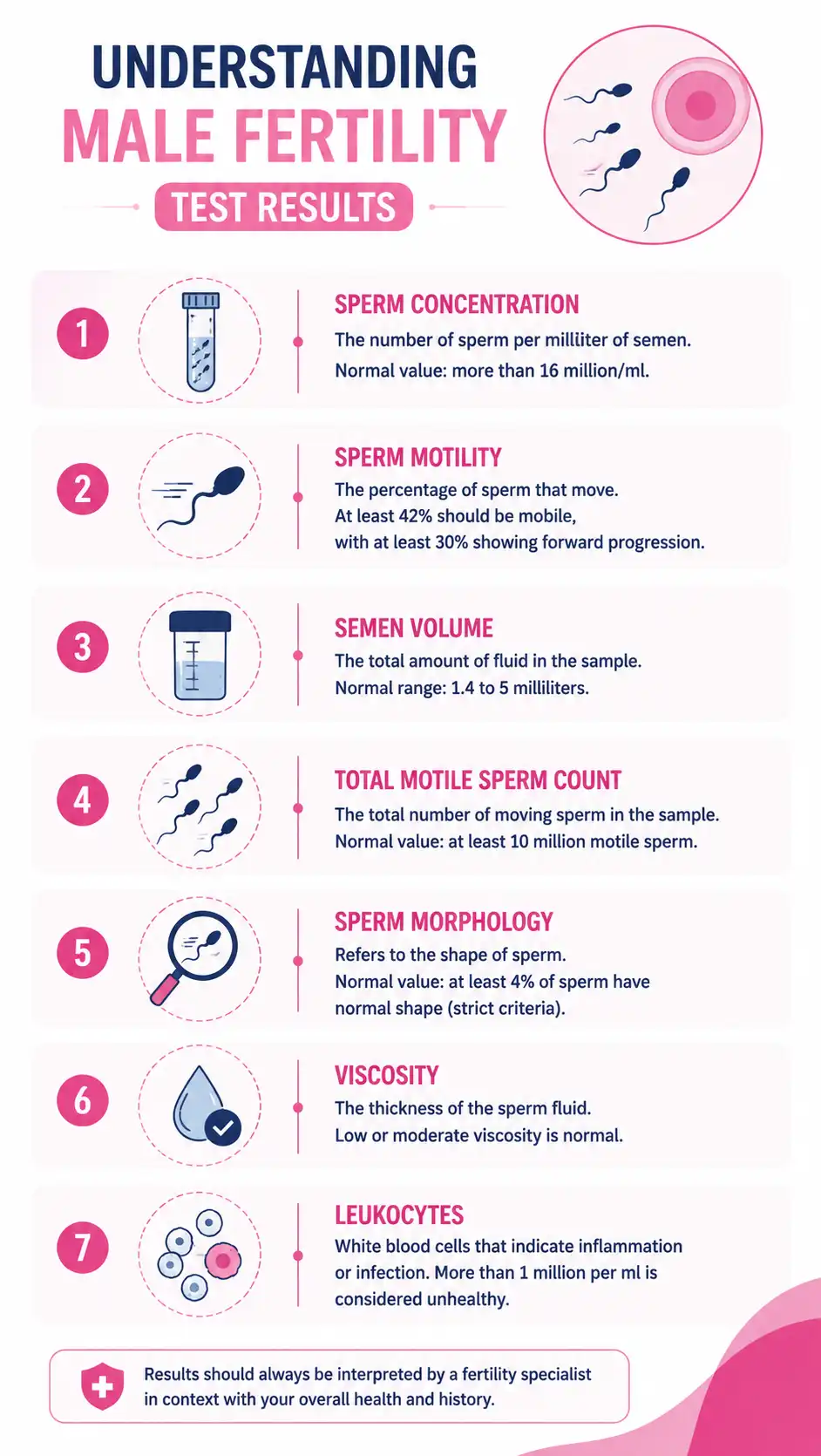
- Sperm Concentration- Often known as sperm count, is the quantity of sperm per milliliter of fluid (a teaspoon contains 5 milliliters). A typical Sperm Concentration exceeds 16 million per milliliter.
- Sperm Motility – the percentage of sperm that move. At least 42% of the sperm should be mobile. This is further divided into those with progression (going forward) and those who do not; at least 30% of all sperm should have forward progression.
- Semen Volume- It refers to the total amount of fluid collected in the sperm sample. A normal volume is at least 1.4 milliliters and no more than 5 milliliters.
- Total Motile Sperm Count – It represents the total number of migrating sperm in the sample. To calculate this number, multiply the volume by the concentration, then by the percentage of motile cells. Usually, the sample contains at least 10 million motile sperm.
- Sperm Morphology- It is basically the shape of the sperm. Surprisingly, Sperm Morphology variations or irregularly shaped sperm are prevalent. Many laboratories employ the World Health Organization guidelines for grading sperm shape, which states that a sample is normal if at least 30% of the sperm have a normal form. Texas Fertility Center has a much rigorous grading method in which the various components of the sperm are measured. According to this grading method, a sample is normal if at least 4% of the sperm have normal parameters.
- Viscosity – It is the thickness of the sperm fluid. Low or moderate viscosity is considered normal.
- Leukocytes – They are white blood cells that are indicative of inflammation or infection. A little amount of leukocytes may be OK, but more than one million leukocytes per milliliter is deemed unhealthy.
Why Choose Birla Fertility for Diagnostic Test
Accurate diagnostics are the foundation of every fertility plan we build — here's what sets our testing experience apart.
120+
Fertility Experts
2 Lakh+
Patients Treated
50+
Clinics in India
NABL
Accredited Labs
Patient Experiences at Birla Fertility & IVF
Male Fertility Test Cost in India
Male fertility test costs in India vary according to the type of test recommended, the diagnostic facility, and the individual’s fertility problems. Birla Fertility & IVF recommends testing based on your medical history and clinical needs, rather than taking a one-size-fits-all strategy.
At Birla Fertility & IVF, a basic semen analysis costs around ₹1,000-₹1,200. Additional male fertility investigations may cost more depending on the tests needed.
| Male Fertility Test | Indicative Cost in India* |
| Semen Analysis | ₹500–₹2,000 |
| Hormone Testing | ₹2,000–₹6,000 |
| Sperm DNA Fragmentation (DFI) Test | ₹8,000–₹20,000 |
| Genetic Testing | ₹5,000–₹25,000+ |
| Testicular Ultrasound | ₹1,500–₹4,000 |
*These are indicative ranges and may vary based on the centre, city, test type and individual requirements.
Birla Fertility & IVF focuses on clear pricing from the start and only recommends studies that are clinically suitable after an evaluation. Your fertility specialist can explain how much a male fertility test costs, what each test measures, and whether more tests are required.
Top IVF Centers in Popular Cities
- IVF Center in Delhi
- IVF Center in New Town Kolkata
- IVF Center in Gurgaon
- IVF Center in Rewari
- IVF Center in Lucknow
- IVF Center in Varanasi
- IVF Center in Gorakhpur
- IVF Center in Noida
- IVF Center in Prayagraj
- IVF Center in Meerut
- IVF Center in Kolkata
- IVF Center in Howrah
- IVF Center in Bhubaneswar
- IVF Center in Cuttack
- IVF Center in Surat
- IVF Center in Ahmedabad
- IVF Center in Ranchi
- IVF Center in Chandigarh
- IVF Center in Guwahati
- IVF Center in Raipur
- IVF Center in Jaipur
- IVF Center in Nagpur
- IVF Center in Hyderabad
- IVF Center in Indore
- IVF Center in Bhopal
- IVF Center in Kozhikode
- IVF Center in Kannur
- IVF Center in Mangalore
- IVF Center in Palakkad
- IVF Center in Salem
- IVF Center in Thrissur
- IVF Center in Bangalore
- IVF Center in Kolar
- IVF Center in Mumbai
- IVF Center in Vijayapura
- IVF Center in Chennai
- IVF Center in Patna
- IVF Center in Perinthalmanna
- IVF Center in Siliguri
- IVF Center in Gachibowli
Frequently Asked Questions
Semen analysis is the most important test for male fertility which assess the semen quality and quantity. Factors like sperm motility and morphology are assessed accordingly.