
 Our Centers
 Select City


 Select City
Seman Analysis Test
Male factor infertility is behind half of all infertility cases, making it a thorough evaluation of sperm health as an important part of fertility assessment. A semen analysis test is one of the most commonly recommended diagnostic tests used to evaluate male reproductive health. It provides valuable information about sperm count, motility, morphology, semen volume, and other parameters that influence the chances of conception. Here, we will explain everything about semen analysis tests in India, from where it is recommended, how it is performed to the results parameters to look at.
Consult an Expert
Get a free callback from our fertility specialists

What Is a Semen Analysis Test?
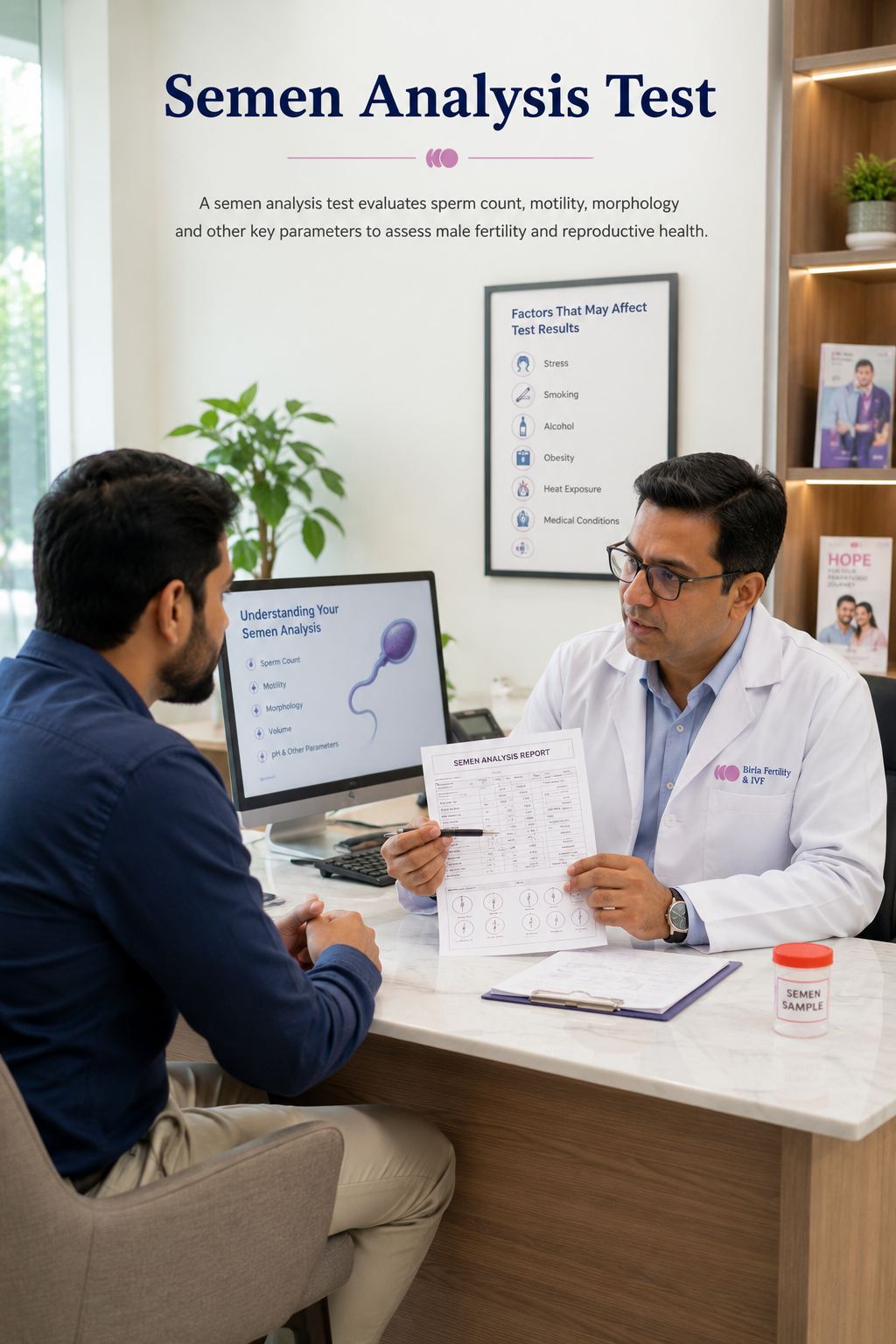
A semen analysis is a laboratory test that assesses the quantity and quality of sperm. In the assessment of male infertility, it is an essential component. The process of the semen analysis test is gathering a sample of semen, typically via masturbation, then examining it under a microscope and using a variety of chemical assays. Many important factors, such as the number of spermatozoa, motility (movement), morphology (shape), volume, pH, and the presence of white blood cells or other cells in the semen, are typically measured for semen analysis purposes. Simply put, semen analysis test means evaluating the health and quality of sperm to determine a man’s fertility potential.
Why and When Is a Semen Analysis Test Conducted?
Since semen analysis tests show a detailed picture of male reproductive health, it actually helps fertility specialists identify whether there are issues with the sperm or not. Here are the key situations for which people search semen analysis test near me:
Difficulty Conceiving Naturally
The first situation is a no-brainer, couples look for semen analysis when they are trying to have a baby for 12 months or more without any success. Early male fertility testing helps prevent delays in diagnosis and guarantees that both partners are evaluated concurrently rather than one at a time, as male factors account for about half of all cases of infertility.
Evaluation After Vasectomy
After a vasectomy, a normal and crucial step to verify the procedure’s success is a semen analysis test. After enough ejaculations to remove any leftover sperm from the reproductive system, it is usually performed 8 to 16 weeks following surgery. Both the patient and the physician can be confident that the vasectomy was successful because the test verifies that there is no sperm in the semen.
Male Infertility Assessment
A semen analysis test is the cornerstone of the male fertility testing workup when a man has been diagnosed with or is suspected of having a problem impacting reproductive health, such as hormonal imbalances, varicocele, a history of infection, or undescended testes. Before proposing additional testing or therapy, it helps the doctor understand the nature and extent of the problem by measuring important factors such as sperm count, motility, morphology, and semen volume.
Recurrent Pregnancy Loss Evaluation
Investigations usually go beyond the lady alone when a couple has two or more miscarriages in a row. Early pregnancy loss and poor embryo development have been associated with abnormal sperm DNA fragmentation, which occurs when the genetic material within sperm is destroyed. A semen analysis test, which is frequently combined with a sperm DNA fragmentation test, aids in identifying whether sperm quality may be a factor in repeated miscarriages and directs future reproductive therapy decisions.
Before Fertility Treatments Such as IVF or ICSI
A comprehensive semen analysis test is necessary to identify the best course of treatment before beginning assisted reproductive procedures like IVF or ICSI. Clinical decisions are directly impacted by the results; for instance, a very low sperm count or poor motility may suggest that ICSI is a better option than traditional IVF. The reproductive team can customize the treatment strategy and increase the likelihood of a good outcome by having precise semen parameters at the beginning.
How Should You Prepare for a Semen Analysis Test?
To get accurate results, doctors recommend a few things before doing a sperm analysis. Here are those tips:
Do Not Ejaculate
It is recommended to avoid ejaculating for 2 to 5 days prior to your test date. This helps guarantee that there is enough sperm in the sample. Though, make sure you do not prolong ejaculation more than 7 days, because that can impact the quality of sperms.
Avoid Drugs or Alcohol
Unless prescribed by a physician, avoid consuming alcohol or using other medications that could affect the quality of your sperm at least two to five days before the test.
Stay Away from Saunas
Before the test, do not plan for saunas or hot baths. Be careful with laptops as well since high temperature might impact sperm production.
Have a Healthy Diet
Optimal bodily circumstances for sperm collection can be ensured by maintaining a healthy diet, getting enough sleep, and lowering stress.
Cleaning the Hands and Genitalia
To prevent sample contamination, wash your hands and genital area before collecting the sample.
Common Factors Affecting Semen Quality
Numerous lifestyle, health, and environmental factors affect the quality of semen. Knowing what influences sperm health is a crucial first step in male fertility testing because many of these variables are either reversible or curable with the correct advice.
Tobacco Use and Smoking
Smoking exposes the body to thousands of dangerous chemicals that alter sperm DNA, lower sperm counts, and impede mortality. Chainsmokers are thought to create sperm with aberrant morphology, making fertilisation challenging.
Drinking Alcohol
Reduce your alcohol intake because too much of it might interfere with the creation of testosterone and change the necessary hormonal environment. Possible results include fewer sperm, poor motility, and a larger percentage of sperm with abnormal shapes. Reducing or giving up alcohol is one of the most significant lifestyle changes a man may make when attempting to conceive because even moderate drinking over time has been demonstrated to have a detrimental effect on the quality of semen.
Obesity
Excess body weight affects male fertility in several interconnected ways. Fat tissue converts testosterone to estrogen, upsetting the hormonal balance required for sperm production.
Stress
Long-term psychological stress impairs testosterone levels and sperm production by releasing cortisol and other stress hormones. Reduced motility, decreased sperm concentration, and increased sperm DNA breakage have all been associated with high levels of stress.
Varicocele
A varicocele, an expansion of the veins inside the scrotum that resembles varicose veins, is one of the most common curable reasons of male infertility. It raises the temperature around the testes and increases oxidative stress, both of which are harmful to sperm production and function.
Hormonal Imbalances
Healthy sperm growth requires an ideal balance of hormones like testosterone, FSH, and LH. When this balance is disturbed, whether by thyroid problems, abnormalities of the pituitary gland, or elevated prolactin levels, sperm production can severely slow down or stop entirely.
Heat Exposure
The temperature required for sperm production must be slightly lower than the body’s core temperature. Prolonged exposure to heat, whether from frequent use of hot tubs or saunas, prolonged laptop use on the lap, or exposure to high temperatures at work, can suppress sperm production and impair motility. One of the simplest ways a man can protect his fertility is to avoid extreme heat exposure, and the effects are typically temporary.
Who Should Consider a Semen Analysis Test?
Couples unable to conceive after 12 months of trying
Men with low sperm count, poor motility, or abnormal morphology
Men with varicocele, undescended testes, or testicular injury
Men with hormonal disorders or reproductive infections
Couples with recurrent pregnancy loss
Men planning IVF, IUI, or ICSI treatment
Men undergoing post-vasectomy fertility confirmation
Men exposed to smoking, alcohol, obesity, or excessive heat
Anyone advised by a fertility specialist to undergo a male fertility evaluation
How Is the Semen Analysis Test Performed?
Book Your Appointment

Understanding Your Semen Analysis Results
Your semen analysis report provides valuable insights into your reproductive health by evaluating different sperm and semen parameters. A fertility specialist interprets these results based on WHO reference values to identify any potential concerns and recommend the most appropriate next steps.
Reference ranges can vary slightly between laboratories and assay kits.
Semen Volume
Measures the total amount of semen released during ejaculation, which plays an important role in transporting sperm
Sperm Concentration
Indicates the number of sperm present in each millilitre of semen
Total Sperm Count
Measures the total number of sperm present in the entire semen sample.
Sperm Motility
Evaluates how well sperm move, including both total and progressive movement needed to reach the egg.
Sperm Morphology
Assesses the size and shape of sperm to determine their ability to fertilise an egg.
Sperm Vitality
Measures the percentage of live sperm present in the semen sample.
Factors That May Affect Test Results
Several health conditions and lifestyle factors can influence semen quality and may affect your test results. Inform your fertility specialist about any relevant medical history or recent changes before undergoing the test.

Smoking & Tobacco Use
Smoking and tobacco products can reduce sperm count, motility, and overall sperm quality.

Alcohol Consumption
Excessive alcohol intake may disrupt hormone levels and negatively impact sperm production.

Obesity
Being overweight can affect hormone balance and reduce sperm quality and fertility.

Stress
Chronic stress may interfere with hormone production and contribute to poor semen quality.

Heat Exposure
Frequent exposure to high temperatures, such as hot tubs or saunas, can temporarily reduce sperm production.

Medical Conditions
Conditions such as varicocele, hormonal disorders, infections, or recent illness can influence semen analysis results.
What Happens After Abnormal Results?
It is common to be stressed after you receive an abnormal test result. But it is crucial to realise that one should look for solutions rather than drawing conclusions. Here are the steps one should rely on after abnormal results:
Repeat Semen Analysis
The first step recommended by specialists is to go for a second round. There are some factors that can alter the results such as illness, stress, or exposure to heat in the weeks preceding the test. To determine whether the results are consistent or a one-time variance, a second sample is taken two to four weeks after the first. On the basis of a single aberrant result, the majority of doctors will not establish a conclusive diagnosis or suggest a course of treatment.
Hormonal Testing
The next step is going for hormonal blood tests. These help the specialists understand issues related to thyroid hormones, prolactin, FSH, LH, and testosterone, all of which directly affect sperm production. In case, anything is found, it needs to be treated as soon as diagnosed.
Sperm DNA Fragmentation Testing
With the advanced technology testing for sperm DNA fragmentation have become easy and accessible. These in depth tests help assess the degree of damage to sperm DNA, which can impact fertilisation, embryonic development, and at times miscarriages. This test is especially advised for couples whose semen parameters appear normal but who have had repeated miscarriages or IVF failures.
Advanced Fertility Treatments
The most appropriate option depends on the severity of the semen analysis findings and the overall fertility profile of both partners.
IUI
A fertility procedure called intrauterine insemination (IUI) involves inserting sperm straight into your uterus. Sperm must pass via your cervix, uterus, fallopian tubes, and vagina for a natural conception. An egg leaves your ovary and goes to your fallopian tube. Fertilization takes place here when the sperm and egg come into contact.
Sperms are inserted directly into your uterus using a catheter (thin tube) during IUI. It is now closer to your fallopian tubes as a result. IUI reduces the time and distance the sperm must travel in order to reach an egg. Your chances of getting pregnant rise as a result.
IVF
In-vitro fertilization, or IVF for short, is a form of assisted reproductive technology (ART) that helps people who are experiencing problems getting pregnant conceive. IVF is a set of operations that include replacing one (and occasionally more) embryos inside the woman’s uterus after fertilizing one or more eggs with sperm outside of her body in a laboratory.
ICSI
A single sperm is chosen and injected straight into an egg during intracytoplasmic sperm injection (ICSI), a specialized type of in vitro fertilization. When sperm count is extremely low, motility is substantially compromised, morphology is markedly aberrant, or prior IVF cycles have produced poor or unsuccessful fertilization, this treatment is advised. ICSI is currently one of the most used methods in fertility therapy worldwide, and it has completely changed the results for men with severe male factor infertility.
Semen Analysis Test Price in In India
An inexpensive method of diagnosing infertility is the semen analysis test. The semen analysis test cost varies depending on the city, laboratory, and type of testing performed.
Depending on the facilities, the city, and whether the test is basic or complex, the typical cost of a sperm analysis test in India ranges from ₹300 to ₹1,500. Additionally, a computer-aided sperm analysis (CASA) might cost anywhere between ₹800 and ₹1,500.
The test is a useful initial step in evaluating male fertility because, despite these modifications, it is still accessible to the majority of people and can offer crucial information on sperm count, motility, and general reproductive health.
Benefits of a Semen Analysis Test

Monitors Reproductive Health
Tracks improvements in sperm quality after treatment, surgery, or lifestyle modifications.
Early Detection of Fertility Issues
Identifies problems with sperm count, motility, morphology, and other semen parameters at an early stage.

Accurate Fertility Assessment
Offers a comprehensive evaluation of male reproductive health to support informed treatment decisions.



Not sure what your Seman Analysis Test result means for you?
Get a free, no-obligation read on your numbers from one of our fertility specialists.
Average response time: under 30 minutes
Risks and Side Effects of a Semen Analysis Test
A semen analysis is a safe and non-invasive diagnostic test with no physical risks or side effects. However, certain factors may influence the accuracy of the results or require repeat testing.
Minimal Risks and Test Limitations
- No needles, surgery, or recovery time involved.
- The test does not cause any physical side effects.
- Temporary discomfort or anxiety during sample collection is possible.
- A repeat test may be required if the sample quality is inadequate or the results are inconclusive.
What Happens After the Semen Analysis Test?
Report Review
Your semen analysis report is evaluated to assess sperm count, motility, morphology, and other key parameters.
Specialist Consultation
A fertility specialist explains your results, discusses any abnormalities, and answers your questions.
Additional Tests (If Needed)
If abnormalities are detected, further investigations such as hormonal tests, sperm DNA fragmentation testing, genetic testing, or scrotal ultrasound may be recommended.
Personalised Treatment Plan
Based on your overall fertility evaluation, your doctor may recommend lifestyle changes, medications, or fertility treatments such as IUI, IVF, or ICSI when appropriate.
Related Fertility Tests


Why Choose Birla Fertility for Diagnostic Test
Accurate diagnostics are the foundation of every fertility plan we build — here's what sets our testing experience apart.
120+
Fertility Experts
2 Lakh+
Patients Treated
50+
Clinics in India
NABL
Accredited Labs
Top IVF Centers in Popular Cities
- IVF Center in Delhi
- IVF Center in New Town Kolkata
- IVF Center in Gurgaon
- IVF Center in Rewari
- IVF Center in Lucknow
- IVF Center in Varanasi
- IVF Center in Gorakhpur
- IVF Center in Noida
- IVF Center in Prayagraj
- IVF Center in Meerut
- IVF Center in Kolkata
- IVF Center in Howrah
- IVF Center in Bhubaneswar
- IVF Center in Cuttack
- IVF Center in Surat
- IVF Center in Ahmedabad
- IVF Center in Ranchi
- IVF Center in Chandigarh
- IVF Center in Guwahati
- IVF Center in Raipur
- IVF Center in Jaipur
- IVF Center in Nagpur
- IVF Center in Hyderabad
- IVF Center in Indore
- IVF Center in Bhopal
- IVF Center in Kozhikode
- IVF Center in Kannur
- IVF Center in Mangalore
- IVF Center in Palakkad
- IVF Center in Salem
- IVF Center in Thrissur
- IVF Center in Bangalore
- IVF Center in Kolar
- IVF Center in Mumbai
- IVF Center in Vijayapura
- IVF Center in Chennai
- IVF Center in Patna
- IVF Center in Perinthalmanna
- IVF Center in Siliguri
- IVF Center in Gachibowli
Frequently Asked Questions About Semen Analysis Test
In order to determine male fertility, a semen analysis test is a laboratory test that measures sperm count, motility, morphology, and general semen quality.