
 Our Centers
 Select City


 Select City
Double Marker Test
A pregnancy is full of excitement, but there are times it can bring questions about your baby’s health and development. It is because the same prenatal screening tests play an important role in assessing the risk of certain chromosomal abnormalities early in pregnancy. These help the expectant parents make informed decisions. Among the most common screening tests, we have Double Market Test, which is commonly recommended during the first-trimester in India. Many parents-to-be search for information about what double marker test means, its purpose, benefits, and accuracy before undergoing screening. Understanding double marker tests for pregnancy can help reduce anxiety and provide clarity about the next steps in your prenatal care journey.
Consult an Expert
Get a free callback from our fertility specialists

What is a Double Marker Test?
During the first trimester of pregnancy, a prenatal screening called the Double Marker Test (also called the dual marker test) is carried out. It aids in determining the infant’s risk of chromosomal abnormalities such Down syndrome, Edward syndrome, and Patau syndrome. This non-invasive blood test provides important information on the genetic health of the unborn child and is an essential part of early pregnancy care.
Two important hormones in the mother’s blood are measured by the test:
Human Chorionic Gonadotropin, or free beta-hCG, is a hormone that the placenta produces.
Pregnancy-Associated Plasma Protein-A, or PAPP-A, is a protein that plays a role in placental development.
The test offers a risk assessment for genetic diseases by examining these markers in addition to maternal age and ultrasound results.
Why is a Double Marker Test Done?
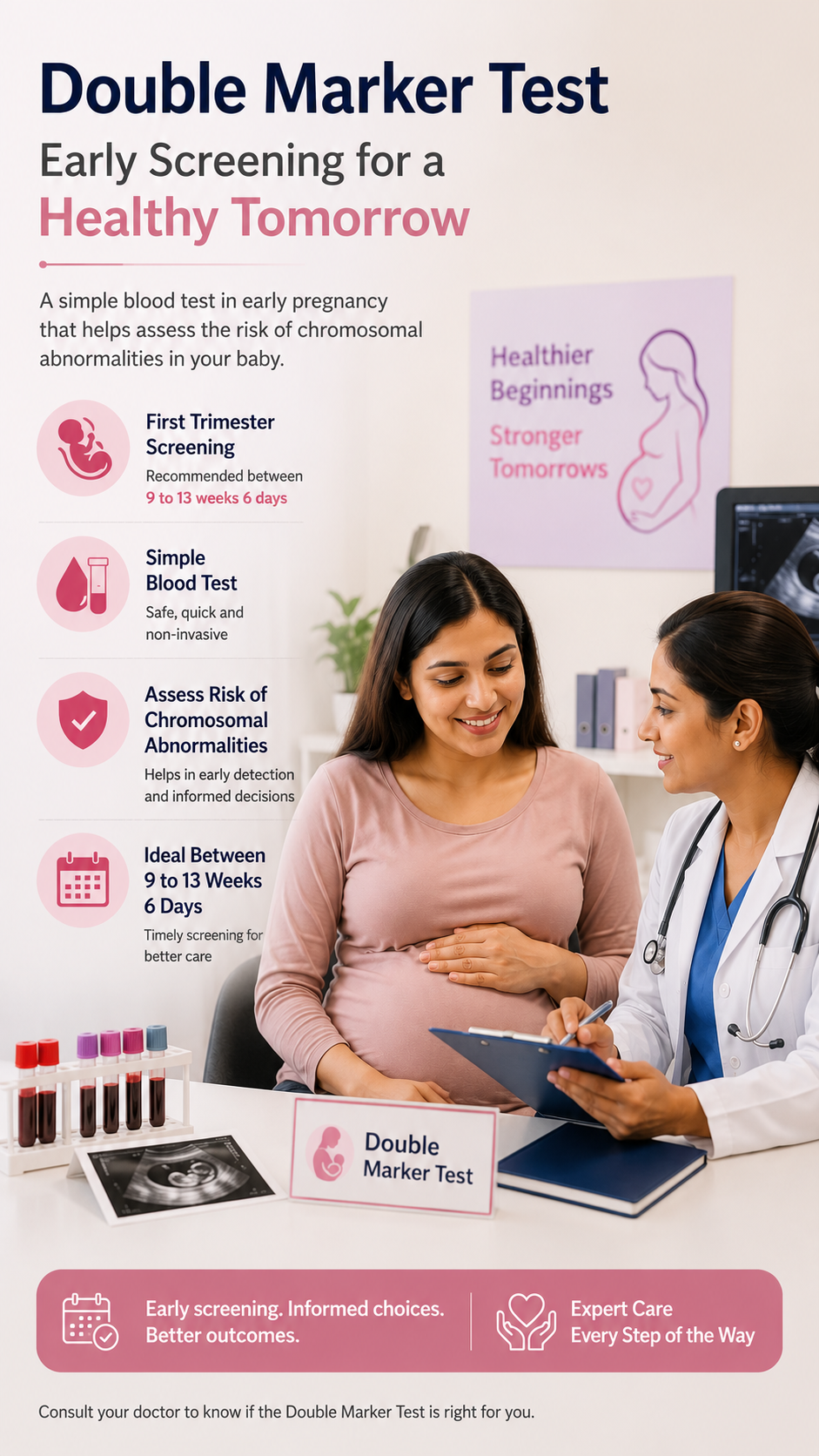
The recommended double marker test weeks are typically between 9 and 13 weeks 6 days of pregnancy. For increased accuracy, it is frequently used with a Nuchal Translucency (NT) ultrasonography and measures two markers: Free Beta-hCG and PAPP-A.
Screening for Chromosomal Conditions
Assessing the baby’s risk for chromosomal abnormalities, such as Down syndrome (trisomy 21), Edwards syndrome (trisomy 18), and Patau syndrome (trisomy 13), is the main goal of the test. Elevated risk is indicated by abnormal marker levels, although this is a screening method rather than a diagnosis.
Assessing Pregnancy Health
While Free Beta-hCG shows how effectively the placenta is working, PAPP-A levels show placental development. When combined, they provide medical professionals with an early picture of whether the pregnancy is going according to plan. Your doctor can evaluate the general health of your pregnancy by knowing what your double marker test result indicates and comparing it to double marker test normal values.
Identifying High-Risk Pregnancies
Maternal age, gestational age, NT ultrasound results, and family history are all taken into consideration when interpreting the results. In order to prevent needless intrusive treatments for low-risk pregnancies, a high-risk result (usually 1:250 or higher) may suggest additional testing, such as NIPT, CVS, or amniocentesis.
Supporting Early Pregnancy Care
There is no risk to the mother or child during the straightforward double marker test process, which just requires a blood sample. Because it is a first-trimester test, it allows for early intervention, including more careful observation, prompt referrals to specialists, and well-informed decision-making. It is especially advised for pregnancies conceived through IVF, women over 35, and those with a history of chromosomal abnormalities.
The double marker test is an essential component of contemporary prenatal care because it is safe, non-invasive, and informative.
What Does a Double Marker Test Detect?
As previously stated, the Double Marker Test is a prenatal screening test used in the first trimester to determine the likelihood of specific chromosomal abnormalities in the developing fetus. The Double Marker Test has multiple uses:
Risk of Down Syndrome
Trisomy 21, or Down syndrome, is a common chromosomal defect that can be detected via screening. With the help of a double marker test, we measure Free Beta-hCG and PAPP-A levels, which are typically elevated and reduced respectively in affected pregnancies. Early identification allows parents and doctors to prepare a more informed care plan.
Risk of Edward Syndrome (Trisomy 18)
The next stage is to determine the probability of this uncommon genetic disorder, which is commonly referred to as Trisomy 18. Early screening is essential because newborns with trisomy 18 frequently have serious cardiac problems, developmental delays, and organ abnormalities.
Identifying Patau Syndrome (Trisomy 13)
These tests help evaluate the probability of this dangerous genetic disorder which impacts the growth of the heart, brain, and other essential organs. Trisomy 13 has serious health consequences and is linked to a high rate of pregnancy loss, while being less frequent than Down syndrome.
The following variables may have an impact on the outcome:
- Maternal age: The baseline risk may be higher for older mothers.
- Gestational age: Interpreting data requires precise dates.
- Ultrasound results: The blood test is supplemented by measurements such as nuchal translucency.
Who Should Get a Double Marker Test?
For pregnant women who wish to determine the likelihood of chromosomal abnormalities in their unborn child during the first trimester, a double marker test is typically advised. All expecting mothers can benefit from it, but women with certain risk factors or medical history should pay special attention to it. Here are the common categories of women who should get a double marker test:
Pregnant Women in the First Trimester
It is observed that the most accurate results come between 10 and 14 weeks of pregnancy which makes it the ideal time to go for the double marker test. You’ll have plenty of time to act on the results if you are screened during this window, whether it’s obtaining additional diagnostic testing or simply finding peace of mind early in the pregnancy process.
Women Aged 35 Years and Above
Mothers who are older than 35 or have a family history of genetic issues should go for early screening. The double marker test is especially important since certain pregnancies are more prone to chromosomal abnormalities because of specific factors, like IVF-conceived pregnancies.
High-Risk Pregnancies
For women who are deemed high-risk due to conditions like diabetes, hypertension, or thyroid problems, the double marker test is strongly advised. When combined with inaccurate double marker test findings, these conditions can affect fetal growth independently and provide a more complete picture of the pregnancy’s health. Early screening in these cases allows for more individualized prenatal treatment plans beginning in the first trimester and closer supervision.
Family History of Genetic
The double marker test is a crucial initial step in prenatal screening if either parent has a known genetic condition or a family history of chromosomal abnormalities. The baseline risk for subsequent pregnancies is considerably increased if a previous kid or close relative has been diagnosed with Down syndrome, trisomy 18, or trisomy 13. In these situations, the double marker test report acts as a preliminary checkpoint to determine whether more conclusive diagnostic procedures, such as CVS or amniocentesis, are required.
Who Should Consider a Double Marker Test?
Pregnant women between 9 and 13 weeks 6 days of pregnancy
Women aged 35 years or older
Women with a high-risk pregnancy
Women with a family history of genetic disorders
Women who have conceived through IVF or assisted reproductive technology (ART)
Women with a previous pregnancy affected by chromosomal abnormalities
Women advised by their obstetrician or fertility specialist to undergo first-trimester prenatal screening
How Is the Double Marker Test Performed?
Book Your Appointment

Understanding Your Double Marker Test Results
The Double Marker Test results are reported as a risk ratio, indicating the likelihood of certain chromosomal abnormalities. Your doctor interprets these results along with your NT scan findings, gestational age, and medical history to determine the next steps.
Reference ranges can vary slightly between laboratories and assay kits.
Low-Risk Result
Indicates a lower likelihood of chromosomal abnormalities based on the screening.
High-Risk Result
Indicates a higher likelihood of chromosomal abnormalities and may require further evaluation.
Risk Ratio
Represents the estimated chance of the baby having a chromosomal abnormality.
Factors That May Affect Double Marker Test Results
Several maternal and pregnancy-related factors can influence the accuracy and interpretation of a Double Marker Test. Providing complete medical information helps ensure more reliable screening results.

Maternal Age
The mother's age is an important factor in calculating the risk of chromosomal abnormalities.

Gestational Age
Accurate pregnancy dating is essential, as the test is most reliable between 9 and 13 weeks 6 days of pregnancy.

Multiple Pregnancy
Twin or multiple pregnancies can influence the levels of screening markers and affect result interpretation.

NT Scan Findings
Nuchal translucency (NT) scan measurements are combined with blood test results to improve screening accuracy.

Maternal Medical History
Certain medical conditions, medications, or IVF pregnancies may influence test results and should be shared with your doctor.
When is the Double Marker Test Performed?
The double marker test for pregnancy is typically performed during the first trimester, between 9 and 13 weeks 6 days of gestation. It is often recommended along with the NT (Nuchal Translucency) scan for more accurate prenatal screening results.
Double Marker Test Procedure
It is a simple process, here the steps involved in it:
- The pregnant woman’s blood is collected. There is no risk to the infant and it is straightforward and non-invasive.
- The lab measures the levels of PAPP-A and free β-hCG.
- A risk figure (such as “1 in 250”) is computed by combining these marker levels with additional variables (such as maternal age, gestational age, and ultrasound measures).
Little preparation: Fasting is usually not necessary. The most important factors are precise pregnancy dates and a trustworthy ultrasound.
Understanding Double Marker Test Results
After the double marker test is finished, the results are usually shown as a risk ratio instead of just a positive or negative result. You and your doctor can decide on the next course of treatment for your pregnancy if you know how to interpret the results of your double marker test.
Low-Risk Result
A low-risk result indicates that the estimated likelihood of a chromosomal anomaly is less than the typical cutoff, which is often a ratio of 1:1000 or below. This suggests that disorders like Down syndrome or trisomy 18 are unlikely to have an impact on the pregnancy. A low-risk result, however, does not totally rule out the possibility, which is why it is always examined in conjunction with the results of the NT ultrasound and the mother’s medical history. A low-risk double marker test result provides a great deal of comfort to the majority of women during the first trimester.
High-Risk Result
A high-risk result usually indicates an increased probability of a chromosomal condition, with a risk ratio of 1:250 or greater. It is crucial to realize that a high-risk result only indicates that additional testing is advised; it is not a diagnosis. To acquire a definitive answer, your doctor might recommend confirmatory tests like CVS, amniocentesis, or NIPT. Many women who test positive for high-risk double markers go on to have safe pregnancies.
Risk Ratio Explained
A ratio, like 1:100 or 1:1200, is used to express the double marker test result. The likelihood of a chromosomal aberration is represented by this figure. A ratio of 1:100, for instance, indicates that 1 in 100 births with comparable marker levels and maternal profiles may be impacted. Free Beta-hCG levels, PAPP-A levels, maternal age, gestational age, and NT ultrasound measures are all used to get the ratio. Determining whether a ratio is alarming or comforting requires an understanding of double marker test normal values where PAPP-A and Beta-hCG are within the predicted range for gestational age.
How Long Do Results Take?
Although some labs may provide findings earlier, the majority of double marker test reports are available three to five working days after the date of the blood sample. For a combined first-trimester risk assessment, the results of the test and an NT ultrasound are typically evaluated together. It is advisable to schedule a follow-up appointment with your doctor as soon as results are available so they can be interpreted accurately in the context of your overall pregnancy health.
What Happens If the Double Marker Test Is Positive?
Although a positive or high-risk double marker test result may seem overwhelming, it’s crucial to keep in mind that it’s not a definitive diagnosis. It simply means that more testing is required since the pregnancy has a higher-than-average chance of a chromosomal abnormality. What usually happens is as follows:
Genetic Counseling
Seeing a genetic counselor is the first advised course of action following the results of a high-risk double marker test. In order to help you and your family navigate the process with clarity and confidence, they offer emotional support, explain the potential next steps, and assist in interpreting what the risk ratio implies for your particular circumstance.
Confirmatory Diagnostic Tests
To confirm or rule out a chromosomal issue, your doctor might suggest one or more of the following tests:
- The Non-Invasive Prenatal Test, or NIPT, is a very precise blood test that examines fetal DNA from the mother’s blood.
- Amniocentesis: Usually carried out after 15 weeks, this operation involves testing a small sample of amniotic fluid for chromosomal abnormalities.
- Chorionic Villus Sampling, or CVS, is a placental tissue sample obtained for chromosomal analysis between 10 and 13 weeks.
Increased Monitoring
Even before confirmatory results arrive, your doctor will likely schedule more frequent ultrasounds and check-ins to closely monitor fetal development and overall pregnancy health.
Emotional Support and Preparation
Getting a high-risk result is a very personal experience, regardless of the outcome. During this time, many couples find it helpful to talk to a counselor or join a support group. A positive double marker test initiates a dialogue rather than a conclusion, providing families with the knowledge they need to plan, prepare, and make the best choices.
Benefits of a Double Marker Test

Early Risk Assessment
Identifies the risk of chromosomal abnormalities during the first trimester of pregnancy.

Safe & Non-Invasive
Requires only a simple blood sample, making it safe for both the mother and the developing baby.

Supports Healthy Pregnancy Care
Helps doctors monitor pregnancy more closely and recommend appropriate prenatal care when needed.



Not sure what your Double Marker Test result means for you?
Get a free, no-obligation read on your numbers from one of our fertility specialists.
Average response time: under 30 minutes
Risks and Side Effects of a Double Marker Test
The Double Marker Test is a safe and non-invasive prenatal screening test that involves only a routine blood sample. It poses no risk to the mother or the developing baby, with only minor discomfort that may occur during blood collection.
Minimal Risks
- Mild pain or discomfort at the blood draw site.
- Temporary bruising or slight swelling may occur.
- No risk to the developing baby.
- No recovery time or special care is required after the test.
What Happens After the Double Marker Test?
Results Review
Your doctor evaluates the test results together with your NT scan, gestational age, and medical history to assess the baby's risk of chromosomal abnormalities.
Specialist Consultation
Your healthcare provider explains the findings, discusses their significance, and answers any questions you may have.
Further Testing (If Needed)
If the screening indicates a higher risk, additional tests such as NIPT, CVS, or amniocentesis may be recommended for confirmation.
Ongoing Pregnancy Care
Based on the results, your doctor will recommend routine prenatal care or a personalised pregnancy management plan to support you throughout your pregnancy.
Related Fertility Tests


Why Choose Birla Fertility for Diagnostic Test
Accurate diagnostics are the foundation of every fertility plan we build — here's what sets our testing experience apart.
120+
Fertility Experts
2 Lakh+
Patients Treated
50+
Clinics in India
NABL
Accredited Labs
Top IVF Centers in Popular Cities
- IVF Center in Delhi
- IVF Center in New Town Kolkata
- IVF Center in Gurgaon
- IVF Center in Rewari
- IVF Center in Lucknow
- IVF Center in Varanasi
- IVF Center in Gorakhpur
- IVF Center in Noida
- IVF Center in Prayagraj
- IVF Center in Meerut
- IVF Center in Kolkata
- IVF Center in Howrah
- IVF Center in Bhubaneswar
- IVF Center in Cuttack
- IVF Center in Surat
- IVF Center in Ahmedabad
- IVF Center in Ranchi
- IVF Center in Chandigarh
- IVF Center in Guwahati
- IVF Center in Raipur
- IVF Center in Jaipur
- IVF Center in Nagpur
- IVF Center in Hyderabad
- IVF Center in Indore
- IVF Center in Bhopal
- IVF Center in Kozhikode
- IVF Center in Kannur
- IVF Center in Mangalore
- IVF Center in Palakkad
- IVF Center in Salem
- IVF Center in Thrissur
- IVF Center in Bangalore
- IVF Center in Kolar
- IVF Center in Mumbai
- IVF Center in Vijayapura
- IVF Center in Chennai
- IVF Center in Patna
- IVF Center in Perinthalmanna
- IVF Center in Siliguri
- IVF Center in Gachibowli
Frequently Asked Questions About Double Marker Test
The normal double marker report indicates a low risk of chromosomal abnormalities which is a ratio lower than 1:250. It means the risk for conditions like Down syndrome, Edwards syndrome, and Patau syndrome are lower.