
 Our Centers
 Select City


 Select City
Endometrial Receptivity Array (ERA)
The uterus must be receptive to the embryo when the time has been reached for successful implantation to take place. The Endometrial Receptivity Array (ERA) is a specialised test that determines whether the uterine lining is in a receptive state to implantation. Often used in certain cases of IVF, the endometrial receptivity array test can help fertility specialists plan embryo transfer timing in a way that improves pregnancy outcomes.
Consult an Expert
Get a free callback from our fertility specialists

What is the Endometrium?
Your endometrium is the inner lining of your uterus where your embryo will implant and develop during your pregnancy. The endometrium lining keeps changing throughout your menstrual cycle in response to hormones such as estrogen and progesterone and typically reaches an optimal thickness and receptiveness around the time of your ovulation to support implantation. For pregnancy to happen, the embryo must successfully attach to a healthy endometrium.
What is Endometrial Receptivity?
Endometrial receptivity is the ability of the uterine lining to permit an embryo to attach (implant) successfully. Endometrial receptivity has a distinct time window called the window of implantation which typically opens a few days post-ovulation or progesterone exposure. For most women, this window happens at a predictable time, but for others the window is shifted and thus an early or late transfer can result in poor implantation chances even with good quality embryos.
What is an ERA Test?
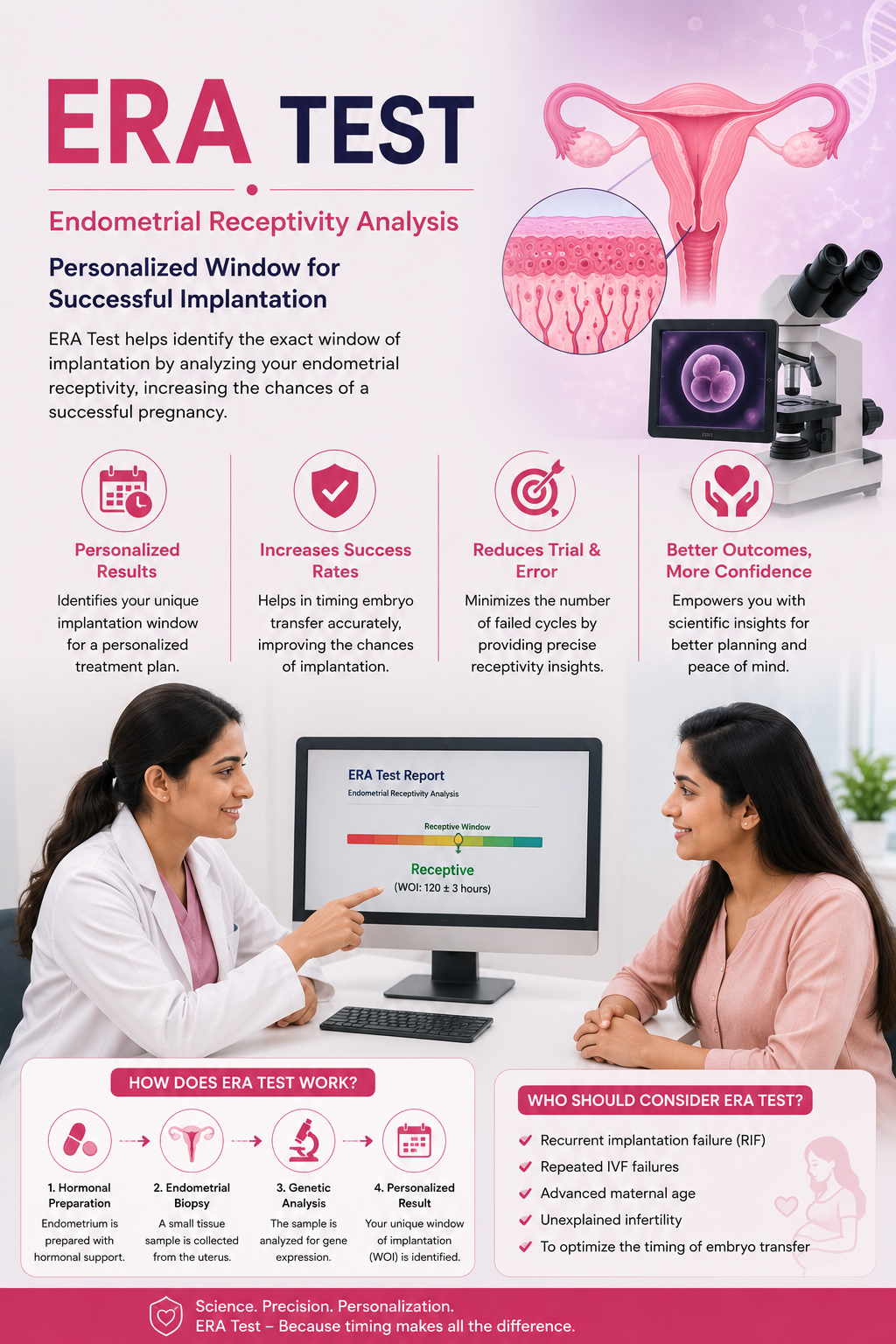
The ERA test which is also known as the Endometrial Receptivity Array is a diagnostic test that examines the genetic activity of the endometrium to find out whether it is ready for embryo implantation.
Unlike ultrasound scans, which assess the thickness and appearance of the uterine lining, the endometrial receptivity array test examines the expression of hundreds of genes associated with implantation. This helps identify whether the endometrium is receptive at the time of testing.
ERA Test in IVF
The ERA test, as part of the IVF process, is usually performed during a mock embryo transfer cycle. A sample of the endometrial tissue is collected and sent for analysis at a specialised laboratory. Once the results are obtained, they help fertility specialists make a decision about when the embryo transfer will take place or if there is a need for customisation of timing corresponding to the patient’s specific implantation window.
How Does ERA Work?
The Endometrial Receptivity Array (ERA) analyses the activity of genes involved in embryo implantation to determine whether the uterine lining is ready to receive an embryo. During the ERA procedure, a small endometrial sample is collected through an ERA biopsy and sent to a specialised laboratory for analysis.
By evaluating gene expression patterns, the endometrial receptivity array test helps identify a woman’s unique window of implantation, allowing fertility specialists to personalise the timing of embryo transfer when needed.
Why is the ERA Test Done?
The main purpose of the ERA test is to determine the most appropriate time to transfer your embryo to the uterus.
Your embryos need to be of good quality, however it also relies on the receptiveness of the endometrial lining. The test helps determine whether the endometrium is receptive when the embryo transfer is planned.
An ERA may be recommended to:
- Investigate possible implantation-related issues
- Identify a displaced window of implantation
- Personalise embryo transfer timing
- Improve treatment planning in selected IVF patients
- Provide additional information after unsuccessful IVF cycles
Who Needs an ERA Test?
The ERA test is only advised in certain cases and not everyone undergoing IVF is advised to undergo this test. Your fertility specialist may suggest an ERA test if you:
- Have experienced recurrent implantation failure
- Have had multiple unsuccessful IVF cycles despite good-quality embryos
- Have undergone transfers of genetically tested embryos without pregnancy
- Have unexplained repeated embryo transfer failures
- Wish to explore personalised embryo transfer strategies
At What Point During IVF Should Women Undergo ERA Testing?
The ERA test procedure is often completed prior to the actual embryo transfer cycle. Most fertility clinics do this during a mock cycle, which closely resembles the hormonal preparation required for a frozen embryo transfer. This allows the endometrium to develop under conditions similar to those planned for the actual IVF treatment.
The information gained from the ERA test is then utilised when preparing for the actual future embryo transfer cycle.
ERA Test Procedure: Step by Step
Understanding the ERA procedure can help reduce anxiety and prepare you for what to expect.
Step 1: Endometrial Preparation
The process starts with preparing the uterine lining with the help of hormones. Based on your treatment plan, you may be suggested orstrogen and progesterone medicines to mimic the conditions of an IVF cycle.
The timing of progesterone exposure plays a critical role in determining the receptivity of endometrium, therefore, it is carefully monitored.
Step 2: Endometrial Biopsy
An ERA biopsy is performed after the uterine lining is prepared. A thin catheter is gently inserted through the cervix to collect a small sample of endometrial tissue. The procedure is usually completed within a few minutes and is performed without general anaesthesia.
Some women may experience the following symptoms which usually resolve in 1-2 days.
- Mild cramping
- Temporary pelvic discomfort
- Light spotting after the procedure
Step 3: Genetic Analysis
The biopsy sample is sent to a specialised laboratory for analysis.
Scientists evaluate the activity of hundreds of genes associated with implantation. The genetic profile helps determine whether the endometrium is receptive or non-receptive at the time the sample was collected.
Step 4: Report Generation
The laboratory generates a detailed report that identifies the receptivity status of the endometrium.
Based on these findings, your fertility specialist can recommend the most appropriate timing for embryo transfer in future treatment cycles.
Book Your Appointment

Understanding Your Results
The ERA test results help determine whether your endometrium (uterine lining) is ready to receive an embryo at the planned time of embryo transfer. Based on the findings, your fertility specialist may recommend maintaining the same transfer schedule or adjusting the timing to match your individual window of implantation.
Reference ranges can vary slightly between laboratories and assay kits.
What do normal results mean?
A receptive result indicates that the uterine lining is prepared for embryo implantation during the tested period, suggesting that embryo transfer can be scheduled according to the planned timeline.
What do abnormal results mean?
Pre-receptive, post-receptive, or non-receptive results indicate that the timing of embryo transfer may need adjustment. Your fertility specialist may create a personalised embryo transfer plan to better align with your unique implantation window.
What Are the Possible ERA Test Outcomes?
The Endometrial Receptivity Array test indicates whether the uterine lining is ready to receive an embryo at the time the sample is collected. Possible outcomes include:
Receptive
A receptive result indicates that the endometrium is prepared for implantation during the tested window. In most cases, the same timing can be used for a future embryo transfer cycle.
Pre-Receptive
A pre-receptive result means the endometrium has not yet reached its optimal implantation window. This suggests that additional progesterone exposure may be required before embryo transfer.
Post-Receptive
A post-receptive result indicates that the implantation window may have already passed at the time of testing. In such cases, embryo transfer may need to be scheduled earlier in a future cycle.
Non-Receptive
A non-receptive result generally means that the timing of implantation may differ from the standard protocol. Your fertility specialist may recommend adjustments to create a personalised embryo transfer plan.
ERA Test IVF Success Rate
Many patients ask about the ERA test IVF success rate. Though some studies have indicated better implantation rates in some patients who suffer from recurrent implantation failure, the benefits of the test vary on basis of several parameters such as embryo quality, maternal age, uterine health or any underlying fertility problem. Based on all these factors, your fertility specialist may be able to determine if the ERA test will work in your case or not.
Risks of the ERA Test
The ERA test is normally considered safe, however like any other medical procedure, it may involve some temporary side effects, such as
| Risk | Description |
| Mild cramping | Similar to menstrual cramps during or shortly after the biopsy |
| Light spotting | Minor vaginal bleeding may occur for a day or two |
| Pelvic discomfort | Temporary discomfort following the procedure |
| Infection | Rare but possible with any uterine procedure |
| Vasovagal reaction | Some women may feel dizzy or faint briefly during the biopsy |
How Much Does an ERA Test Cost in IVF?
The ERA test cost in India ranges anywhere between ₹60,000 and ₹90,000, depending on
- The fertility clinic
- Laboratory charges
- Consultation fees
- Medication used during the mock cycle
- Additional diagnostic investigations
It is important to discuss the complete cost breakdown with your fertility clinic before proceeding so that you stay informed right from the beginning.
Benefits of the ERA Test in IVF

Personalised Embryo Transfer Timing
The test helps identify your individual window of implantation rather than relying solely on standard treatment protocols.

Additional Insight After Failed IVF Cycles
For women who have experienced repeated implantation failure, the ERA test may provide useful information about endometrial receptivity.

Improved Treatment Planning
The results can help fertility specialists make informed decisions regarding the timing of embryo transfer.



Not sure what your Endometrial Receptivity Array (ERA) Test means for you?
Get a free, no-obligation read on your numbers from one of our fertility specialists.
Average response time: under 30 minutes
Risks and Side Effects of the ERA Test
The ERA test is generally considered safe and well-tolerated. However, because it involves an endometrial biopsy, some women may experience mild and temporary side effects after the procedure.
Common Side Effects
- Mild cramping similar to menstrual pain
- Light vaginal spotting for 1–2 days
- Temporary pelvic discomfort
- Mild fatigue after the procedure
Rare Risks
- Infection following the biopsy
- Excessive bleeding
- Temporary dizziness or fainting (vasovagal reaction)
- Increased pelvic pain requiring medical attention
What Happens After the Test?
Results Review
Your fertility specialist reviews the ERA test report to determine whether your endometrium was receptive at the time of testing.
Personalised Treatment Planning
Based on the results, your doctor may recommend maintaining the current embryo transfer schedule or adjusting the timing to better match your implantation window.
Embryo Transfer Preparation
The findings are used to plan a future embryo transfer cycle with the goal of transferring the embryo when the uterine lining is most receptive.
Follow-Up Consultation
Your healthcare provider discusses the results, answers any questions, and explains the next steps in your fertility treatment plan.
Related Fertility Tests


Why Choose Birla Fertility for Diagnostic Test
Accurate diagnostics are the foundation of every fertility plan we build — here's what sets our testing experience apart.
120+
Fertility Experts
2 Lakh+
Patients Treated
50+
Clinics in India
NABL
Accredited Labs
Top IVF Centers in Popular Cities
- IVF Center in Delhi
- IVF Center in New Town Kolkata
- IVF Center in Gurgaon
- IVF Center in Rewari
- IVF Center in Lucknow
- IVF Center in Varanasi
- IVF Center in Gorakhpur
- IVF Center in Noida
- IVF Center in Prayagraj
- IVF Center in Meerut
- IVF Center in Kolkata
- IVF Center in Howrah
- IVF Center in Bhubaneswar
- IVF Center in Cuttack
- IVF Center in Surat
- IVF Center in Ahmedabad
- IVF Center in Ranchi
- IVF Center in Chandigarh
- IVF Center in Guwahati
- IVF Center in Raipur
- IVF Center in Jaipur
- IVF Center in Nagpur
- IVF Center in Hyderabad
- IVF Center in Indore
- IVF Center in Bhopal
- IVF Center in Kozhikode
- IVF Center in Kannur
- IVF Center in Mangalore
- IVF Center in Palakkad
- IVF Center in Salem
- IVF Center in Thrissur
- IVF Center in Bangalore
- IVF Center in Kolar
- IVF Center in Mumbai
- IVF Center in Vijayapura
- IVF Center in Chennai
- IVF Center in Patna
- IVF Center in Perinthalmanna
- IVF Center in Siliguri
- IVF Center in Gachibowli
Frequently Asked Questions
The process itself is not painful. However, many women experience mild cramping during the biopsy similar to period pain. The discomfort is usually temporary and goes away in a day or two.