
 Our Centers
 Select City


 Select City
Triple Marker Test
A woman has to undergo multiple screening tests during pregnancy which help assess the growth of the baby. One such test is the Triple Marker Test. It is a second-trimester prenatal screening tests which is useful in estimating the risk of certain chromosomal abnormalities and neural tube defects. The triple marker test is a simple and non-invasive test which is conducted through mother’s blood sample.
Consult an Expert
Get a free callback from our fertility specialists

What is the Triple Marker Test?
The Triple Marker Test is a part of prenatal screening that is generally performed during the second trimester of pregnancy. Three substances (AFP, hCG, uE3) in the mother’s blood are analysed to determine the probability of the baby having particular chromosomal and developmental abnormalities. It is not a typical diagnostic test, meaning it does not definitively determine if the baby has a specific condition, but rather highlights pregnancies that require further testing or observation.
How Does the Triple Marker Test Work?
Placenta and the growing baby release multiple hormones and proteins that circulate in the bloodstream of mother. The triple marker test examines the levels of three of these substances and checks if these match with the expected levels for that phase of pregnancy.
The results are combined with factors such as:
- Maternal age
- Gestational age
- Maternal weight
- Medical history
A risk calculation is generated based on this information. If the risk is found to be higher than expected, the doctor may recommend further screening.
Procedure of Triple Marker Test
The procedure is simple and usually completed during a routine prenatal visit. Typically the steps are
- Review of pregnancy details and gestational age.
- Collecting a blood sample from the mother’s arm.
- Sending the sample to a laboratory for analysis.
- Preparing a report based on the measured marker levels.
What Does the Triple Marker Test Measure?
The Triple Marker Test measures three key markers:
Alpha-Fetoprotein (AFP): The baby’s liver produces this protein. An abnormal level might suggest a higher risk of neural tube defects or chromosomal problems.
Human Chorionic Gonadotropin (hCG): The placenta produces this hormone which may provide valuable information about the health of the pregnancy and development of the baby.
Unconjugated Estriol (uE3): This type of oestrogen is produced by the placenta and the fetus. A result lower than expected may indicate the presence of certain chromosomal conditions.
Taken together, the three results can help to assess pregnancy risks more effectively.
Purpose of Triple Marker Test
The key purpose of the Triple Marker test is to find out whether the pregnancy has a risk of certain chromosomal abnormalities. It acts as an early screening tool that helps doctors assess whether additional testing is required.
Why is Triple Marker Screening Important During Pregnancy?
A large number of birth defects and chromosomal abnormalities cannot be seen by clinical assessment during pregnancy. This screening test helps in the diagnosis of possible problems prior to birth thus allowing timely medical intervention.
There are several advantages of doing triple marker screening:
- Helps detect risk of genetic disorders
- Identifies pregnancy at higher risk that may need further evaluation
- Supports informed decision making regarding pregnancy
- Gives peace of mind, if you know that your result is within the normal limit
- Guides on any additional prenatal screening
Conditions Detected Through the Triple Marker Test
The Triple Marker Test helps estimate the risk of several conditions including:
Down Syndrome: Also, called trisomy 21, it is a genetic condition caused by an extra copy of chromosome 21. It can affect physical development, learning ability and overall health.
Edwards Syndrome: Also called Trisomy 18, it is a rare chromosomal disorder caused by an extra chromosome 18. It is associated with severe developmental abnormalities.
Neural Tube Defects (NTDs): These occur when the baby’s brain or spinal cord does not develop properly during early pregnancy. Spina bifida is one of the most common examples.
Other Pregnancy-Related Concerns: Abnormal marker levels may occasionally indicate placental issues, fetal growth concerns, or inaccurate pregnancy dating.
When is the Triple Marker Test Needed in Pregnancy?
Timing becomes crucial when it comes to the accurate interpretation of the Triple Marker Test. Let’s find out the ideal time.
Ideal Time for Triple Marker Test
The Triple Marker Test is normally recommended between the 15th and 20th week of pregnancy since this is the duration which is considered reliable for obtaining accurate results. If the test is done within this recommended timeframe, it helps ensure better risk calculations.
How Long Does the Test Take?
The blood collection happens within a few minutes. Including registration and sample collection, the appointment is generally completed within 15 to 30 minutes. Results can be collected the same day or within 2-3 days depending on the lab.
Uses of the Triple Marker Test
The following are some of the uses that the Triple Marker Test offers:
Screening for Chromosomal Abnormalities
One of the primary uses of the test is to estimate the risk of chromosomal abnormalities. Changes in AFP, hCG and uE3 levels may indicate an increased likelihood of:
- Down syndrome: It is a genetic condition which occurs due to the presence of an extra copy of chromosome 21. It leads to developmental delays and distinct physical features.
- Edwards syndrome: It is a rare chromosomal disorder caused by an extra chromosome 18. It is generally associated with severe developmental and health complications.
The results help doctors determine whether additional testing may be beneficial.
Screening for Neural Tube Defects
The Triple Marker Test is also beneficial for identifying the pregnancies which are at a high risk of neural tube defects. Increased AFP levels can sometimes point towards abnormalities involving the brain, spinal cord or spine. Detailed ultrasound examinations are often recommended if a risk is suspected.
Assessing Pregnancy Risk Factors
Apart from chromosomal conditions, abnormal marker levels may occasionally signal:
- Placental abnormalities: These are the issues linked with development and functioning of placenta. Placenta is crucial for the supply of nutrients and oxygen to the baby.
- Fetal growth concerns: It can be assessed if the baby is growing slower or faster than expected for that particular stage of pregnancy.
- Multiple pregnancies: If a woman is carrying twins or more can naturally change marker levels in the blood.
- Incorrect estimation of gestational age: Test results may also appear abnormal despite the pregnancy is healthy if pregnancy dates are miscalculated.
Who Should Consider a Triple Marker Test?
You are 35+ years of age.
There is a family history of genetic disorders.
You have had a previous pregnancy affected by a chromosomal abnormality.
An ultrasound has shown unusual findings.
You have experienced recurrent pregnancy loss.
You want additional information about your baby's health during pregnancy.
What Happens During the Triple Marker Test?
Book Your Appointment

Triple Marker Test Results and Interpretation
It is important to understand that Triple Marker Test results only indicate risk levels and do not provide a definitive diagnosis.
Reference ranges can vary slightly between laboratories and assay kits.
Normal Triple Marker Test Results
A normal result usually means that the level of markers is in the normal range for your stage of pregnancy, making it unlikely that the conditions for which screening is done are present. However, no screening test can completely rule out all genetic and developmental problems in a baby.
What Does the Triple Marker Test Measure?
The Triple Marker Test measures three key markers:
Alpha-Fetoprotein (AFP)
The baby's liver produces this protein. An abnormal level might suggest a higher risk of neural tube defects or chromosomal problems.
Human Chorionic Gonadotropin (hCG)
The placenta produces this hormone which may provide valuable information about the health of the pregnancy and development of the baby.
Unconjugated Estriol (uE3)
This type of oestrogen is produced by the placenta and the fetus. A result lower than expected may indicate the presence of certain chromosomal conditions.
Difference Between the Double Marker and the Triple Marker Test
Both tests are used for prenatal screening but they vary in timing and parameters.
Differentiation Based on Parameters
| Double Marker Test | Triple Marker Test |
It measures:
|
It measures:
|
| It is usually performed during the first trimester. | It is suggested during the second trimester. |
Differentiation Based on Accuracy and Screening Capability
- The Double Marker Test is commonly combined with an NT scan and provides early screening for chromosomal abnormalities.
- The Triple Marker Test offers additional screening for neural tube defects through AFP measurement making it valuable during the second trimester.
Which Test is Recommended?
Whether an individual should undergo double marker or triple marker test, it largely depends on the stage of pregnancy and the advice of your doctor.
If first trimester screening has already been completed, additional testing may not always be necessary. However, women who miss early screening are often advised to undergo the Triple Marker Test during the second trimester.
Triple Marker Test Accuracy
The Triple Marker Test is a reliable screening tool but it is not a diagnostic test. Its role is to estimate risk rather than confirm a condition.
Factors Affecting the Accuracy of Triple Marker Test
A number of factors can influence the accuracy of results:
- Incorrect gestational age calculation
- Maternal age
- Maternal weight
- Multiple pregnancies
- Certain medical conditions
Limitations of Triple Marker Screening
The triple marker test has some limitations such as
- It cannot diagnose genetic disorders
- False positive results may occur
- False negative results are also possible
- Not all birth defects can be detected through screening
For this reason, abnormal results often require further evaluation.
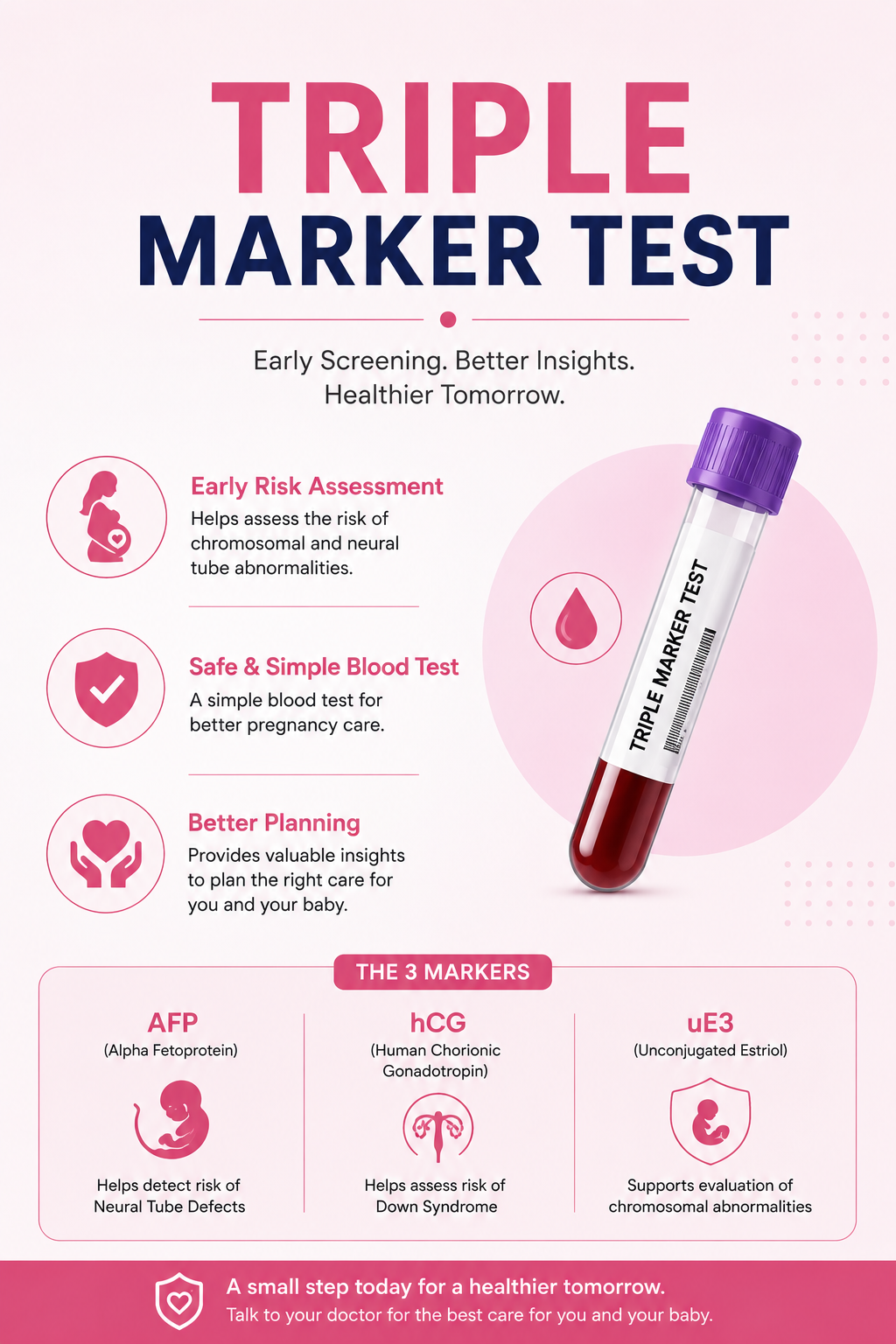
Benefits of the Triple Marker Test

Early Risk Assessment
Screens for the risk of certain chromosomal abnormalities and neural tube defects during pregnancy.

Simple & Safe
Requires only a routine blood sample with no special preparation.

Supports Timely Decision-Making
Helps identify pregnancies that may need additional screening or diagnostic tests.



Not sure what your Triple Marker Test means for you?
Get a free, no-obligation read on your numbers from one of our fertility specialists.
Average response time: under 30 minutes
Risks and Side Effects of Triple Marker Test
The Triple Marker Test is considered safe for both the mother and baby because it only requires a routine blood sample. Side effects, if any, are usually mild and temporary.
Common Side Effects
- Mild pain at the needle site
- Temporary bruising
- Minor bleeding
- Brief dizziness in some individuals
Rare Risks
- Infection at the blood collection site (rare)
- Fainting during or shortly after the blood draw
- Excessive bleeding in people with bleeding disorders or those taking blood-thinning medications
What Happens After a Triple Marker Test?
Doctor Consultation
Review your screening report together with your medical history and ultrasound findings. Your doctor will explain the results and discuss the appropriate next steps.
Additional Investigations
If a higher-than-average risk is identified, your doctor may recommend further tests such as a detailed ultrasound examination, Non-Invasive Prenatal Testing (NIPT), or other assessments.
Confirmatory Testing & Genetic Counselling
If required, confirmatory diagnostic tests such as amniocentesis may be advised. Genetic counselling can help you understand the findings, possible risks, and available options.
Follow-Up Plan
Based on your results, your doctor will create a personalised follow-up plan, including any additional monitoring, testing, or pregnancy care recommendations.
Related Fertility Tests


Why Choose Birla Fertility for Diagnostic Test
Accurate diagnostics are the foundation of every fertility plan we build — here's what sets our testing experience apart.
120+
Fertility Experts
2 Lakh+
Patients Treated
50+
Clinics in India
NABL
Accredited Labs
Top IVF Centers in Popular Cities
- IVF Center in Delhi
- IVF Center in New Town Kolkata
- IVF Center in Gurgaon
- IVF Center in Rewari
- IVF Center in Lucknow
- IVF Center in Varanasi
- IVF Center in Gorakhpur
- IVF Center in Noida
- IVF Center in Prayagraj
- IVF Center in Meerut
- IVF Center in Kolkata
- IVF Center in Howrah
- IVF Center in Bhubaneswar
- IVF Center in Cuttack
- IVF Center in Surat
- IVF Center in Ahmedabad
- IVF Center in Ranchi
- IVF Center in Chandigarh
- IVF Center in Guwahati
- IVF Center in Raipur
- IVF Center in Jaipur
- IVF Center in Nagpur
- IVF Center in Hyderabad
- IVF Center in Indore
- IVF Center in Bhopal
- IVF Center in Kozhikode
- IVF Center in Kannur
- IVF Center in Mangalore
- IVF Center in Palakkad
- IVF Center in Salem
- IVF Center in Thrissur
- IVF Center in Bangalore
- IVF Center in Kolar
- IVF Center in Mumbai
- IVF Center in Vijayapura
- IVF Center in Chennai
- IVF Center in Patna
- IVF Center in Perinthalmanna
- IVF Center in Siliguri
- IVF Center in Gachibowli
Frequently Asked Questions
No. Triple Marker Test is not a mandatory requirement and can be recommended for an expectant mother considering the age, medical history, or pregnancy related risk factors.