
 Our Centers
 Select City


 Select City
HyCoSy Test
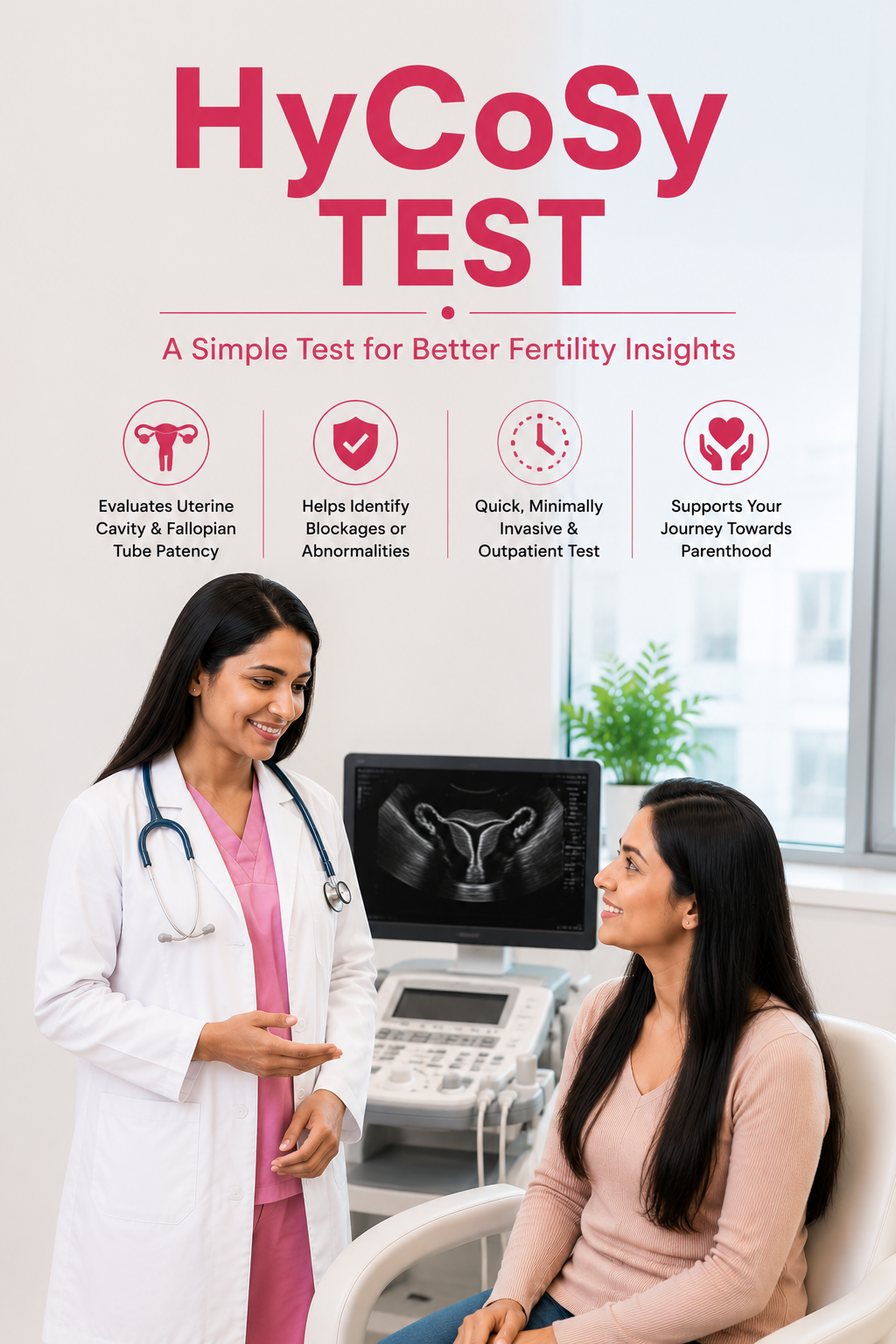
If you are trying to conceive and have been advised to undergo fertility screening, your doctor may suggest a HyCoSy test, which is also known as a Hysterosalpingo-Contrast Sonography. The HyCoSy test checks that your fallopian tubes are not blocked and that your uterus looks normal. A HyCoSy test is a minimally invasive, radiation-free procedure that helps decide on the best fertility treatment that will suit your condition. It is often suggested when you are trying for a baby for some time without success, or if you have experienced several miscarriages, or before fertility procedures such as IUI and IVF.
Consult an Expert
Get a free callback from our fertility specialists

What is the HyCoSy Test?
A HyCoSy is an ultrasound scan used to check the fallopian tubes and the uterine cavity. The HyCoSy is carried out by introducing a contrast medium into the uterus via a thin catheter. Using ultrasound imaging, the fertility specialist observes how the contrast travels through the fallopian tubes. This helps determine whether the tubes are open or blocked. The test can also find out certain abnormalities within the uterus that may affect fertility or implantation.
Why is a HyCoSy Test Recommended?
Your fertility specialist may suggest a HyCoSy test if there are concerns about your reproductive health. The most common cases are:
Unexplained Infertility
When pregnancy is not happening despite the standard fertility tests appearing normal, a HyCoSy test can help rule out hidden tubal problems.
Recurrent Miscarriages
Sometimes, uterine abnormalities can lead to repeated pregnancy loss. In such cases, a HyCoSy test can help assess the shape and structure of the uterus to check for any abnormalities.
Suspected Tubal Blockage or Uterine Issues
Blocked fallopian tubes can prevent sperm and egg from meeting. The test helps determine whether the tubes are open and functioning properly.
Before IUI or IVF Treatment
Many fertility specialists recommend a HyCoSy test before assisted reproductive treatments to gain a clearer understanding of reproductive anatomy and optimise treatment planning.
What Happens During the HyCoSy Test Procedure?
The HyCoSy test procedure is usually performed in the first half of the menstrual cycle, after your period ends but before ovulation.
The procedure typically involves:
- You will lie comfortably on an examination couch.
- A speculum is inserted into the vagina, similar to a cervical screening examination.
- A thin catheter is placed through the cervix into the uterus.
- A contrast solution is gently introduced through the catheter.
- A transvaginal ultrasound probe is used to visualise the uterus and fallopian tubes.
- The specialist monitors the movement of the contrast fluid through the tubes to assess whether they are open.
The entire procedure generally takes around 15 to 30 minutes.
In many cases, HyCoSy test results are available immediately after the examination that allows your doctor to discuss the findings with you during the same visit.
Book Your Appointment

Understanding Your HyCoSy Test Results
Your fertility specialist will interpret your HyCoSy test findings alongside your medical history, fertility evaluation, and other investigations to understand how your reproductive system may be affecting conception.
Reference ranges can vary slightly between laboratories and assay kits.
What Do Normal Results Mean?
If the contrast fluid passes freely through both fallopian tubes and the uterus appears normal, it suggests that there are no obvious structural barriers to conception. Your doctor may continue evaluating other fertility factors if pregnancy has not occurred.
What Do Abnormal Results Mean?
Blocked fallopian tubes or uterine abnormalities may affect fertility and implantation. Depending on the findings, your fertility specialist may recommend additional investigations or fertility treatments such as IUI or IVF.
Are There Any Side Effects of the HyCoSy Test Procedure?
Most women tolerate the procedure well. However, some temporary HyCoSy test side effects may occur.
Cramping and Discomfort
Mild cramping during or shortly after the procedure is common and is often described as feeling similar to menstrual cramps. In most cases, the discomfort is temporary and settles within a few hours.
Nausea and Vomiting
Some women may experience nausea, dizziness, or a feeling of light-headedness during the procedure. These symptoms are usually short-lived and improve quickly with rest.
Bleeding
Light spotting or mild bleeding after a HyCoSy test can occur due to the placement of the catheter through the cervix. This is generally minimal and resolves within a day or two without treatment.
Infection
Although rare, there is a small risk of infection following the procedure. Contact your doctor if you develop symptoms such as fever, increasing pelvic pain, foul-smelling discharge or heavy bleeding.
Allergic Reaction
Allergic reactions to the contrast medium used during the test are uncommon. When they do occur, symptoms are typically mild, but patients should inform their doctor about any known allergies before the procedure.
What Are the Risks of the HyCoSy Test?
The HyCoSy test risks are generally low. Your fertility specialist will review your medical history and discuss any concerns before the procedure. Despite a low risk, potential complications include:
- Pelvic infection: Some women may get an infection after the test, especially if they have an existing infection.
- Allergic reaction to the contrast medium: Although rare, some individuals may experience an allergic response to the contrast agent used during the test.
- Temporary pelvic discomfort: Mild cramps or pelvic pain may be felt at the time of the procedure or immediately after the procedure but these symptoms usually go away quickly.
- Light vaginal bleeding: Minor spotting or light bleeding can occur due to the insertion of the catheter through the cervix.
- Rare vasovagal reactions causing dizziness or fainting: Some women may briefly feel dizzy, light-headed or faint as a response to pain or anxiety during the procedure.
How Should I Prepare for the Procedure?
The HyCoSy test is a simple procedure but your doctor may provide a few simple instructions to ensure the procedure is performed safely and accurately. These are:
Cycle Timing
Usually the tests is conducted between days 6-12 of your menstrual cycle. The tests are done after the periods finish and before ovulation to get the accurate test results and avoid disrupting an early pregnancy.
Pregnancy Precautions
Since the test is not recommended during pregnancy, the doctor will make sure that you are not pregnant. If there is any chance that you might have conceived, make sure that you inform the doctor before going for the test.
Pain Management
Most women have little discomfort, though many report experiencing light cramping. Your doctor may advise a pain relief medication approximately 30–60 minutes prior to the procedure, if required. Do not self-medicate.
Infection Screening
Any active pelvic infection should be treated before undergoing a HyCoSy test. This helps minimise the risk of complications and ensures the procedure can be performed safely.
Hygiene
You can bathe and maintain your usual hygiene routine before the appointment. Your fertility clinic may also provide specific instructions to help you prepare for the procedure.
What to Expect After a HyCoSy Test?
Most women can resume their normal activities right after the procedure but some may experience
- Mild cramping
- Light spotting
- Temporary pelvic discomfort
These symptoms usually improve within 24 to 48 hours.
In some cases, it has been reported that flushing the fallopian tubes at the time of the procedure can temporarily improve fertility rate in some women. Because of this, we often receive questions about pregnancy after a HyCoSy test. This test is in no way a method of improving fertility, however, natural pregnancy may occur in the months following the examination if no significant fertility issues are identified.
What Are the Benefits of the HyCoSy Test?

Radiation- Free Diagnosis
The best part is that unlike HSG (Hysterosalpingogram), which uses X-rays, the HyCoSy test relies on ultrasound imaging. This means there is no radiation exposure which makes it a safer option for evaluating the uterus and fallopian tubes.
Detailed Pelvic Assessment
A HyCoSy test allows the fertility specialist to assess not only the fallopian tubes but also multiple reproductive organs. Along with checking whether the fallopian tubes are open or not, it also checks for abnormalities in the uterus and ovaries.

Identifies Uterine Abnormalities
The procedure can help identify structural abnormalities within the uterus, such as fibroids, polyps, adhesions, or congenital variations. Detecting these issues early can help guide appropriate fertility treatment.


Not sure what your HyCoSy Test means for you?
Get a free, no-obligation read on your numbers from one of our fertility specialists.
Average response time: under 30 minutes
Are There Any Risks or Side Effects?
The HyCoSy test is generally considered safe and well tolerated. Most women experience only mild and temporary discomfort during or after the procedure.
Common Side Effects
- Mild cramping similar to menstrual cramps
- Temporary pelvic discomfort
- Light spotting or minor vaginal bleeding
- Brief nausea, dizziness, or light-headedness
Rare Risks
- Pelvic infection
- Allergic reaction to the contrast medium
- Excessive bleeding
- Vasovagal reaction causing fainting or dizziness
What Happens After the Test?
Results Discussion
Your fertility specialist reviews the HyCoSy findings and explains whether your fallopian tubes are open and if the uterus appears normal.
Fertility Assessment
The results are evaluated alongside your medical history, fertility investigations, and reproductive goals to identify any factors affecting conception.
Treatment Recommendations
Based on the findings, your doctor may recommend natural conception, ovulation induction, IUI, IVF, or additional investigations if abnormalities are detected.
Follow-Up Plan
A personalised fertility plan is created, and any necessary follow-up appointments or treatments are scheduled to support your pregnancy goals.
Related Fertility Tests


Why Choose Birla Fertility for Diagnostic Test
Accurate diagnostics are the foundation of every fertility plan we build — here's what sets our testing experience apart.
120+
Fertility Experts
2 Lakh+
Patients Treated
50+
Clinics in India
NABL
Accredited Labs
Top IVF Centers in Popular Cities
- IVF Center in Delhi
- IVF Center in New Town Kolkata
- IVF Center in Gurgaon
- IVF Center in Rewari
- IVF Center in Lucknow
- IVF Center in Varanasi
- IVF Center in Gorakhpur
- IVF Center in Noida
- IVF Center in Prayagraj
- IVF Center in Meerut
- IVF Center in Kolkata
- IVF Center in Howrah
- IVF Center in Bhubaneswar
- IVF Center in Cuttack
- IVF Center in Surat
- IVF Center in Ahmedabad
- IVF Center in Ranchi
- IVF Center in Chandigarh
- IVF Center in Guwahati
- IVF Center in Raipur
- IVF Center in Jaipur
- IVF Center in Nagpur
- IVF Center in Hyderabad
- IVF Center in Indore
- IVF Center in Bhopal
- IVF Center in Kozhikode
- IVF Center in Kannur
- IVF Center in Mangalore
- IVF Center in Palakkad
- IVF Center in Salem
- IVF Center in Thrissur
- IVF Center in Bangalore
- IVF Center in Kolar
- IVF Center in Mumbai
- IVF Center in Vijayapura
- IVF Center in Chennai
- IVF Center in Patna
- IVF Center in Perinthalmanna
- IVF Center in Siliguri
- IVF Center in Gachibowli
Frequently Asked Questions
A HyCoSy is generally done between days 6 and 12 of your menstrual cycle, once the menstrual bleeding has stopped but before the onset of ovulation.