
 Our Centers
 Select City


 Select City
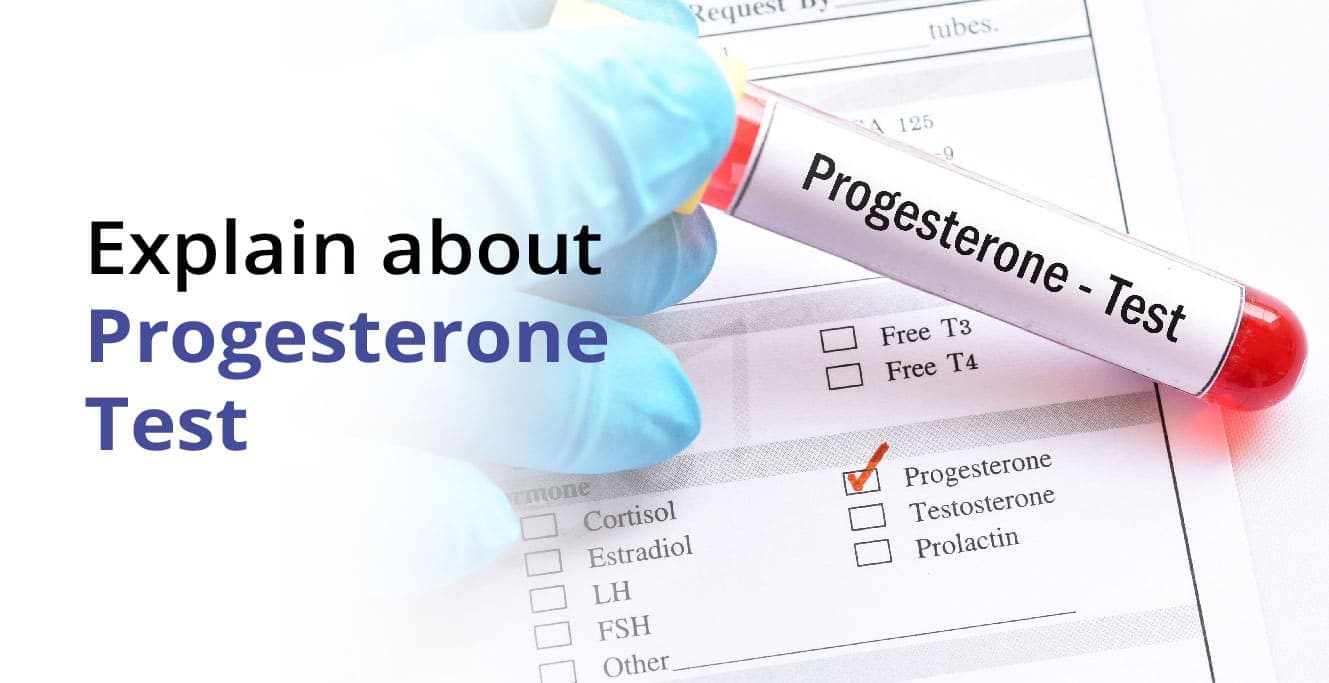
Progesterone Test
Hormones have a critical part to play in a woman's reproductive health, and progesterone is a hormone that is one of the most significant ones. Often known as the "pregnancy hormone," progesterone works to prepare a woman's uterus for pregnancy and aids the development of the fetus in the early stages. A progesterone test is a blood test used to determine the level of progesterone in the body. Doctors will generally recommend this test to assess fertility concerns, track ovulation, monitor pregnancy, or assess irregular menstrual cycles. Having your progesterone levels checked can reveal information about your reproductive health and how to proceed with treatment (if required).
Consult an Expert
Get a free callback from our fertility specialists

What is a Progesterone Test?
Progesterone blood test measures the level of progesterone in the blood. Progesterone is mainly produced by the ovaries after ovulation and by the placenta in the pregnancy.
Important functions of progesterone are:
- Prepare the endometrium for implantation
- Supporting a healthy pregnancy
- Regulation of the menstrual cycle
- Helping confirm whether ovulation has occurred
The test is often used as part of fertility evaluations and pregnancy monitoring.
Why is a Progesterone Test Done?
The progesterone test is done for the following reasons:
Tracking Ovulation and Fertility Success
One common reason to have progesterone testing is to determine if ovulation has occurred. When an egg is released, the body releases more progesterone. This can tell your doctor if ovulation has happened and if your luteal phase is working correctly. This is beneficial if you are trying to get pregnant or undergoing treatment for infertility.
Monitoring Early or High-Risk Pregnancies
Progesterone is important in the maintenance of the uterine lining during pregnancy. A progesterone blood test during early pregnancy can be performed if you have concerns about a miscarriage or bleeding, or if you have a history of pregnancy complications. Results of a progesterone test are used to assess whether you need additional monitoring or treatment.
Investigating Abnormal Uterine Bleeding
Irregular periods, unusually heavy bleeding or unexplained spotting can sometimes be linked to hormonal imbalances. A progesterone test may help identify whether ovulation is occurring normally and whether hormone levels are contributing to menstrual irregularities.
Symptoms That May Indicate the Need for a Progesterone Test
Difficulty getting pregnant
Irregular menstrual cycles
Missed periods
Unexplained vaginal bleeding
Recurrent miscarriages
Spotting between periods
Symptoms of hormonal imbalance
Suspected ovulation problems
Monitoring during fertility treatment
How is a Progesterone Test Performed?
Book Your Appointment

Understanding Progesterone Test Results
The levels of progesterone are not the same and vary depending on factors like age, stage of menstrual cycle and pregnancy status. Your doctor will interpret the results based on your medical history and clinical situation.
Reference ranges can vary slightly between laboratories and assay kits.
Normal Progesterone Levels
Normal levels depend on the phase of the menstrual cycle,Low levels are expected before ovulation,Levels rise after ovulation,Pregnancy is associated with significantly higher progesterone levels,A healthy rise after ovulation often indicates that ovulation has occurred.
Low Progesterone Levels
Low progesterone levels may be associated with,Lack of ovulation (anovulation),Luteal phase defects,Certain hormonal disorders,Increased risk of early pregnancy complications,Menstrual irregularities,Further testing may be recommended to identify the underlying cause.
High Progesterone Levels
Elevated progesterone levels may occur due to:,Pregnancy,Multiple pregnancies,Ovarian cysts,Certain adrenal gland disorders,Progesterone supplementation during fertility treatment
Conditions Associated with Abnormal Progesterone Levels
Abnormal progesterone levels may be linked to:
Polycystic Ovary Syndrome (PCOS)
Women with PCOS may experience irregular or absent ovulation which can lead to lower-than-expected progesterone levels during the menstrual cycle.
Ovulation Disorders
Conditions that interfere with regular egg release can prevent the normal rise in progesterone that occurs after ovulation.
Luteal Phase Deficiency
In this condition, the body may not produce enough progesterone after ovulation to adequately support implantation and early pregnancy.
Infertility
Abnormal progesterone levels may affect ovulation, implantation or the ability to maintain a pregnancy thus contributing to fertility challenges.
Recurrent Miscarriage
Low progesterone levels in early pregnancy may be associated with difficulties in supporting the uterine lining needed for pregnancy continuation.
Ovarian Cysts
Certain ovarian cysts, particularly those related to the corpus luteum, can sometimes cause progesterone levels to be higher than normal.
Ectopic Pregnancy
Progesterone levels may be lower than expected in some ectopic pregnancies, although additional tests are needed for diagnosis.
Adrenal Gland Disorders
Since the adrenal glands produce small amounts of reproductive hormones, certain adrenalconditions can affect progesterone levels.
Hormonal Imbalances
Disorders involving the ovaries, pituitary gland or thyroid can disrupt hormone production and lead to abnormal progesterone levels.
When is the Best Time to Have a Progesterone Test Done?
Timing of a progesterone test is relevant because levels of this hormone keep changing throughout your menstrual cycle. For a normal 28 day cycle, it may be performed about day 21, approximately seven days after ovulation, when the progesterone level is thought to be at its highest.
For women with irregular cycles, the doctor may recommend testing based on ovulation tracking methods such as ultrasound monitoring, ovulation predictor kits, or cycle history.
How Does Progesterone Affect Fertility?
Progesterone is a crucial hormone for successful implantation and conception. Following ovulation, progesterone builds up the lining of the uterus so that it is thickened, stable and suitable for the implanted embryo to develop. Inadequate progesterone levels may indicate that the uterine lining has not developed properly thus making the implantation difficult. Poor levels may also affect the ability to maintain an early pregnancy. For this reason, levels are frequently measured as part of fertility investigation or treatment planning.
When Should a Progesterone Test Be Done?
Doctors usually advise a progesterone test in the following cases:
- You are trying to conceive without success
- Ovulation needs to be confirmed
- You have irregular or absent periods
- You experience recurrent pregnancy loss
- There are concerns about an early pregnancy
- You are undergoing IVF or fertility treatment
- Hormonal disorders are suspected
The exact timing will depend on the reason for testing and your menstrual cycle pattern.
Benefits of the Progesterone Test

Confirms Ovulation
Determines whether ovulation has occurred during your menstrual cycle.

Simple & Quick
Requires only a routine blood sample with no special preparation.

Supports Fertility Planning
Helps identify the best timing for conception and fertility treatment.


Not sure what your Progesterone Test means for you?
Get a free, no-obligation read on your numbers from one of our fertility specialists.
Average response time: under 30 minutes
Are There Any Risks or Side Effects?
The progesterone test is a routine blood test and is generally safe. Most people experience little to no discomfort, and serious complications are uncommon.
Common Side Effects
- Mild pain or bruising at the blood draw site
- Temporary dizziness or lightheadedness
- Slight swelling or tenderness around the puncture area
Rare Risks
- Infection at the blood draw site (rare)
- Fainting during or after the blood sample collection
- Fainting during or after the blood sample collection
What Happens After the Test?
Doctor Consultation
Review your AMH result with your fertility specialist.
Additional Investigations
An antral follicle count scan or other hormone panels, if needed.
Treatment Recommendations
A personalised plan based on your ovarian reserve and goals.
Follow-Up Plan
Periodic re-testing if you're undergoing active treatment.
Related Fertility Tests


Why Choose Birla Fertility for Diagnostic Test
Accurate diagnostics are the foundation of every fertility plan we build — here's what sets our testing experience apart.

Experienced Fertility Specialists
Our Fertility specialists will take the time to review your hormonal profile and fertility issues and help decide on the next best course of action.

Advanced Diagnostic Laboratories
We utilise our state-of-the-art diagnostic laboratories and modern diagnostic technology to ensure the highest accuracy possible.

Detailed Hormonal Assessments
We offer thorough hormonal analyses with attention paid to all hormones that can be related to your fertility issues.
Personalised Fertility Treatment Plans
Your reproductive care will also be individually designed by a fertility treatment plan that best suits your medical history and test results, your fertility goals and your individual fertility concerns.

Evidence-Based Reproductive Care
You can rely on our evidence-based reproductive care when you decide on our services for your fertility needs. Our team is there with support for your fertility concerns from the beginning to the end.

Support Throughout Your Fertility Journey
By combining accurate diagnostics with expert guidance, we help couples make informed decisions about their reproductive health.
120+
Fertility Experts
2 Lakh+
Patients Treated
50+
Clinics in India
NABL
Accredited Labs
Top IVF Centers in Popular Cities
- IVF Center in Delhi
- IVF Center in New Town Kolkata
- IVF Center in Gurgaon
- IVF Center in Rewari
- IVF Center in Lucknow
- IVF Center in Varanasi
- IVF Center in Gorakhpur
- IVF Center in Noida
- IVF Center in Prayagraj
- IVF Center in Meerut
- IVF Center in Kolkata
- IVF Center in Howrah
- IVF Center in Bhubaneswar
- IVF Center in Cuttack
- IVF Center in Surat
- IVF Center in Ahmedabad
- IVF Center in Ranchi
- IVF Center in Chandigarh
- IVF Center in Guwahati
- IVF Center in Raipur
- IVF Center in Jaipur
- IVF Center in Nagpur
- IVF Center in Hyderabad
- IVF Center in Indore
- IVF Center in Bhopal
- IVF Center in Kozhikode
- IVF Center in Kannur
- IVF Center in Mangalore
- IVF Center in Palakkad
- IVF Center in Salem
- IVF Center in Thrissur
- IVF Center in Bangalore
- IVF Center in Kolar
- IVF Center in Mumbai
- IVF Center in Vijayapura
- IVF Center in Chennai
- IVF Center in Patna
- IVF Center in Perinthalmanna
- IVF Center in Siliguri
- IVF Center in Gachibowli
Frequently Asked Questions
Home testing kits are available but accuracy can vary greatly. Blood testing at a certified laboratory is the most reliable and accurate way to measure progesterone.