
 Our Centers
 Select City


 Select City
hCG Test
Human Chorionic Gonadotropin (HCG) is a hormone that is produced when a woman is pregnant. This hormone is essential in supporting the early-stage development of the baby. It is the same hormone that is detected by home pregnancy kits and blood tests for pregnancy. Monitoring hCG levels helps confirm whether you are pregnant, checks whether the pregnancy is progressing normally, and tracks certain fertility treatments and pregnancy-related conditions. However, an hCG test alone does not always provide the full picture. Doctors usually interpret the hCG values along with symptoms, ultrasound findings, and repeat tests if needed.
Consult an Expert
Get a free callback from our fertility specialists

What are hCG Levels?
The human chorionic gonadotropin (hCG) hormone is produced by the cells that eventually give rise to the placenta after implantation of the fertilised egg inside the uterus. Small traces of hCG start appearing in the blood around 6 to 10 days after conception and in urine a few days later.
The hCG hormone assists the corpus luteum, enabling it to synthesise progesterone, which is necessary for the maintenance of the uterine lining in the initial stages of pregnancy before the placenta starts producing hormones.
Levels of this hormone remain low in cases other than pregnancy. It may be elevated in some medical conditions or after fertility treatments that use hCG injections.
How Are hCG Levels Measured?
Blood hCG Test
A blood test determines the accurate level of hCG in the bloodstream. This type of test is highly sensitive when compared to a home pregnancy test and is more precise and faster.
Doctors can order one of two types of blood hCG tests:
- Qualitative hCG Test: Determines presence of hCG.
- Beta-hCG Test: Tests the precise concentration of hCG.
Urine hCG Pregnancy Test
The home pregnancy tests determine the level of hCG in the urine. Although simple and convenient, they are less sensitive than blood tests and may fail to determine very early pregnancies.
Serial hCG Testing
Instead of depending on only one result, serial testing is carried out to assess if the hCG levels increase or decrease appropriately.
What Do High hCG Levels Mean?
Higher-than-expected hCG levels may occur for several reasons.
Multiple Pregnancy
Twin or higher-order pregnancies often produce more hCG than singleton pregnancies, although hCG alone cannot confirm twins.
Incorrect Pregnancy Dating
If conception occurred earlier than estimated, hCG levels may appear higher because the pregnancy is further along than expected.
Molar Pregnancy
A molar pregnancy is a rare condition in which abnormal tissue grows inside the uterus instead of a healthy pregnancy. It is often associated with unusually high hCG levels and requires prompt medical treatment.
Other Medical Conditions
Rare tumours, certain cancers, or hormonal conditions may also increase hCG levels. Additional testing is necessary to determine the cause.
What Do Low hCG Levels Mean?
Lower-than-expected hCG levels do not always indicate a problem. They may simply reflect earlier-than-estimated pregnancy.
Early Pregnancy
Testing too soon after implantation may produce lower hCG values that rise normally over the following days.
Ectopic Pregnancy
In an ectopic pregnancy, the fertilised egg implants outside the uterus. hCG levels often rise more slowly than expected. This is a medical emergency requiring immediate evaluation.
Miscarriage
Falling or plateauing hCG levels may suggest pregnancy loss, although ultrasound is needed to confirm the diagnosis.
Incorrect Pregnancy Dating
Late ovulation or delayed implantation can make the pregnancy appear younger than expected, resulting in lower hCG levels.
Symptoms Associated with Abnormal hCG Levels
Abnormal hCG levels alone rarely produce any symptoms; rather, it is the underlying cause that causes visible symptoms.
Vaginal Bleeding
Spotting is common in the early stages of pregnancy, while persistent or heavy bleeding needs medical attention.
Pelvic Pain
Pelvic pain, especially severe and unilateral, may indicate ectopic pregnancy or some other critical problem.
Nausea and Vomiting
High hCG levels may be one of the factors causing severe nausea and vomiting, resulting in hyperemesis gravidarum.
Pregnancy Complications
Abnormal hCG patterns may occasionally be associated with pregnancies that need closer monitoring to check fetal growth and development.
Who Should Consider an hCG Test?
Women who have missed a menstrual period
Women with a positive home pregnancy test
Women experiencing vaginal bleeding or pelvic pain during early pregnancy
Women who have undergone IVF or fertility treatment
Women with a history of recurrent miscarriage or ectopic pregnancy
Individuals requiring monitoring after treatment for certain pregnancy-related conditions
How Is an hCG Test Performed?
Book Your Appointment

Understanding Your hCG Test Results
An hCG test result is interpreted based on your stage of pregnancy, symptoms, medical history, and, when required, repeat testing or ultrasound findings. Rather than relying on a single value, doctors assess how hCG levels change over time to evaluate pregnancy progression.
Reference ranges can vary slightly between laboratories and assay kits.
Normal Pregnancy Progression
During early pregnancy, hCG levels typically rise rapidly and usually double every 48 to 72 hours.
Higher-than-Expected hCG Levels
hCG levels above the expected range may occur due to several pregnancy-related conditions.
Lower-than-Expected hCG Levels
Lower hCG levels do not always indicate a problem and may simply reflect an earlier stage of pregnancy.
Repeat Testing
When results are unclear, repeat hCG testing helps assess changes over time.
Factors That May Affect hCG Test Results
Several pregnancy-related and medical factors can influence hCG test results. Your doctor considers these factors along with your symptoms, medical history, and repeat testing to accurately interpret the results.

Stage of Pregnancy
hCG levels vary significantly throughout pregnancy, making gestational age essential for accurate interpretation.

Fertility Treatment
hCG-containing fertility medications or recent IVF treatment may temporarily affect test results.

Timing of the Test
Testing too early after implantation may result in lower hCG levels, requiring repeat testing after 48–72 hours.

Pregnancy-Related Conditions
Conditions such as ectopic pregnancy, miscarriage, or molar pregnancy can affect hCG levels and their interpretation.

Medical History & Clinical Findings
Symptoms, ultrasound findings, and previous pregnancy history are considered alongside hCG levels for an accurate diagnosis.
How Do hCG Levels Affect Fertility and Pregnancy?
Natural Conception
The increase in the level of hCG following natural conception is an indicator of successful implantation. This hormone is also important to support the early pregnancy.
IVF Pregnancy Monitoring
When conception takes place through IVF, the measurement of beta-hCG is done around 10 to 14 days following embryo transfer. An increase in hCG levels acts as an early indicator of successful pregnancy implantation but still does not replace an ultrasound to confirm pregnancy.
Early Pregnancy Assessment
Repeated hCG measurements along with ultrasound help doctors evaluate pregnancy viability and determine whether additional monitoring is required.
What Happens After the Test?
The next steps depend on your results and symptoms.
Understanding Your Results
Your doctor will explain whether your hCG level is appropriate for your stage of pregnancy and whether repeat testing is necessary.
Repeat Testing (If Needed)
If the results are unclear, another blood test may be scheduled after 48 to 72 hours to observe the trend.
Additional Diagnostic Tests
An ultrasound, progesterone test, or other investigations may be recommended to better understand the pregnancy.
Treatment for Abnormal hCG Levels
Treatment for abnormal hCG levels is directed at the cause rather than the hCG value itself.
Management of the Cause
The cause of your high or low hCG will be determined by your doctor prior to prescribing any treatment.
Monitoring of Pregnancy
Often, what many women need is regular blood testing and ultrasound testing until your doctor gets a clear picture of your pregnancy.
Medical or Surgical Treatment (When Needed)
Ectopic or molar pregnancies may necessitate medical or surgical management of the condition, depending on the situation.
Aftercare
Regular follow-up appointments are important in monitoring your progress and guide further care. This also provides a chance for timely intervention for making any changes to your current treatment process.
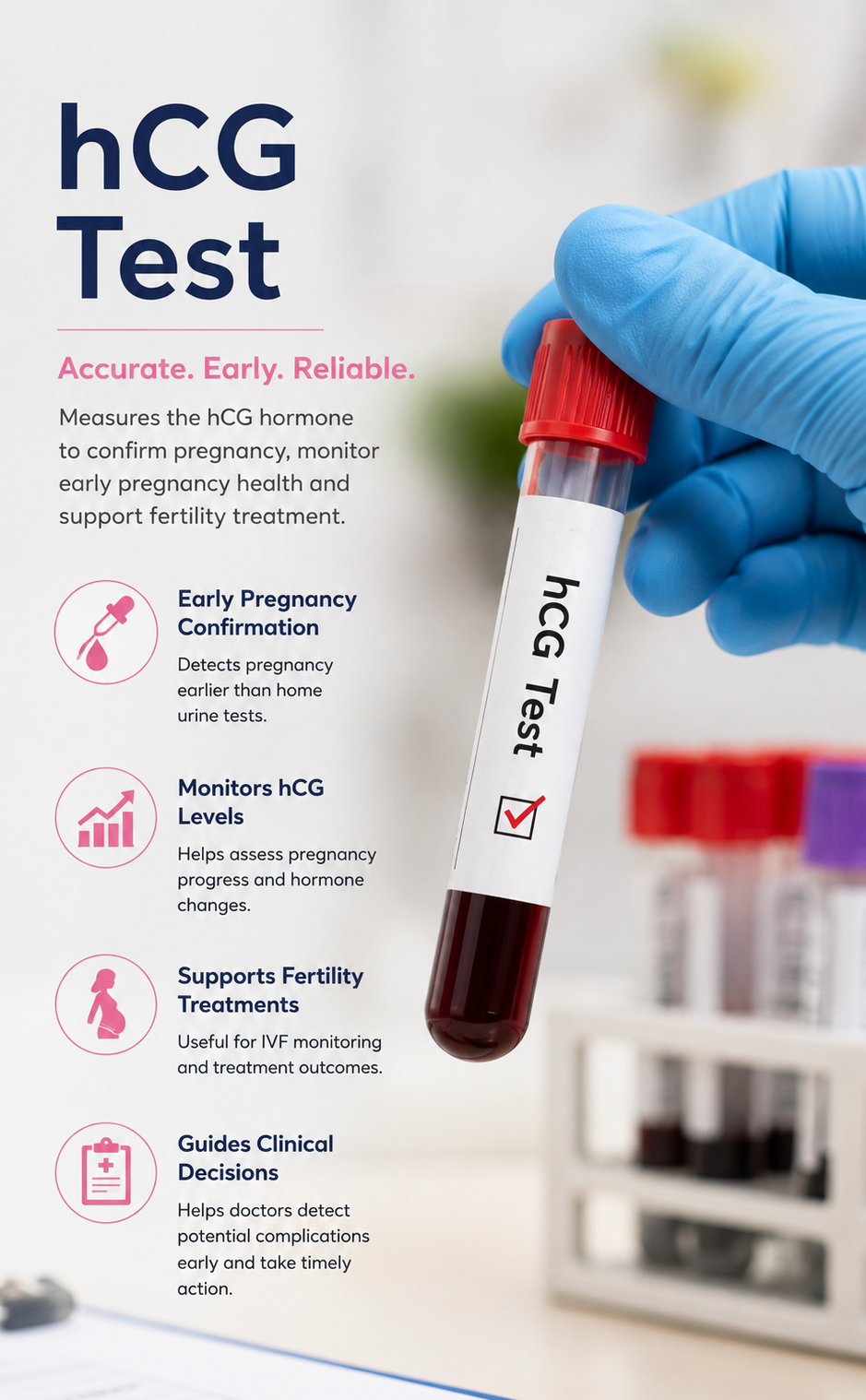
Benefits of an hCG Test
Confirms Pregnancy Early
Detects pregnancy even before it can be confirmed through an ultrasound in many cases.

Monitors Pregnancy Progress
Tracks changes in hCG levels to assess the progress of an early pregnancy

Helps Detect Pregnancy Complications
Assists in identifying conditions such as ectopic pregnancy, miscarriage, or molar pregnancy when interpreted with other clinical findings.

Not sure what your hCG Test result means for you?
Get a free, no-obligation read on your numbers from one of our fertility specialists.
Average response time: under 30 minutes
Risks and Side Effects of an hCG Test
An hCG test is a safe and routine diagnostic test. It involves either a blood sample or a urine sample and carries minimal risk. Most people experience little to no discomfort, and no recovery time is required after the test.
Minimal Risks
- Mild pain or discomfort during the blood sample collection.
- Temporary bruising or slight swelling at the injection site.
- A small risk of bleeding or infection, which is uncommon.
- No known risks with urine-based hCG testing.
What Happens After the hCG Test?
Results Review
Your doctor interprets your hCG levels based on the stage of pregnancy and the reason the test was performed.
Follow-Up Testing (If Needed)
If required, a repeat hCG blood test may be recommended after 48 to 72 hours to monitor changes in hCG levels over time.
Additional Evaluation
If the results are abnormal or unclear, your doctor may advise an ultrasound or other diagnostic tests for further assessment.
Personalised Care Plan
Based on your test results, your doctor will discuss the next steps, which may include routine pregnancy care, fertility treatment monitoring, or further medical evaluation.
Related Fertility Tests


Why Choose Birla Fertility for Diagnostic Test
Accurate diagnostics are the foundation of every fertility plan we build — here's what sets our testing experience apart.
120+
Fertility Experts
2 Lakh+
Patients Treated
50+
Clinics in India
NABL
Accredited Labs
Top IVF Centers in Popular Cities
- IVF Center in Delhi
- IVF Center in New Town Kolkata
- IVF Center in Gurgaon
- IVF Center in Rewari
- IVF Center in Lucknow
- IVF Center in Varanasi
- IVF Center in Gorakhpur
- IVF Center in Noida
- IVF Center in Prayagraj
- IVF Center in Meerut
- IVF Center in Kolkata
- IVF Center in Howrah
- IVF Center in Bhubaneswar
- IVF Center in Cuttack
- IVF Center in Surat
- IVF Center in Ahmedabad
- IVF Center in Ranchi
- IVF Center in Chandigarh
- IVF Center in Guwahati
- IVF Center in Raipur
- IVF Center in Jaipur
- IVF Center in Nagpur
- IVF Center in Hyderabad
- IVF Center in Indore
- IVF Center in Bhopal
- IVF Center in Kozhikode
- IVF Center in Kannur
- IVF Center in Mangalore
- IVF Center in Palakkad
- IVF Center in Salem
- IVF Center in Thrissur
- IVF Center in Bangalore
- IVF Center in Kolar
- IVF Center in Mumbai
- IVF Center in Vijayapura
- IVF Center in Chennai
- IVF Center in Patna
- IVF Center in Perinthalmanna
- IVF Center in Siliguri
- IVF Center in Gachibowli
Frequently Asked Questions About hCG Test
Normal hCG levels vary widely depending on the stage of pregnancy. Doctors interpret the results using gestational age and repeated measurements rather than relying on a single value.