
 Our Centers
 Select City


 Select City
High TSH Test
The thyroid gland controls the metabolic rate, energy production, body temperature, and reproductive function. It is regulated by TSH (thyroid-stimulating hormone), which stimulates the thyroid gland to secrete the necessary amount of hormones required by the body. High TSH levels mean that there is a lack of secretion of thyroid hormones by the thyroid gland. In this case, the pituitary gland produces TSH to stimulate the thyroid gland to overcome its inability to secrete enough thyroid hormones. To put it simply, elevated TSH means that the thyroid gland might be underactive, leading to a condition known as hypothyroidism. If left untreated, it could adversely affect general well-being, the menstrual cycle, fertility, and pregnancy.
Consult an Expert
Get a free callback from our fertility specialists

What is TSH?
TSH is an abbreviation used for Thyroid Stimulating Hormone, a hormone secreted by the pituitary gland. The pituitary gland is a small gland situated at the base of the brain responsible for controlling the secretion of thyroid hormones. The two hormones controlled by the pituitary gland are Triiodothyronine (T3) and thyroxine (T4).
When there is a fall in thyroid hormone secretion, the pituitary gland increases the secretion of TSH to stimulate the thyroid gland. When the levels normalise, the secretion of TSH decreases to maintain a balance in thyroid function.
What Does a High TSH Level Mean?
If TSH levels are high, they usually mean that the thyroid gland is not producing sufficient thyroid hormones. To compensate for this, the pituitary gland produces more TSH to stimulate the thyroid. In many cases, high TSH signals hypothyroidism or an underactive thyroid. It may also indicate another condition known as subclinical hypothyroidism, where TSH is elevated, but thyroid hormone levels remain within the normal range.
Continuously elevated TSH levels should not be overlooked. While mildly raised levels may only require monitoring, dangerously high TSH levels can indicate significant thyroid dysfunction, especially during pregnancy or when accompanied by severe symptoms. Early diagnosis and appropriate treatment can help prevent complications.
High TSH Levels Symptoms
Not everyone with high TSH experiences symptoms, especially in the early stages. However, as thyroid hormone levels decline, the body’s metabolism slows down, leading to a range of symptoms. The most common symptoms of high TSH levels include:
Fatigue
If you are getting adequate sleep but still feeling unusually tired is one of the first signs of an underactive thyroid. Many people also experience low energy and difficulty concentrating.
Weight Gain
A slower metabolism due to an underactive thyroid can lead to gradual weight gain, even if you are not making major changes in your diet or physical activity. Some individuals may also notice fluid retention.
Sensitivity to Cold
People with high TSH often feel cold more easily than others because thyroid hormones help regulate body temperature.
Dry Skin and Hair Loss
Low thyroid hormone levels can affect the health of your skin and hair, which leads to dry skin, brittle nails, thinning hair or increased hair fall.
Constipation
An underactive thyroid slows digestion, making constipation a common symptom. Some people may also experience bloating or discomfort.
Irregular Menstrual Cycles
High TSH can disrupt hormone balance, resulting in heavy periods, irregular cycles or missed periods. These changes may also affect ovulation.
Fertility Problems
Thyroid hormones play an important role in reproductive health. Untreated hypothyroidism can make it harder to conceive by affecting ovulation in women and sperm quality in men.
Apart from all these, other symptoms of high TSH levels may include depression, memory problems, muscle weakness, a slow heart rate, and puffiness of the face. Since these symptoms can overlap with other conditions, a thyroid function test is needed to confirm the diagnosis.
Who Should Consider a High TSH Test?
Individuals experiencing persistent fatigue or low energy
People with unexplained weight gain
Individuals with cold intolerance
People with dry skin or hair loss
Individuals with constipation
Women with irregular menstrual cycles
Couples experiencing difficulty conceiving
Individuals with a family history of thyroid disease or previous thyroid problems
Women who are pregnant or planning pregnancy
How Is a High TSH Test Performed?
Book Your Appointment

Understanding Your High TSH Test Results
Your High TSH test results are interpreted alongside your symptoms, medical history, and other thyroid function tests, especially Free T4. An abnormal TSH level does not always confirm thyroid disease, so your doctor evaluates the complete clinical picture before making a diagnosis.
Reference ranges can vary slightly between laboratories and assay kits.
Normal TSH Level
A normal TSH level indicates that your thyroid gland is functioning within the expected range.
Mildly Elevated TSH
A mildly elevated TSH level may indicate subclinical hypothyroidism, where thyroid hormone levels remain within the normal range.
High TSH with Low Free T4
High TSH combined with low Free T4 usually indicates overt hypothyroidism.
Persistently High TSH
Continuously elevated TSH levels may indicate significant thyroid dysfunction and require further evaluation.
Factors That May Affect High TSH Test Results
Several health conditions, medications, and physiological factors can influence TSH levels. Your doctor considers these factors along with your symptoms and other thyroid function tests to accurately interpret your results.

Pregnancy
Pregnancy increases the body's demand for thyroid hormones, and TSH target ranges may differ during pregnancy.

Medications
Certain medicines, including lithium, amiodarone, interferon, some cancer therapies, and biotin supplements, can affect TSH test results or thyroid function.

Thyroid Disorders
Conditions such as hypothyroidism, Hashimoto's thyroiditis, and iodine deficiency are common causes of elevated TSH levels.

Pituitary Disorders
Although uncommon, pituitary gland disorders can alter TSH production and may require additional evaluation.

Other Thyroid Function Tests
TSH results should be interpreted together with Free T4, Free T3, thyroid antibody tests, symptoms, and medical history for an accurate diagnosis.
How Does High TSH Affect Fertility?
Thyroid hormones are vital in the management of reproductive health in men as well as women. Higher TSH levels can affect ovulation, production of sperm, and hormonal balance during pregnancy.
Impact on Female Fertility
Higher TSH levels in women might affect the ability to have regular periods and ovulate. This can make conception harder.
These are common effects that are experienced:
- Menstrual periods that are infrequent or absent
- Heavy menstrual bleeding
- Irregular or absent ovulation
- Difficulty in conceiving
- Risk of early miscarriage
Impact on Male Fertility
Thyroid dysfunction can also affect male reproductive health. Elevated TSH levels may contribute to:
- Low sperm quality
- Poor sperm motility
- Reduced libido
- Erectile dysfunction
Pregnancy Outcomes
Thyroid gland functioning is crucial for a woman during pregnancy, especially during early fetal development. Unchecked hypothyroidism is linked to miscarriages, premature birth, pre-eclampsia, underweight babies or even impaired fetal brain development.
Women who are pregnant or planning to conceive should get their thyroid function evaluated and treated if required.
Treatment for High TSH
Treatment depends on the cause of the elevated TSH level and whether thyroid hormone levels are low.
Hormone Replacement Therapy
Levothyroxine is the most common treatment. It is a synthetic form of thyroid hormone that is administered to maintain hormonal balance. It helps restore normal hormone levels and reduce TSH levels.
Treating the Underlying Cause
Treatment will focus on treating the underlying cause, which can be due to Hashimoto’s thyroiditis, iodine deficiency, medication effects or another condition.
Lifestyle and Dietary Modifications
Certain lifestyle changes can support ongoing medical treatment. These include:
- Using iodised salt if recommended
- Eating a balanced diet
- Taking thyroid medication exactly as prescribed
- Avoiding supplements that interfere with medication absorption unless advised by your doctor
Monitoring TSH Levels
TSH is usually rechecked from time to time once the treatment starts. Dosage adjustments may be needed until levels are within the target range.
Can High TSH Be Prevented?
Not all conditions can be prevented, particularly those that involve autoimmune thyroid disorders. However, some measures that can help to minimise the chances of developing thyroid problems are
- Maintain proper iodine intake
- Have your thyroid medication regularly
- Have regular check-ups to keep track of thyroid levels
- Get yourself checked for any symptoms or if you have a family history of thyroid problems
- Monitor thyroid function during pregnancy if advised
When to See a Doctor?
It is best to seek a medical advice without delay if you are experiencing any of the following signs:
- Persistent symptoms of hypothyroidism
- Difficulty conceiving
- Irregular periods
- Abnormal thyroid test results
Seek urgent medical attention if you experience any of the following:
- Severe weakness
- Confusion
- Extreme drowsiness
- Chest pain
- Shortness of breath or
- Significant swelling
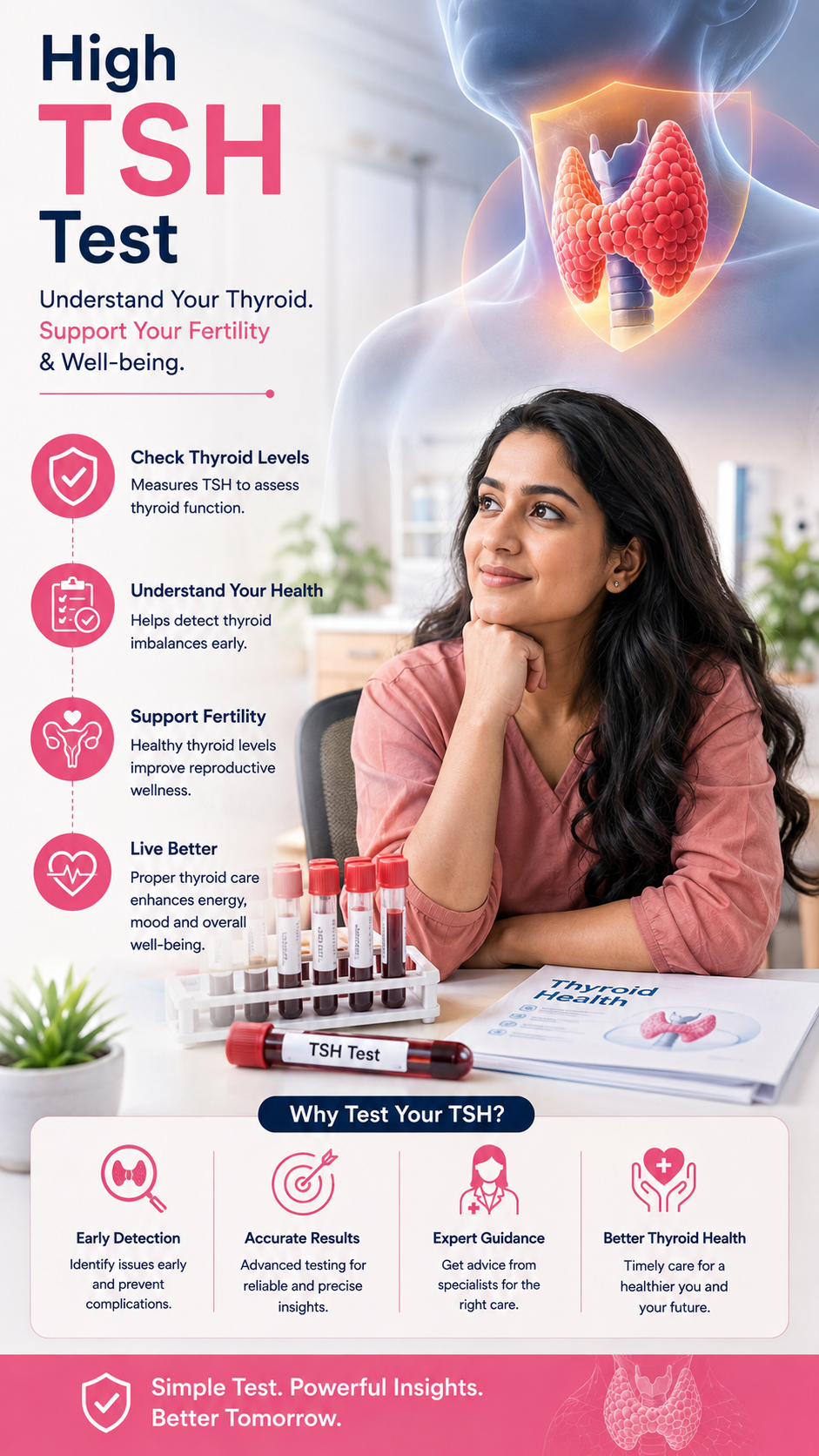
Benefits of a High TSH Test

Detects Thyroid Dysfunction
Helps identify an underactive thyroid (hypothyroidism) and other conditions affecting thyroid function.
Supports Fertility Evaluation
Assists in identifying thyroid-related hormone imbalances that may affect ovulation, sperm quality, and conception.
Promotes Healthy Pregnancy
Helps detect thyroid problems early to support maternal health and healthy fetal development during pregnancy.


Not sure what your High TSH Test result means for you?
Get a free, no-obligation read on your numbers from one of our fertility specialists.
Average response time: under 30 minutes
Risks and Side Effects of a High TSH Test
A High TSH test is a safe and routine blood test with minimal risks. Most people experience only mild, temporary discomfort during or after blood sample collection, and serious complications are uncommon.
Minimal Risks
- Mild pain or discomfort during blood sample collection.
- Temporary bruising or slight bleeding at the needle insertion site.
- Minor swelling that usually resolves within a day or two.
- Serious complications are rare.
What Happens After the High TSH Test?
Results Review
Your doctor interprets your TSH level together with Free T4, symptoms, medical history, and other thyroid test results to determine the underlying cause.
Additional Evaluation (If Needed)
If your TSH level is abnormal, further investigations such as Free T4, Free T3, thyroid antibody tests, repeat blood tests, thyroid ultrasound, or pituitary gland assessment may be recommended.
Personalised Treatment Plan
If hypothyroidism or another thyroid disorder is diagnosed, your doctor may recommend thyroid hormone replacement, treatment of the underlying cause, and lifestyle or dietary modifications.
Ongoing Monitoring
Regular follow-up TSH tests help monitor your response to treatment and determine whether medication dosage adjustments are needed to maintain healthy thyroid hormone levels.
Related Fertility Tests


Why Choose Birla Fertility for Diagnostic Test
Accurate diagnostics are the foundation of every fertility plan we build — here's what sets our testing experience apart.
120+
Fertility Experts
2 Lakh+
Patients Treated
50+
Clinics in India
NABL
Accredited Labs
Top IVF Centers in Popular Cities
- IVF Center in Delhi
- IVF Center in New Town Kolkata
- IVF Center in Gurgaon
- IVF Center in Rewari
- IVF Center in Lucknow
- IVF Center in Varanasi
- IVF Center in Gorakhpur
- IVF Center in Noida
- IVF Center in Prayagraj
- IVF Center in Meerut
- IVF Center in Kolkata
- IVF Center in Howrah
- IVF Center in Bhubaneswar
- IVF Center in Cuttack
- IVF Center in Surat
- IVF Center in Ahmedabad
- IVF Center in Ranchi
- IVF Center in Chandigarh
- IVF Center in Guwahati
- IVF Center in Raipur
- IVF Center in Jaipur
- IVF Center in Nagpur
- IVF Center in Hyderabad
- IVF Center in Indore
- IVF Center in Bhopal
- IVF Center in Kozhikode
- IVF Center in Kannur
- IVF Center in Mangalore
- IVF Center in Palakkad
- IVF Center in Salem
- IVF Center in Thrissur
- IVF Center in Bangalore
- IVF Center in Kolar
- IVF Center in Mumbai
- IVF Center in Vijayapura
- IVF Center in Chennai
- IVF Center in Patna
- IVF Center in Perinthalmanna
- IVF Center in Siliguri
- IVF Center in Gachibowli
Frequently Asked Questions About High TSH Test
TSH levels higher than the reference values set by laboratories are generally considered high. For most adults, this is a value above 4.0 mIU/L, although the normal range may vary slightly between laboratories.