
 Our Centers
 Select City


 Select City
Ovulation Calculator
Trying to understand when you are most likely to ovulate can make planning for pregnancy a little easier. An ovulation calculator uses information about your menstrual cycle to estimate when ovulation may occur and identify your fertile window which is considered the best time to try for pregnancy. While every menstrual cycle is different, tracking your periods and understanding the signs of ovulation can help you identify your most fertile days and plan intercourse around them.

How To Use
The Ovulation Calculator?
The Ovulation Calculator?
Using an ovulation calculator is usually very simple. You typically need to follow a few steps only.:
- Enter the first day of your last period
This is the day your most recent period started. It is counted as Day 1 of your menstrual cycle. - Enter your usual cycle length
This is the number of days from the first day of one period to the first day of your next period. For example, if your period usually comes every 28 days, your cycle length is 28 days. - Calculate your results
Once you enter these details, the calculator estimates when you are likely to ovulate based on your cycle pattern. - Understand your fertile days
Your results can help you identify your fertile window, the days when you are most likely to conceive. You may also see your expected next period and other estimated dates.
Keep in mind that these dates are only estimates. Ovulation does not always happen on the same day in every cycle, even when your periods are regular.
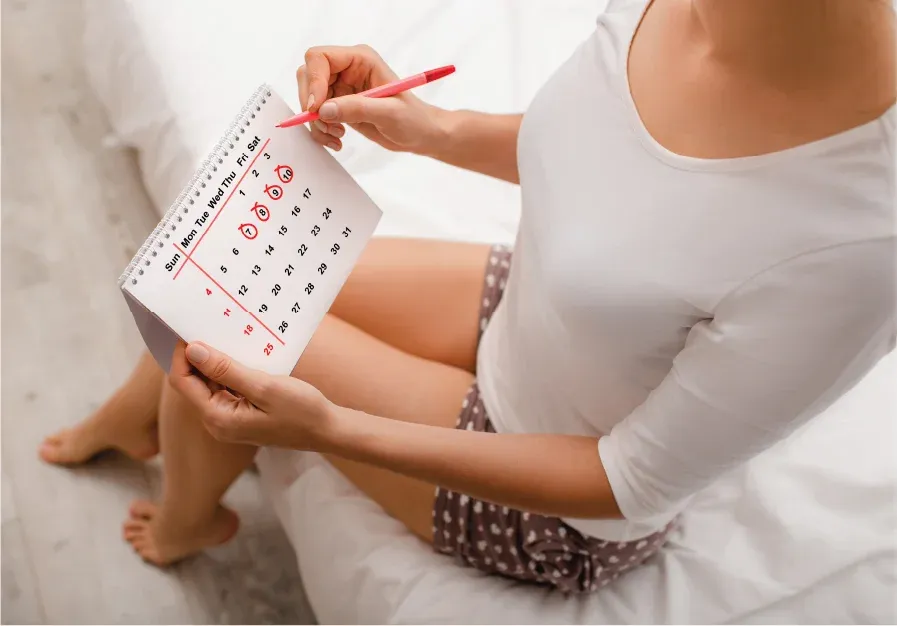
Benefits of Using the Ovulation Calendar

Predicts Fertile Window
Based on information about the menstrual cycle, ovulation calculators help determine the peak fertility days for conceiving.

Timed Intercourse
This helps determine the best time to indulge in sexual intercourse, which increases the likelihood of conception.

Promotes Preparedness
Equipped with insights from ovulation calculators, women can enhance their readiness for conception by embracing active lifestyle practices and, if necessary, pursuing medical guidance.

Encourages Pregnancy Planning
Ovulation calculators help women organize their attempts at conception, lining them up with their ovulation cycle to maximize the chances of conception.

Empower Women
Ovulation calculators offer women more control over their reproductive health by providing them with knowledge about their fertility window.

Supports Conception Journey
Ovulation calculator provides insights and important timelines to assist women in their reproductive journey

Helps Maintain a Fertility Record
Keeping track of menstrual and ovulation information over multiple cycles can provide a useful record of your reproductive patterns.

Supports Conversations with Doctor
Having your cycle dates and fertility information documented through ovulation calculator can help provide useful context during fertility consultations.
Talk to our fertility experts
 Speak to our expert
How Does an Ovulation
Calculator Work?
Calculator Work?
An ovulation calculator estimates ovulation by looking at the relationship between your menstrual cycle and the expected start of your next period. Ovulation often occurs about 12 to 14 days before the next period begins, although this can vary.
For example, if you have a regular 28-day cycle, ovulation may occur around day 14. However, this does not mean everyone with a 28-day cycle ovulates on exactly the same day. The calculator provides an estimated ovulation date, not a confirmed one.

Can You Use an Ovulation Calculator For Irregular Periods?
You can use an ovulation calculator with irregular periods, but the results may be less reliable. When cycle length changes from month to month, predicting ovulation based only on previous periods becomes more difficult.
If your periods are frequently irregular, tracking other signs of ovulation, such as changes in cervical mucus or using ovulation predictor kits, may provide additional information. Persistent irregular periods may also be worth discussing with a fertility specialist, particularly if you are trying to conceive.
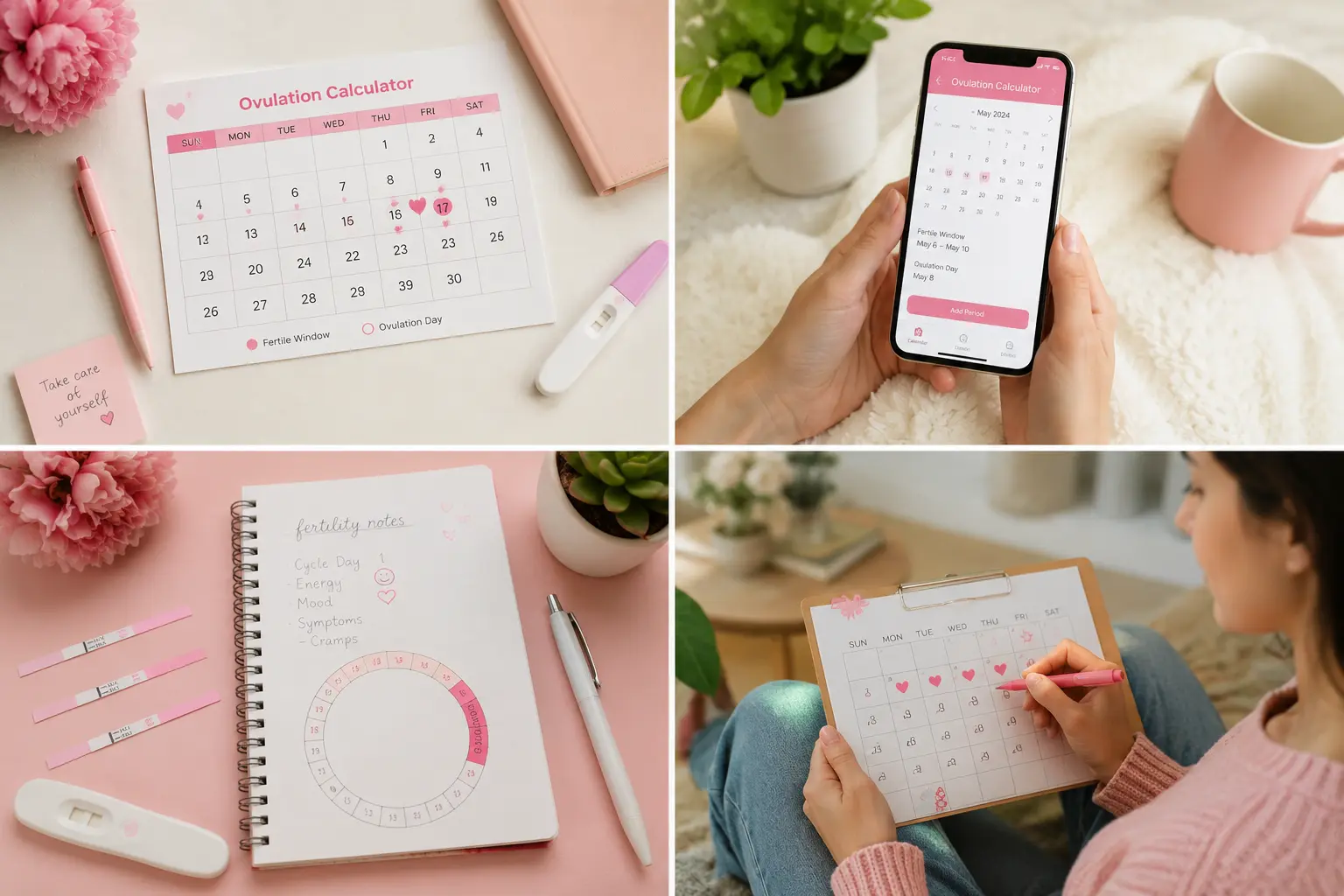
What Are the Signs of
Ovulation?
Ovulation?
Your body may show several changes around ovulation. Some people notice these changes clearly, while others may not notice any symptoms.
Common signs of ovulation include:
- Clear, slippery and stretchy cervical mucus
- A slight rise in basal body temperature after ovulation
- Mild pelvic or lower abdominal discomfort
- Increased sexual desire
- Breast tenderness or bloating in some people
These signs can help you understand your cycle but they do not always confirm exactly when ovulation has occurred.

What Is the
Fertile Window?
Fertile Window?
The fertile window is the period during which intercourse can result in pregnancy. It generally includes the five days before ovulation, the day of ovulation, and sometimes the day after it. This is because sperm can survive in the female reproductive tract for several days under favourable conditions, while the egg remains available for fertilisation for a much shorter period after ovulation. Since ovulation can shift between cycles, tracking the fertile window over time can be more useful than relying on a single predicted date.

How Does the Menstrual Cycle Affect Ovulation?
The menstrual cycle has different phases and hormonal changes throughout the cycle influence ovulation.
- Menstrual phase: Your period begins, marking day one of the cycle.
- Follicular phase: Follicles in the ovary develop as hormone levels change.
- Ovulation phase: A rise in luteinising hormone triggers the release of an egg.
- Luteal phase: The body prepares for a possible pregnancy after ovulation.
The length of these phases can vary, which is one reason ovulation does not necessarily happen on the same cycle day every month.

When Is the Best Time
To Conceive?
To Conceive?
The best days to conceive are generally the days leading up to ovulation and the day of ovulation itself. Having intercourse regularly during the fertile window can increase the chances of sperm being available when an egg is released. If you are using an ovulation calculator, consider its fertile-window estimate as a starting point rather than waiting for one specific day. Tracking cervical mucus or using ovulation predictor kits can provide additional clues about approaching ovulation.

How Accurate Is an
Ovulation Calculator?
Ovulation Calculator?
The accuracy of an ovulation calculator depends largely on how regular your menstrual cycles are. For someone with consistently similar cycle lengths, the estimate may provide a useful indication of when ovulation is likely to occur. However, ovulation can happen earlier or later than predicted because of natural cycle variations, stress, illness, hormonal changes and other factors. A calculator cannot confirm that ovulation has actually occurred, and it cannot diagnose conditions such as anovulation, where ovulation does not take place.

When Should You See
A Fertility Specialist?
A Fertility Specialist?
An ovulation or period calculator can help you understand your cycle, but it cannot identify every factor that may affect fertility. Consider consulting a fertility specialist if you:
- Have consistently irregular or absent periods
- Suspect that you may not be ovulating regularly
- Have been trying to conceive without success
- Notice significant changes in your menstrual cycle
- Have concerns about your ovulation or reproductive health
A fertility specialist can assess your menstrual history, ovulation pattern and other factors that may affect conception and help you understand what to do next.
Symptoms of
Ovulation Phase
The following signs can indicate and help you determine when you can plan your pregnancy:



Talk to our fertility experts
Speak to our expertMyths & Facts
Facts:
FALSE! Typically, the fertility window of each menstrual cycle is between 8 to 9 days, so you can indulge in intercourse at any point during this period and it could lead to conception.
Facts:
FALSE! It is said that the period is not likely to be the most fertile time of the month. However, the ovulation phase can change in every menstrual cycle, so you may already be fertile while on your period. So yes, there is a possibility of conception during periods.
Frequently Asked Questions
Frequently Asked Questions
What is the best day to conceive?
The days just before ovulation and the day of ovulation are generally considered the most fertile. Since the exact day can vary between cycles, having intercourse regularly throughout the fertile window may be more useful than focusing on a single day.
How many days after my period do I ovulate?
There is no fixed number of days after your period when everyone ovulates. Ovulation depends on your cycle length and can vary between individuals and cycles. In a 28-day cycle, it may occur around day 14, but this is only an estimate.
What is the fertile window?
The fertile window is the time when pregnancy is most likely to occur. It generally covers the five days before ovulation, the day of ovulation and, potentially, the following day.
Can I use an ovulation calculator with irregular periods?
Yes, but the ovulation calculator may be less accurate when your cycle length changes significantly. Tracking your periods over several cycles and using other ovulation-tracking methods can give you a better understanding of your cycle.
How accurate is an ovulation calculator?
An ovulation calculator provides an estimate rather than confirming ovulation. It tends to be more useful when menstrual cycles are regular, but even then, ovulation can vary from one cycle to another.
Can I get pregnant outside my fertile window?
Pregnancy is less likely outside the estimated fertile window, but it is not possible to predict the fertile window with complete certainty using a calendar alone. Ovulation can occur earlier or later than expected, which can change when pregnancy is possible.
What are the signs of ovulation?
Common signs include clear, stretchy cervical mucus, a slight rise in basal body temperature after ovulation, mild pelvic discomfort and changes in sexual desire. Not everyone experiences noticeable symptoms.
Top IVF Centers in Popular Cities
- IVF Center in Delhi
- IVF Center in New Town Kolkata
- IVF Center in Gurgaon
- IVF Center in Rewari
- IVF Center in Lucknow
- IVF Center in Varanasi
- IVF Center in Gorakhpur
- IVF Center in Noida
- IVF Center in Prayagraj
- IVF Center in Meerut
- IVF Center in Kolkata
- IVF Center in Howrah
- IVF Center in Bhubaneswar
- IVF Center in Cuttack
- IVF Center in Surat
- IVF Center in Ahmedabad
- IVF Center in Ranchi
- IVF Center in Chandigarh
- IVF Center in Guwahati
- IVF Center in Raipur
- IVF Center in Jaipur
- IVF Center in Nagpur
- IVF Center in Hyderabad
- IVF Center in Indore
- IVF Center in Bhopal
- IVF Center in Kozhikode
- IVF Center in Kannur
- IVF Center in Mangalore
- IVF Center in Palakkad
- IVF Center in Salem
- IVF Center in Thrissur
- IVF Center in Bangalore
- IVF Center in Kolar
- IVF Center in Mumbai
- IVF Center in Vijayapura
- IVF Center in Chennai
- IVF Center in Patna
- IVF Center in Perinthalmanna
- IVF Center in Siliguri
- IVF Center in Gachibowli