
 Our Centers


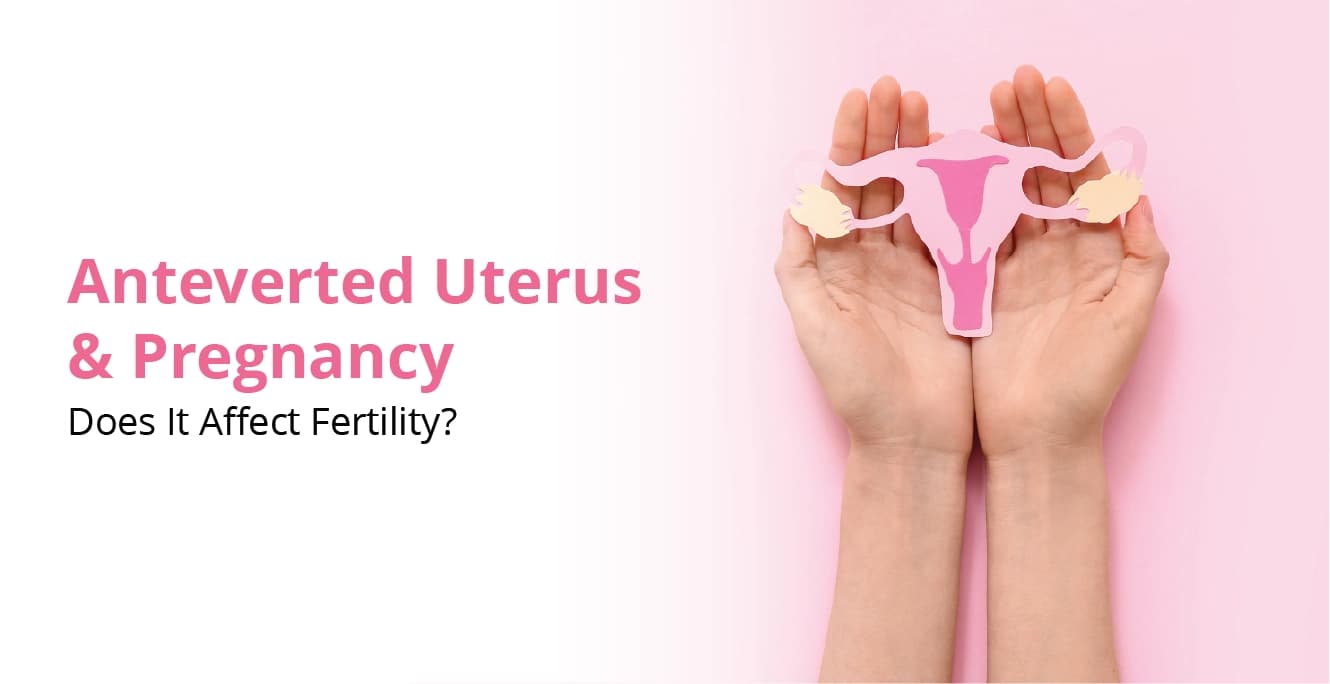
Impact of Anteverted Uterus on Pregnancy

Table of Contents
“Your report says you have an anteverted uterus.”
For many women, this line from a doctor sparks immediate questions, and often, unnecessary worry.
Is it normal?
Will it affect pregnancy?
Do I need treatment?
The truth is, an anteverted uterus is actually the most common uterine position, and in most cases, it doesn’t interfere with fertility or pregnancy at all. Yet, because it sounds clinical and unfamiliar, it can feel like something is “not right.”
In this blog, let’s clear the confusion. We will break down what is the meaning of uterus anteverted, and understand its actual impact on your chances of having a healthy pregnancy.
What is an Anteverted Uterus?
Anteverted uterus is a usual uterus but tilted forward in the direction of the bladder. This position is a normal pelvic anatomy rather than a disorder. The uterus normally leans forward in the majority of women from adoltescence itself.
During a pelvic examination or an ultrasound, doctors determine the uterus position. The uterus is briefly altered by changes in hormones, muscular tone, and pregnancy, but its fundamental orientation usually stays the same.
Causes of an Anteverted Uterus
Infectious/Environmental Causes
Although the location of the uterus is primarily physical, environmental factors or certain infections can have an impact on uterine health. For instance, the uterus may shift due to adhesions or scarring from pelvic inflammatory disease (PID). However, the anteverted posture itself is not as strongly linked to these cases as potential infection-related problems.
Genetic/Autoimmune Causes
There is little proof that immunological or genetic factors have a major impact on the position of the uterus. However, conditions like endometriosis and uterine fibroids can alter the uterus’s position and may be hereditary. Women with a family history of certain conditions may be more susceptible to complications.
Lifestyle and Dietary Factors
Lifestyle choices including smoking, binge drinking, and eating badly can have an impact on overall reproductive health. Although they do not directly cause an anteverted uterus, these factors can contribute to circumstances that may affect uterine health. Maintaining a healthy lifestyle and eating a balanced diet can help maintain reproductive health and lower the risks of many gynecological illnesses.
How Common is an Anteverted Uterus?
The uterus is frequently anteverted and is thought to be in a normal anatomical position. Actually, between 70 and 80 percent of women have an anteverted uterus, which tilts forward toward the bladder. It is frequently only discovered during normal pelvic exams or imaging and typically does not result in any health problems, interfere with fertility, or necessitate treatment.
Symptoms of Anteverter Uterus
The majority of women have no symptoms. In exceptional instances, the forward tilt could be extremely significant and result in:
- Soreness or pressure in the front of the pelvis
- Menstrual pain
- Occasionally feeling uncomfortable during sex
- An anteverted uterus may put strain on the bladder from frequent urination
Diagnosis of Anteverter Uterus
The majority of people discover they have an anteverted uterus during routine examinations rather than because they have any symptoms. Doctors can detect an anteverted uterus by touching its position during a routine pelvic exam. To gain a better look, doctors may suggest the following further tests:
- When the bladder is empty, transvaginal ultrasonography reveals an anteriorly tilted uterus.
- The location of the uterus is confirmed via transabdominal ultrasonography.
- MRI scans that show clearer images of the uterus and pelvic organs.
- These tests aid medical professionals in distinguishing anteverted uteruses from other disorders that present with comparable symptoms.
Effects of Anteverted Uterus on Pregnancy
Women with an anteverted uterus become pregnant on their own. As the uterus expands upward and outward to hold the fetus without obstacles, the baby’s growth advances.
Important characteristics of anteverted pregnancy:
- Conception: There are no extra difficulties in getting pregnant.
- Development of the fetus: The uterus expands normally and unrestrictedly.
- Delivery: C-section or vaginal delivery depends on other clinical factors; delivery technique has no bearing.
Because of the placement of their uterus, women with an anteverted uterus can also have healthy pregnancies with no additional concerns.
Anteverted Uterus and Fertility
The majority of women who are concerned about their fertility question if having an anteverted uterus is beneficial or detrimental to becoming pregnant. The good news is that fertility is not negatively impacted by an anteverted uterus. An anteverted uterus has a typical orientation for sperm mobility, whereas a retroverted uterus, in the absence of any additional difficulties, may be associated with endometriosis or adhesions complicating conception.
More than the uterus’s location, problems that impact fertility include:
- Ovulation and hormone balance
- Well-being of the fallopian tubes
- Sperm and egg quality
- Having fibroids or PCOS
Instead of focusing on the uterine position, it is crucial for women who are experiencing trouble getting pregnant to contact a specialist for a comprehensive fertility assessment.
Conclusion
When you have a greater understanding of your body, medical jargon in examination reports may seem less intimidating. The majority of women have an anteverted uterus; this is not a medical issue. Millions of women worldwide exhibit this natural position, which has no negative effects on fertility or pregnancy issues.
During routine pelvic exams or ultrasounds, doctors can identify this typical uterus position. Although your anteverted uterus doesn’t require medical attention on its own, you should discuss any persistent pelvic pain, discomfort during sexual activity, or unusual bleeding with your physician.
Everybody’s body is different, and that’s what makes us attractive. Your anteverted uterus is just another aspect of your individuality, just like your height or eye color.
FAQ
Can you be naturally pregnant by an anteverted uterus?
Yes, an anteverted uterus is completely normal. It does not impact your ability to conceive, and most women with this type of uterus get pregnant naturally without any issues.
Which is the best uterus position for pregnancy?
There is no “best” uterus position for pregnancy. Both anteverted and retroverted positions are normal variations. Fertility depends more on overall reproductive health.
Can an anteverted uterus cause pain?
No, an anteverted uterus does not cause pain. It is a natural anatomical position. If there is any discomfort, it is usually linked to other underlying conditions.
Do lifestyle changes affect anteverted uterus?
Lifestyle changes do not change uterus position. The position is naturally determined by your anatomy. However, a healthy lifestyle supports reproductive health overall.
Our Fertility Specialists


Gorakhpur, Uttar Pradesh
Dr. Akriti Gupta
MBBS, MS (Obstetrics & Gynaecology)


Surat, Gujarat
Dr. Aashita Jain
MBBS, Diploma in Gynaecology & Obstetrics, Diploma in IVF & Reproductive Medicine

Kolkata New Town, West Bengal
Dr. Aaheli Maiti
MBBS, MS (Obstetrics & Gynaecology)

Gurgaon – Sector 14, Haryana
Dr. Prachi Benara
MBBS (Gold Medalist), MS (OBG), DNB (OBG), PG Diploma in Reproductive and Sexual health

Gurgaon - Sector 51, Haryana
Dr. Shivika Gupta
MBBS, MD/MS (Obstetrics and Gynecology)

Mumbai, Maharashtra
Dr. Navina Singh
MBBS, MS (Obstetrics and Gynaecology), MRM (London), DRM (Germany)
Related Blogs



To know more
Birla Fertility & IVF aims at transforming the future of fertility globally, through outstanding clinical outcomes, research, innovation and compassionate care.


Had an IVF Failure?
Talk to our fertility experts