
 Our Centers


Retroverted Uterus: Causes, Symptoms & Treatment

Table of Contents
- What is a Retroverted uterus?
- Symptoms of a Retroverted Uterus
- Causes of a Retroverted Uterus
- Types of Retroverted Uterus
- Diagnosis of Retroverted Uterus
- Treatment of Retroverted Uterus
- Does a Retroverted Uterus Affect Fertility?
- Retroverted vs Anteverted Uterus
- How Common is a Retroverted Uterus?
- Exercise to Prevent a Retroverted Uterus
- Bottom Line
- FAQs
Have you ever been told during a scan that your uterus is “retroverted” and wondered what that actually means?
For many women, it’s a term they hear for the first time during a routine check-up, often followed by confusion or unnecessary worry.
A retroverted uterus is more common than you might think, and in most cases, it’s completely normal. Understanding the retroverted uterus meaning, why it happens, and when it may need attention can help you feel more informed and at ease about your reproductive health.
What is a Retroverted uterus?
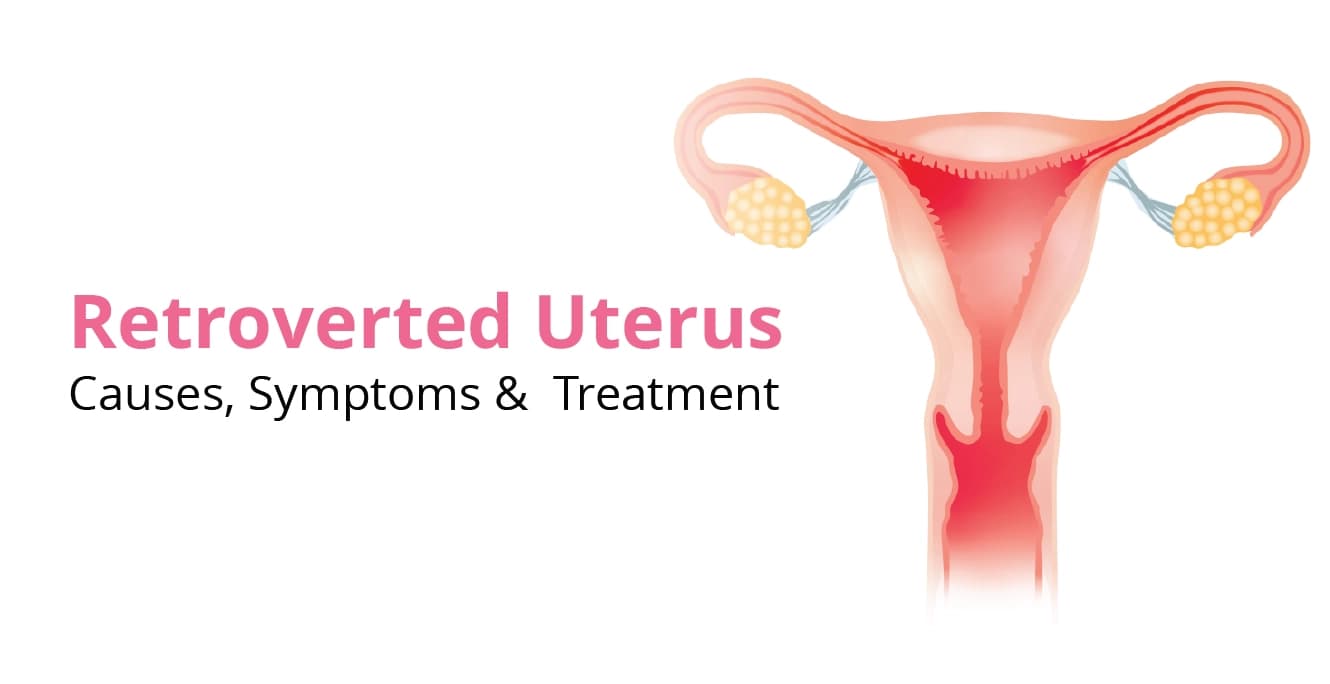
A retroverted uterus is a condition in women where the uterus tilts backward towards the spine rather than forward towards the belly. The precise retroverted uterus pictures can be seen with the help of imaging tests that can change throughout the stages of pregnancy and differ from person to person. Due to the lack of symptoms, the majority of women are unaware that they have a tilted uterus. Many ask, “Is a retroverted uterus normal”? Well, approximately 20% to 30% of women worldwide suffer from this condition.
Symptoms of a Retroverted Uterus
- Menstrual pain, often known as dysmenorrhea, is a common symptom of a retroverted uterus.
- Dyspareunia, or pain during sex, is another symptom of a retroverted uterus.
- The uterus may be tilted backward if a person has lower back or pelvic pain.
- People with a retroverted uterus find it more difficult to use tampons.
- In extreme situations, people may feel pressure on their intestines or bladder, which makes it difficult to contain urine or stool.
Causes of a Retroverted Uterus
Some people have a retroverted uterus from birth; this condition is not brought on by any medical issues. Sometimes it occurs later in life. The following are some causes of a retroverted gravid uterus:
- Scarring or adhesions: Your uterine tissues may adhere to other organs due to scar-like tissues from previous pelvic procedures (including caesarean deliveries), pelvic inflammatory disease (PID), or other infections. Your uterus may be pulled backward by this.
- Fibroids: The shape and location of your uterus can be altered by uterine fibroids or other growths.
- Endometriosis: Tissues similar to your uterine lining develop outside of your uterus when you have endometriosis. Your uterus may become retroverted as a result of these cells adhering to other pelvic organs.
- Childbirth: Your uterus may tilt backward after giving birth due to the stretching and weakening of your pelvic floor muscles and ligaments.
- Menopause: Due to a drop in the hormone oestrogen, menopausal women will have weaker pelvic muscles. Your uterus tilts backward because the ligaments holding it in place are unable to sustain it.
Types of Retroverted Uterus
A retroverted uterus can be either fixed or moveable, and its degree of backward tilt might vary. The most common types of retroverted uterus are:
Mobile Retroverted Uterus
In this type of acute retroverted uterus, the uterus can move freely, but it tilts backward. The most prevalent kind typically has no symptoms.
Fixed Retroverted Uterus
Endometriosis, pelvic infections, and scar tissue are common causes of the uterus’s backward tilt and stable position. This kind could be uncomfortable or painful.
Partially Retroverted Uterus
Instead of being completely inclined backward, the uterus is only marginally so. If symptoms are present, they are often mild.
Severely Retroverted Uterus
The uterus has a severe backward inclination. This may occasionally be linked to pelvic pain, uncomfortable periods, or discomfort during sexual activity.
Diagnosis of Retroverted Uterus
Your doctor can find out if you have a retroverted uterus by doing a pelvic exam. Your doctor will examine your cervix and uterus during this procedure to assess their position and tilt. Sometimes an ultrasound can be performed to confirm a retroverted uterus and rule out more serious problems such as uterine fibroids or endometriosis.
Treatment of Retroverted Uterus
Here are the most common retroverted uterus treatment options available:
- Treating the underlying disease: Treating the underlying condition may help alleviate your symptoms if you have a retroverted uterus.
- Exercises: Exercises to strengthen your pelvic muscles can help maintain your uterus in that position if this occurs. You can talk to your doctor if doing retroverted uterus exercises can help you feel better. It includes tightening your pelvic muscles, as if you were trying to hold back your urine. After a few seconds of tightening the muscles, relax them. If your uterus is retroverted due to scarring, exercising won’t assist, and it may revert to its previous position.
- Pessary: A pessary is a little, donut-shaped piece of plastic that is placed inside your vagina. It helps keep things in place in your vagina by serving as a support structure. It can assist in raising your uterus to an anteverted position. Healthcare professionals may suggest pessaries as a temporary fix due to certain concerns, such as irritation and infection.
- Surgery: Your uterus may be surgically moved to face forward by your healthcare provider. Uterine suspension or uterine relocation are the terms used to describe this procedure. This can relieve pain and permanently correct a tilted uterus. A hysterectomy, or complete removal of the uterus, may be considered in extreme circumstances.
Does a Retroverted Uterus Affect Fertility?
Fertility is typically unaffected by a retroverted uterus. Many women who have a retroverted uterus are able to conceive easily and naturally. It is only a change in the uterus’s position and is typically present from birth or develops over time as a result of pelvic changes or pregnancy.
However, fertility may be indirectly impacted if a retroverted uterus is brought on by underlying diseases such as endometriosis, pelvic inflammatory disease, or adhesions. Improved reproductive outcomes may result from treating the underlying disease. In general, infertility is rarely caused only by a retroverted uterus.
Retroverted vs Anteverted Uterus
|
Aspect |
Anteverted Uterus |
Retroverted Uterus |
|
Definition |
The uterus tilts forward toward the bladder |
Uterus tilts backward toward the spine |
|
Prevalence |
Most common uterine position |
Found in about 20–30% of women |
|
Is it normal? |
Yes |
Yes |
|
Impact on fertility |
Usually no impact |
Usually no impact |
|
Symptoms |
Often no symptoms |
May cause back pain, painful periods, or discomfort during sex (in some women) |
|
Cause |
Natural anatomical position |
Present from birth or due to pregnancy, pelvic surgery, or endometriosis |
|
Effect during pregnancy |
The uterus rises and enlarges normally |
Usually shifts forward as pregnancy progresses |
|
Need for treatment |
No treatment required |
Treatment only if symptoms or underlying conditions are present |
How Common is a Retroverted Uterus?
It is typical to have a retroverted uterus, which is regarded as a natural variation in uterine position. A retroverted uterus is thought to affect 20–30% of women. Many people have it from birth, while others may develop it over time as a result of ageing, pregnancy, or pelvic diseases, including endometriosis or pelvic infections. The majority of women with a retroverted uterus don’t have any symptoms, and an ultrasound or normal pelvic check may be the only way to find out. Unless it is uncomfortable, it usually has no effect on menstruation, fertility, or pregnancy and doesn’t need to be treated.
Exercise to Prevent a Retroverted Uterus
Simple treatments and specific exercises for a retroverted uterus may help relieve moderate discomfort and promote pelvic health. Here are the exercises to prevent a retroverted uterus:
- Kegel exercises: Improve uterine support and strengthen the pelvic floor muscles.
- Bridge postures and pelvic tilts: These exercises gradually change the position of the pelvis and relieve pressure.
- The cat-cow stretch: It is a gentle yoga practice that helps reduce back strain and increase pelvic flexibility.
- Warm compresses: Mild cramping can be relieved by applying heat to the back or lower abdomen.
- Good posture habits: Maintaining proper posture can help reduce tension in your lower back.
Bottom Line
In conclusion, a retroverted uterus is usually a normal anatomical variation and rarely a cause for concern. With the right medical guidance, most women experience no long-term health or fertility issues. Modern imaging methods like retroverted uterus USG help in accurate diagnosis and reassurance.
Even during pregnancy, concerns such as a retroverted uterus or pregnancy bump typically resolve as the uterus shifts forward naturally. Only in rare cases, such as a bulky retroverted uterus, is medical intervention required. Staying informed, monitoring symptoms, and consulting a specialist when needed can ensure confident decisions and healthy reproductive outcomes.
FAQs
How to get pregnant with a retroverted uterus?
Getting pregnant with a retroverted uterus is usually not difficult, as this condition rarely affects fertility. Most women conceive naturally without any special treatment.
Is a retroverted uterus good or bad?
A retroverted uterus is neither good nor bad it is simply a normal variation in the position of the uterus. Many women are born with a retroverted uterus, while others develop it over time due to pregnancy, pelvic changes, or medical conditions.
Why does a uterus become retroverted?
A uterus can be retroverted from birth or develop later due to pregnancy, aging, or weakened pelvic support. Conditions like endometriosis, pelvic infections, or scar tissue can also cause the uterus to tilt backward.
How does sperm travel in a retroverted uterus?
Sperm travel in the same way regardless of whether the uterus is retroverted or anteverted. After ejaculation, sperm move through the cervix into the uterus and then into the fallopian tubes, guided by cervical mucus and uterine contractions not by gravity.
Can a retroverted uterus cause painful periods?
Yes, a retroverted uterus can cause painful periods in some women, but not in all cases. The backward tilt may increase pressure on pelvic structures during menstruation, leading to cramping or lower back pain. However, period pain is often due to underlying conditions like endometriosis or pelvic inflammation rather than the uterine position itself.
Does a retroverted uterus affect fertility?
As we already mentioned, a retroverted uterus does not affect fertility.
Can a retroverted uterus cause constipation?
Yes, a retroverted uterus can contribute to constipation in some women. When the uterus tilts backward, it may put slight pressure on the rectum, making bowel movements more difficult.
Our Fertility Specialists


Kolkata New Town, West Bengal
Dr. Aaheli Maiti
MBBS, MS (Obstetrics & Gynaecology)


Gorakhpur, Uttar Pradesh
Dr. Akriti Gupta
MBBS, MS (Obstetrics & Gynaecology)

Allahabad, Uttar Pradesh
Dr. Ankur Pandey
MBBS, DGO, DNB

Kozhikode, Kerala
Dr. Celine Aricatt
MBBS, MS, Fellowship in Reproductive Medicine

Koramangala, Karnataka
Dr. Manjunath CS
MBBS, MS (OBG), Fellowship in Gynaec Endoscopy (RGUHS), MTRM (Homerton University, London UK)

Kozhikode, Kerala
Dr. Shifa Safarulla
MBBS, MS (Obstetrics & Gynaecology)

Koramangala, Karnataka
Dr. Snehadarshini Karanth
MBBS, MS (Obstetrics & Gynaecology), FRM
Related Blogs




To know more
Birla Fertility & IVF aims at transforming the future of fertility globally, through outstanding clinical outcomes, research, innovation and compassionate care.


Had an IVF Failure?
Talk to our fertility experts