
 Our Centers
 Select City


 Select City
పిండం బదిలీ లక్షణాలు 7 రోజుల తర్వాత

The journey of in vitro fertilization (IVF) is filled with anticipation and hope, especially after the crucial step of embryo transfer. Embryo transfer can be especially anxiety-provoking after the two-week wait. As you navigate this crucial time, it’s natural to wonder if every sensation in your body is a sign of success. While everyone’s experience is unique, understanding common symptoms can help you feel more prepared and less anxious 7 days after embryo transfer . In this article, we explore what to expect during this time and provide guidance on when to seek medical care.
Before we get into the day-to-day experience, let’s address some questions about the embryo transfer process. The process involves thawing the embryo, preparing your uterus, and transferring the embryo using a thin catheter.
How long does the embryo transfer process take?
Embryo transfer is a relatively quick procedure, usually taking between 15 and 30 minutes. However, you may spend a few hours at the fertility clinic, as you will need time to prepare and recover afterwards. Your doctor will usually ask you to rest for a while after the transfer to allow the embryos to settle. The entire procedure, including setup and rest time, can take around 2 to 4 hours.
What happens in the days after embryo transfer?
After the transfer, a lot happens behind the scenes. The embryo continues to develop and hopefully implants in your uterine lining. Here’s a timeline of key milestones:
|
days) |
Event |
|---|---|
|
1-2 |
The embryo begins to hatch from its shell and attach to the uterine lining. |
|
3 |
Implantation begins when the embryo implants into the uterine wall. |
|
4-5 |
Implantation proceeds and the cells that will form the placenta and embryo begin to develop. |
|
6 |
The hormone hCG, which indicates pregnancy, begins to be produced. |
|
7-8 |
Fetal development progresses and hCG levels continue to rise. |
Common symptoms 7 days after embryo transfer
1-3 days: Initial period
In the first few days after your embryo transfer, you may experience:
- Mild cramping as the embryo begins to implant
- Light spotting or discharge due to irritation from the transfer
- Fatigue due to hormonal changes
- Mood swings related to the stress and anxiety of the IVF process
4-6 days: Window for implantation
What you can expect in the 4-6 days after embryo transfer:
- Implantation bleeding , which may look like pink or brown discharge
- Mild cramps or twinges in the pelvic area
- Slight increase in basal body temperature
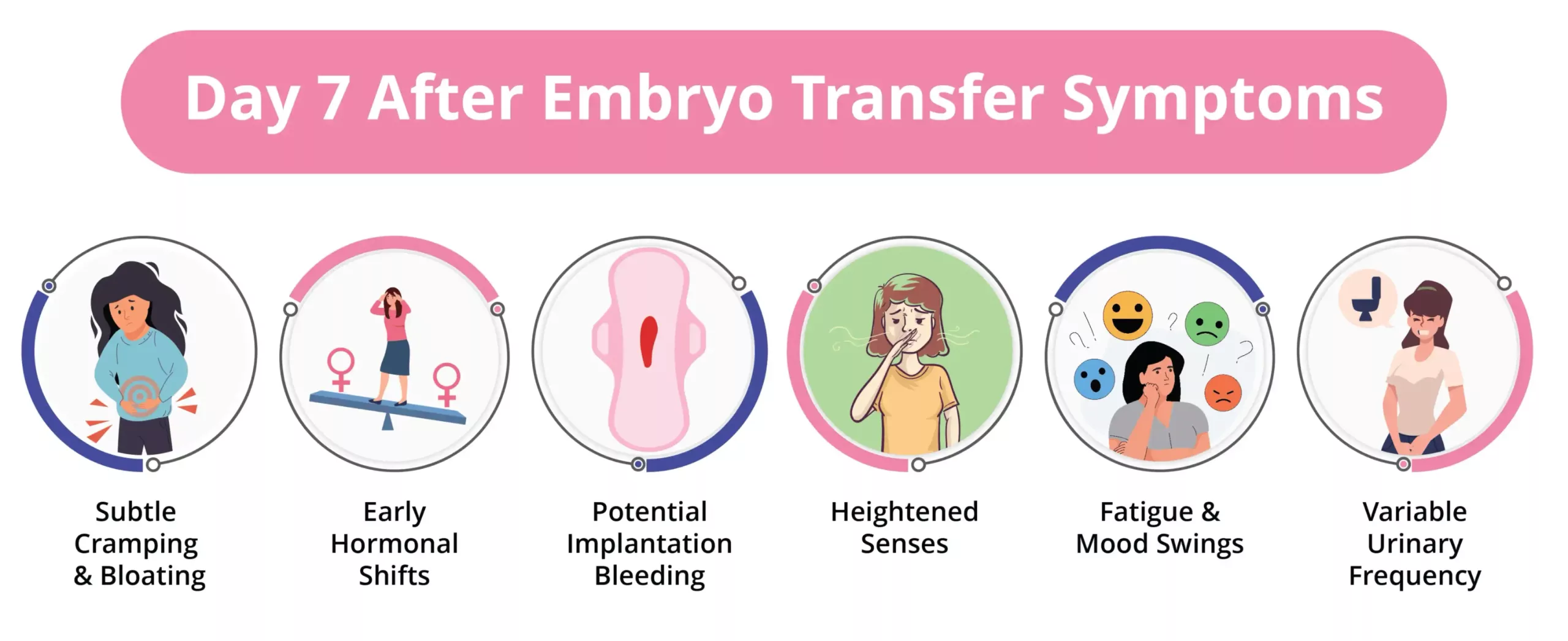
Day 7 and Beyond: Early Symptoms of Pregnancy
By day 7, the embryo may have successfully implanted, leading to specific signs and symptoms such as:
- Breast tenderness and tenderness
- Constant tiredness and fatigue
- Numbness and low back pain
- Changes in vaginal discharge
What are your traits and why cheat sheet
|
Symptom |
The reason may be |
|---|---|
|
Numbness |
Mild cramping indicates implantation of the embryo into the uterine lining |
|
Breast tenderness |
Increased progesterone levels cause sensitivity and tenderness |
|
Fatigue |
Hormonal changes can lead to feelings of fatigue |
|
Implantation bleeding |
Light pink to brown discharge, although not everyone experiences this |
|
Frequent urination |
Increased urination due to increased progesterone and hCG levels |
|
Bloating |
Fluid retention and bloating caused by IVF hormone treatments |
What should I do if I have no symptoms 7 days after the transfer?
If you do not experience any noticeable symptoms 7 days after your embryo transfer , do not worry. It is estimated that 10-15% of women will not have any symptoms at this time. Just as the presence of symptoms does not guarantee a positive result, the absence of symptoms does not mean that the transfer was not successful. The only definitive way to know if you are pregnant is through a pregnancy test.
Red flags: When to seek medical attention
While many symptoms are common, there are some red flags that require immediate medical attention. Here are some to watch out for:
- Heavy bleeding, similar to a heavy period
- Severe stomach pain or cramps
- High fever (above 100.4°F or 38°C)
- Persistent nausea or vomiting
- Dizziness or fainting
If you experience any of these symptoms, contact your fertility specialist or seek emergency medical care.
The importance of the two-week wait
Your clinic will advise you to wait two weeks after your embryo transfer before taking a pregnancy test. This may seem like an eternity, but this waiting period is crucial for several reasons:
- This allows time for the embryo to implant and produce the pregnancy hormone, human chorionic gonadotropin (hCG).
- Testing too early can lead to false-negative results, which can cause unnecessary stress and frustration.
- This gives your body a chance to adjust to hormonal changes and any medication side effects to subside.
Coping emotionally during the two-week wait
The two weeks between your embryo transfer and your pregnancy test can feel like an eternity. It’s natural to feel anxious, impatient, and a little crazy during this time. Here are some strategies to help you cope:
- Practice stress-reducing techniques such as deep breathing, meditation, or gentle yoga.
- Rely on a support network of family, friends, or fellow IVF warriors.
- Keep busy with activities you enjoy, but avoid those that are too strenuous.
- Be kind to yourself and accept that your feelings are valid.
Lifestyle factors that can improve implantation success
While there is no magic formula to ensure successful implantation, there are some lifestyle factors that can help create a welcoming environment for your embryo:
- Eat a balanced, nutrient-rich diet with plenty of fruits, vegetables, whole grains, and lean proteins.
- Stay hydrated by drinking plenty of water and electrolyte-rich fluids.
- Take any supplements recommended by your doctor, such as folic acid and vitamin D.
- Get plenty of rest and aim to get 7-8 hours of sleep a night.
- Avoid smoking, alcohol, and caffeine, as these can interfere with implantation.
A word from an expert
The waiting period after embryo transfer can be a time of mixed emotions. Remember that your body is working hard to conceive. Take care of yourself and know that your fertility team will support you every step of the way. ~ Swati Mishra
To know more
Birla Fertility & IVF aims at transforming the future of fertility globally, through outstanding clinical outcomes, research, innovation and compassionate care.


Had an IVF Failure?
Talk to our fertility experts