
 Our Centers
 Select City


 Select City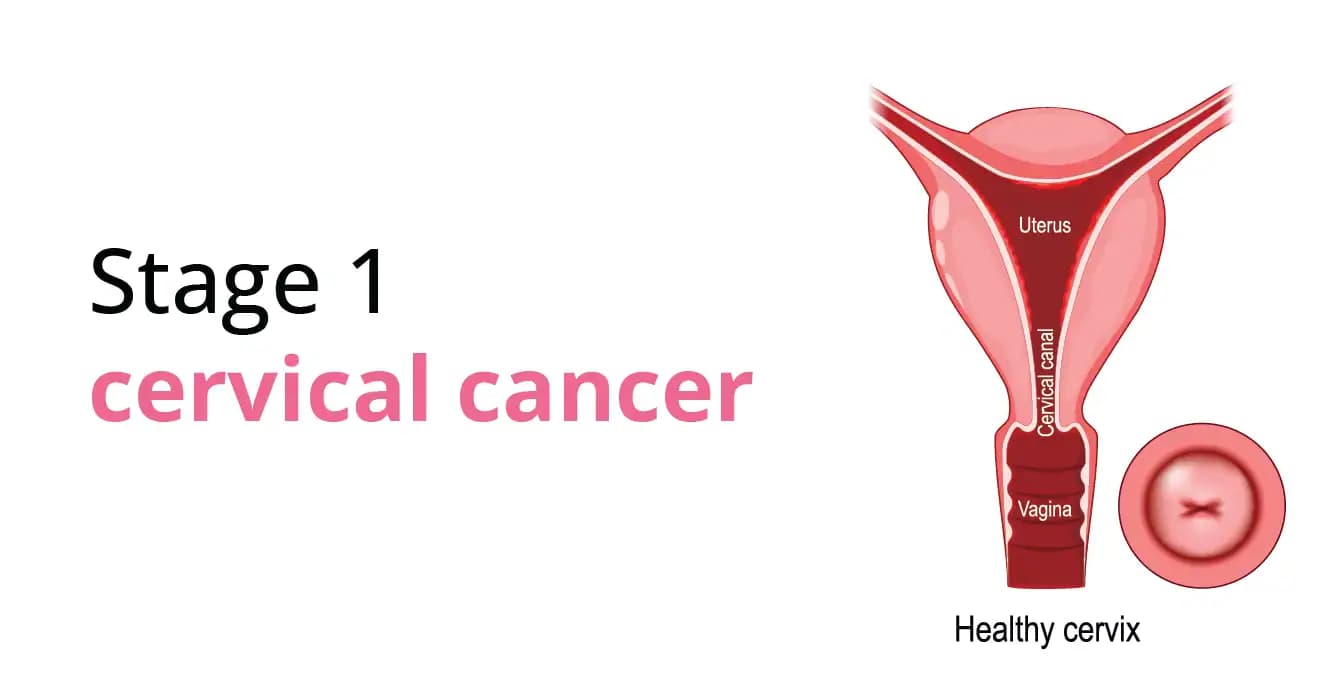
Stage 1 Cervical Cancer: Symptoms, Diagnosis, and Treatment

Table of Contents
- What is Stage 1 Cervical Cancer?
- What Happens After Stage 1 Cervical Cancer?
- Causes of Stage 1 Cervical Cancer
- Symptoms of Stage 1 Cervical Cancer
- Why is Early Detection so Important?
- Diagnosis of Stage 1 Cervical Cancer
- What are the Treatment Options for Stage 1 Cervical Cancer?
- Is Stage 1 Cervical Cancer Curable?
- Survival Rate of Stage 1 Cervical Cancer
- Lifestyle Changes for Managing Stage 1 Cervical Cancer
- Impact of Stage 1 Cervical Cancer on Fertility
- When to see a doctor?
- Final Takeaway
- FAQs
- Is chemo required in stage 1 cervical cancer?
- What are the survival rates of stage 1 cervical cancer?
- What if stage 1 was left untreated?
- What are the early detected symptoms?
- Who should have cervical cancer screening?
- What happens if a Pap smear is positive?
- What diet is for cervical cancer stage 1?
- At what stage does cervical cancer worsen?
- What is the best treatment for stage 1 cervical cancer?
Cervical cancer, when caught early, is a battle that you can win easily.
All you need is the right approach, timely treatment, and compassionate care.
The cervix is the lower part of the uterus that connects to the vagina. Cervical cancer is the growth of abnormal cells in the cervix. Persistent infection due to the human papillomavirus is the most common cause of cervical cancer. The first stage of cervical cancer is one in which the cancerous cells have not progressed beyond the cervical area and have not affected nearby or distant tissues.
Is this the end?
No. With timely intervention and a proactive approach, the chances of the cure of stage 1 cervical cancer are very high, so one should stay positive and get the best treatment.
What is Stage 1 Cervical Cancer?
Compared to other stages, stage 1 cervical cancer is easier to cure because it is limited to the cervix. It is divided into two sections, Stage 1A and Stage 1B, which provide additional details regarding the condition’s location, progression, and severity.
Stage 1A: The growths are so tiny at this stage that a microscope or colposcope is required to see them. It is further separated into two phases:
Stage 1A1: In this stage, the cells are present no deeper than three millimetres inside the cervical tissues and are only visible by microinvasion.
Stage 1A2: The cells extend three to five millimetres inside the cervical tissues and are visible to the unaided eye.
Stage 1B: At this stage, the cancer is visible inside the cervix but considerably deeper into the cervical tissues. It is further separated into three phases:
Stage 1B1: In this stage, the cancer cells have penetrated the cervical tissues more than five centimetres but not more than two centimetres.
Stage 1B2: In this stage, the cancer cells penetrate the cervical tissues by more than two cm.
Stage 1B3: The malignancy has penetrated the cervical tissues more deeply than 4 cm.
What Happens After Stage 1 Cervical Cancer?
Even though this blog will be mostly talking about Stage 1 cervical cancer, we should also understand what happens if it progresses. Well, it begins to spread outside the cervix to nearby tissues and, in advances stages, to distant organs.
Stage 2 Cervical Cancer
In Stage 2, the cancer spreads beyond the cervix and uterus. However, at this stage, the cancer doesn’t reach the pelvic wall or the lower part of the vagina. It is further segregated into 2 parts:
- Stage 2A- Cancer has spread to the upper part of the vagina.
- Stage 2B – Cancer has spread to the tissues around the parametrium. This makes treatment complex in the earlier stages.
Stage 3 Cervical Cancer
At this stage, the cancer spreads further within the pelvis. This stage is further segregated into 3 parts:
- Stage 3A- Cancer has reached the lower part of the vagina.
- Stage 3B- Cancer has spread to the pelvic wall. This may block the uterus, complicating kidney function.
- Stage 3C- Cancer has spread to the nearby lymph nodes, regardless of the size of the tumor.
Stage 4 Cervical Cancer
Stage 4 is the most advanced stage, where cancer spreads beyond the pelvis.
- Stage 4A: Cancer has spread to nearby organs such as the bladder or rectum.
- Stage 4B: Cancer has spread to distant organs like the lungs, liver, or bones.
Causes of Stage 1 Cervical Cancer
The main cause of Stage 1 cervical cancer is the abnormal growth of cells in the cervix, which is located in the lower region of the uterus. Here are the additional possible causes of cervical cancer:
- Weak Immune System: Certain drugs and medical conditions may impair the immune system’s normal function, increasing the risk of infection and cervical cancer.
- Multiple Full-Term Pregnancies: Because pregnancy causes hormonal changes that may impact cervical cells, women who have three or more full-term pregnancies are more likely to acquire cervical cancer.
- Frequent Smoking: Because tobacco contains chemicals that might damage cervical cells’ DNA and make them more vulnerable to HPV, which further promotes cervical cancer, regular smoking may raise a woman’s risk of developing the disease.
- Long-Term Birth Control Use: Regular birth control use over an extended period of time can cause hormonal changes that can impact cervical cells.
Symptoms of Stage 1 Cervical Cancer
During the early stage, cervical cancer may not show many symptoms; however, some women may experience:
- Abnormal Vaginal Bleeding– The most common symptoms include bleeding that happens after menopause, in between cycles, or after any kind of sexual activity. It is because aberrant cells on the cervix might irritate the surrounding blood vessels. Persistent or unusual bleeding should never be disregarded, even if it appears mild at first.
- Watery or Blood-Streaked Vaginal Discharge– Another symptom is changes in the vaginal discharge. The while discharge changes into a watery, pink, or brown liquid mixed with blood. A strong or unpleasant smell may indicate an infection or tissue breakdown. If you notice any change in the colour, smell, or consistency of your discharge, you should get medically evaluated.
- Pelvic Pain or Discomfort- When cervical tissue becomes sensitive or inflamed, it can cause pain during sexual activity. From minor discomfort to a more severe pelvic aching, this discomfort might vary. It’s crucial to see a doctor if sex starts to hurt for no apparent reason.
- Changes in Menstruation– Another symptom is that you can sense changes in your menstruation cycles. There can either be heavy bleeding, or the cycles extend from 3-5 days. It is due to abnormal cervical cell proliferation that interferes with the regular menstrual cycle.
You must seek a proper diagnosis if you experience any of these symptoms.
Why is Early Detection so Important?
Early detection is important because many gynecological conditions, including cervical cancer, can progress silently before clear symptoms appear. When you pay attention to these visible signs of cervical cancer, you can get help in seeking timely medical care. Once the diagnosis is made, it is easier for the experts to recommend a treatment plan. This plan can be more effective and less invasive, thereby reducing long-term health risks.
The most important part is that early diagnosis also plays a crucial role in preserving reproductive health, as delayed treatment can impact the uterus and ovaries, leading to female infertility. Identifying issues early allows doctors to plan safer and more effective fertility treatment, improving outcomes and protecting future fertility.
Diagnosis of Stage 1 Cervical Cancer
To confirm stage 1 cervical cancer, doctors usually use the following diagnostic methods:
- Pap Smear Test- This is the first test used to detect abnormal cells in cervical cancer screening.
- HPV Test- This test identifies the presence of high-risk HPV types, which are linked to cervical cancer.
- Colposcopy- Once the pap smear test and HPV testing are done, a detailed examination of the cervix is done by using a magnifying device. The main motive is to spot abnormal tissues.
- Biopsy- It involves taking a small tissue sample for microscopic analysis, which confirms the cancer and determines the stage.
- Imagine tests– At last, MRI, CT scans, or ultrasounds can be done to assess the size of the tumour and confirm whether it is spreading.
What are the Treatment Options for Stage 1 Cervical Cancer?
The treatment for stage 1 cervical cancer depends on factors such as the sub-stage, tumour size, and a woman’s fertility preferences. Common treatment options include:
1. Surgery:
- Cone Biopsy– This procedure removes a cone-shaped portion of the cervix that contains cancerous cells. It is usually recommended for very early-stage cervical cancer (stage 1A1) and is suitable for women who wish to preserve their fertility.
- Simple Hysterectomy- In this procedure, the cervix and uterus are removed. It is typically advised for smaller tumours when fertility preservation is not a priority.
- Radical Hysterectomy– This involves removing the cervix, uterus, nearby tissues, and part of the vagina. It is recommended for larger tumours (stages 1B1–1B3) where more extensive treatment is required.
2. Radiation Therapy:
External beam radiation or brachytherapy uses high-energy rays to destroy cancer cells. It is often combined with surgery, especially in stage 1B cases.
3. Chemoradiation Therapy (CRT):
Low-dose chemotherapy is given along with radiation to improve treatment effectiveness, mainly for advanced stage 1B cancers.
4. Radical Trachelectomy (Fertility-sparing):
This procedure removes the cervix and surrounding tissue while preserving the uterus, making it suitable for women with small tumours who want to retain fertility.
Your doctor will guide you through the options based on your health and personal priorities.
Is Stage 1 Cervical Cancer Curable?
Yes, Stage 1 cervical cancer is one of the most treatable cases of cancer, where success rates are equivalent to approximately 95%. However, it is only possible if the proper diagnosis happens early. According to the analysis, treatment options can be planned, including surgery or radiation therapy. Both these options yield great survival chances, and many women lead cancer-free lives.
Survival Rate of Stage 1 Cervical Cancer
The survival rate for stage 1 cervical cancer is very encouraging for those who have just been diagnosed with the same. Here are the approximate numbers of success rates for both categories:
- Stage 1A- 5-year survival rate is above 95%
- Stage 1B – It can range from 80% to 90%, depending on the exact sub-stage and treatment plan.
These survival rates highlight the importance of early diagnosis and prompt treatment.
Lifestyle Changes for Managing Stage 1 Cervical Cancer
Though medical treatment is important for curing cervical cancer, some lifestyle changes can be adapted to aid recovery and healthy living.
- Healthy Diet: Include fruits, vegetables, whole grains, and lean proteins to boost immunity.
- Exercise: Regular physical activity can improve energy levels and reduce treatment side effects.
- Quit Smoking: Smoking weakens the immune system and may affect treatment outcomes.
- Stress Management: Practices like yoga, meditation or counselling can help manage anxiety during recovery.
Impact of Stage 1 Cervical Cancer on Fertility
The impact of stage 1 cervical cancer on fertility is as follows:
- Hysterectomy- Both simple and radical hysterectomies need to remove the uterus and the cervix permanently, which makes pregnancy impossible.
- Radiation therapy- During this therapy, the ovaries and the uterus may be damaged, which potentially causes infertility in women.
- Fertility-sparing options- There are cone biopsy, which removes only the affected tissues from the body, which means the uterus is preserved and the women have the ability to conceive. Radio trachelectomy also helps with allowing future pregnancies since it just removes the cervix and the surrounding tissues while keeping the uterus intact.
- Tumor size & stage- This determines the feasibility of fertility-preserving treatments for the sub-stages 1A1, 1A2, and sometimes for 1B1 as well.
Early discussion of fertility concerns allows personalised treatment plans that align with both medical needs and future family goals. Stage 1 cervical cancer patients can discuss fertility preservation options like egg freezing or embryo freezing with their oncologist before starting any treatment. IVF is also an option in case the doctor suggests going for a cone biopsy or radio trachelectomy. Women should be monitored during pregnancy, and counselling or support groups can provide emotional guidance.
When to see a doctor?
You should see a doctor if you experience symptoms such as abnormal vaginal bleeding (between periods, after intercourse, or after menopause), unusual vaginal discharge, persistent pelvic pain, or changes in your menstrual cycle. Even if symptoms seem mild, they should not be ignored. Regular cervical screening through Pap smear and HPV testing is essential, especially for women above 21 years or those with risk factors like HPV infection or smoking. If you have been diagnosed with abnormal cervical cells earlier, timely follow-up is crucial. Early consultation helps ensure prompt diagnosis, effective treatment, and better long-term outcomes.
Final Takeaway
Cancer is not only overwhelming for the person suffering from it but also for their close ones. But this doesn’t mean that one should lose hope. Early diagnosis and effective treatment options provide a strong chance of recovery and ensure a healthy life. Understanding the symptoms, getting timely medical advice, and exploring fertility-preserving treatments can empower you to make informed decisions about your health. With awareness and a proactive mindset, cervical cancer is a challenge that can be overcome. Don’t lose hope; move forward with a positive approach.
Word From an Expert:
“First-stage cervical cancer is a treatable disease if it receives the correct diagnosis. Frequent screening, monitoring of symptoms, and prompt medical intervention play a key role in the patient getting a positive outcome.” ~ Dr. Jyotsna Pundir. ~ Dr. Aashita Jain
FAQs
Is chemo required in stage 1 cervical cancer?
Chemotherapy is usually not required in stage 1 cervical cancer. There are some cases in stage 1B that might need chemo combined with radiation to help improve the treatment outcomes.
What are the survival rates of stage 1 cervical cancer?
The survival rates of stage 1 cervical cancer are high when detected early. The 5-year survival rate is over 95% for stage 1A and around 80-90% for stage 1B, depending on the treatment plan recommended by the specialists.
What if stage 1 was left untreated?
If cervical cancer is left untreated at stage 1, then it can progress to advance stages, spreading beyond the cervix to nearby tissues and organs. This can make the treatment complex and reduce the survival rates.
What are the early detected symptoms?
The early detected symptoms are abnormal vaginal bleeding along with watery or blood-streaked vaginal discharge. Further, the symptoms can worsen to pelvic pain.
Who should have cervical cancer screening?
Cervical cancer screening is recommended for all women with a cervix starting at age 21. Regular Pap smears and HPV tests help detect changes early, even before symptoms appear.
What happens if a Pap smear is positive?
A positive Pap smear means that there are some abnormal cervical cells, but they need not be cancerous. Your healthcare provider will advise you to undergo repeat testing, an HPV test, colposcopy, or a biopsy to confirm the cause of the abnormal cells and to discuss the next steps.
What diet is for cervical cancer stage 1?
For Stage 1 cervical cancer, a balanced, nutrient-rich diet helps support immunity and recovery.
Focus on fresh fruits and vegetables (especially leafy greens), whole grains, lean proteins, and foods rich in antioxidants, folate, and vitamin C; limit processed foods, sugar, and alcohol.
At what stage does cervical cancer worsen?
Cervical cancer worsens when it moves beyond the cervix. In stage 2, cancer extends to the upper vagina and the nearby tissues. Post that in stage 2, the cancer reaches the lower vagina, pelvic wall, or lymph nodes. In stage 4, the cervical cancer spreads to nearby organs as well. These include the lungs, liver, and bones. However, early detection can help prevent the progression.
What is the best treatment for stage 1 cervical cancer?
Surgeries like cone biopsy, hystectomy ( simple or radical), radiation therapy, chemoradiation therapy, and radical trachelectomy. Are some of the best treatments for stage 1 cervical cancer.
Our Fertility Specialists
To know more
Birla Fertility & IVF aims at transforming the future of fertility globally, through outstanding clinical outcomes, research, innovation and compassionate care.


Had an IVF Failure?
Talk to our fertility experts