
 Our Centers


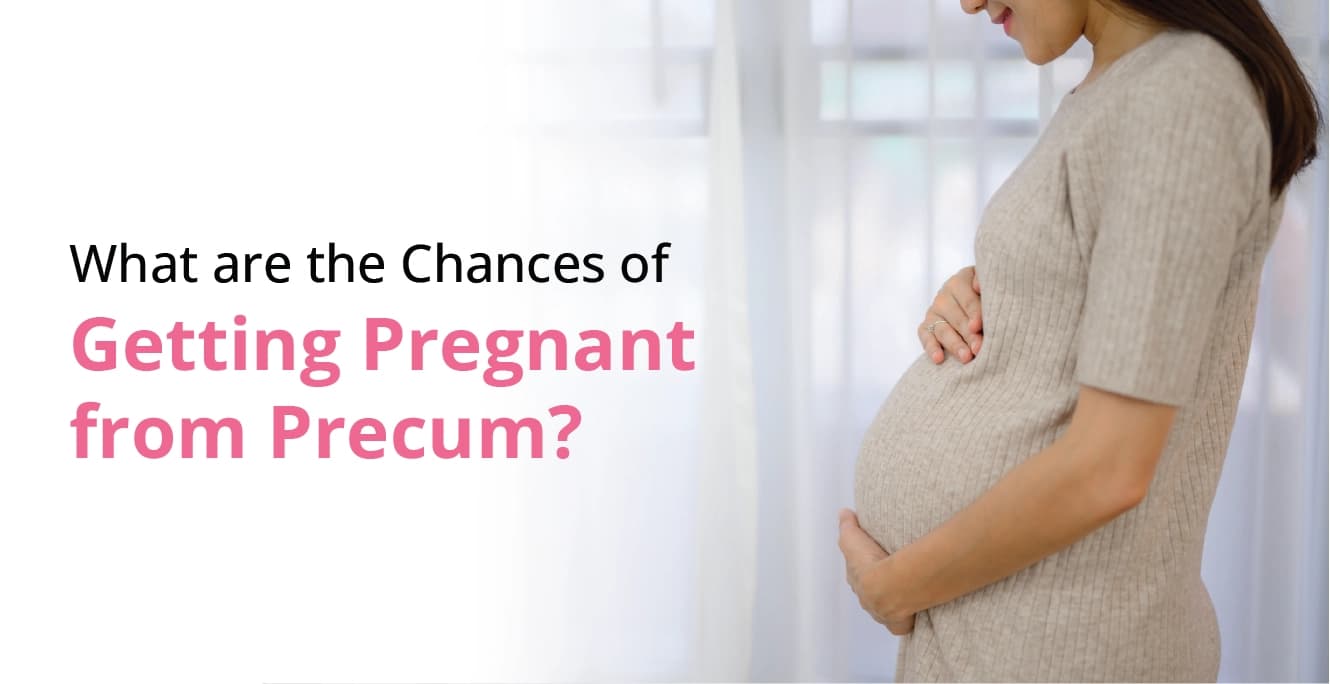
Can Precum Cause Pregnancy? Facts, Risks, and Myths Explained

Table of Contents
An unplanned pregnancy is something many couples worry about, especially when it comes to moments that feel confusing or unclear. One question that often comes up is whether pregnancy can happen without ejaculation, particularly from pre-ejaculatory fluid, also known as precum.
You may have seen mixed opinions on forums, social media, or other knowledge-sharing platforms, which can make it harder to know what is accurate and what is a myth.
This blog explains the topic in a clear, detailed and science-backed way. The aim is to help you clarify your doubts so you can make informed choices about your sexual health.
What is Precum?
Precum is a short term for pre-ejaculatory fluid. This is a clear and colourless fluid that is discharged from the penis during sexual arousal. It typically occurs before ejaculation and most of the time people do not even notice it as it is released in very small quantities.
The main function of precum is to get the urethra ready for ejaculation by washing away any traces of urine and providing natural lubrication. This makes the way for semen during ejaculation easier and it can also make intercourse comfortable.
Precum is produced by the Cowper’s glands, which are different from the glands that produce semen. Even though precum is not meant to be a carrier of sperm, it may at times pick up sperm that are leftover in the urethra from an earlier ejaculation.
Does Precum Contain Sperm?
This is one of the most important questions to address. Precum does not naturally contain sperm when it is produced. However, sperm can sometimes be present in precum due to leftover sperm in the urethra from a previous ejaculation.
If a person has ejaculated recently, sperm may remain in the urethra. When precum passes through the same pathway, it can carry those sperm along with it. This is why the answer to whether pre cum has sperm is not always a simple no.
Several medical studies have found that some samples of precum contained active sperm, while others did not. This variation is why pregnancy from precum is possible, even if the risk is lower compared to full ejaculation.
Can Precum Cause Pregnancy?
Yes, pre-ejaculatory fluid can lead to pregnancy, although the chances are lower than with full ejaculation. This happens when the fluid carries sperm left in the urethra from a previous ejaculation. If that fluid enters the vagina, fertilisation is possible even if ejaculation does not occur.
The risk becomes higher during ovulation, which is the most fertile phase of the menstrual cycle. At this time, an egg is available for fertilisation, and sperm can survive inside the reproductive tract for up to five days. Because of this, even a small number of sperm present in pre-ejaculatory fluid can result in pregnancy.
How Often Can Precum Cause Pregnancy?
It is hard to measure how often pregnancy happens specifically due to precum because the presence of sperm in precum varies from person to person. However, studies show that the withdrawal method has a typical failure rate of about 20% per year. This means that out of 100 couples who rely on withdrawal as their only method of contraception, around 20 may experience an unplanned pregnancy within a year.
These pregnancies happen due to factors such as sperm present in pre-ejaculatory fluid, delayed withdrawal, or incorrect timing. While pregnancy from precum alone is not very common, the overall risk becomes higher when no other contraception is used, especially during the fertile window.
Can Precum Cause Pregnancy Before Period?
Pregnancy before a period depends on the phase of your menstrual cycle, particularly your ovulation phase. The chances are low if you have already passed your ovulation phase and the egg is no longer viable. However, cycles can vary from month to month, and many people do not track ovulation accurately. If ovulation happens later than expected, sperm from precum could still fertilise the egg.
What Factors Impact the Chances of Pregnancy through Precum?
Multiple factors influence whether precum can lead to pregnancy, especially during ovulation. These are:
- Recent ejaculation: If ejaculation occurred shortly before intercourse, leftover sperm in the urethra increases the risk.
- Timing: Intercourse during the fertile window raises the chances significantly.
- Sperm health and count: Healthier and more motile sperm increase the likelihood of fertilisation.
- Consistency of contraception: Relying only on withdrawal to avoid pregnancy increases overall risk.
How to Avoid Pregnancy from Precum?
If avoiding pregnancy is the goal, relying on withdrawal alone is not recommended. Here are safer options.
- Use condoms from the very first moment of sexual contact, not only right before ejaculation. Condoms are great at blocking sperm from reaching the vagina, and they also protect against infections.
- Hormonal contraceptives such as pills, patches or injections that prevent the release of eggs (ovulation) can also help.
- An intrauterine device (IUD) or an implant provides long-term protection with a high level of effectiveness.
- If unprotected sex has already happened, emergency contraception can be used. However, it should not be a regular method of contraception.
Can Precum Be Prevented?
There is no way to completely prevent the release of pre-ejaculatory fluid, as it is a natural response of the body to sexual arousal. However, the risk can be significantly reduced.
- Using protection from the very start of sexual contact is crucial, as waiting until just before ejaculation does not stop sperm from entering the vagina. This is the reason why the withdrawal method alone is not a reliable contraceptive method.
- It is possible that urinating before intercourse may get rid of any remaining sperm in the urethra, but the risk is not yet completely eliminated.
- Education and healthy communication between partners help them to decide on contraception before the situation arises. Using protection such as condoms or other available contraceptives is an effective and practical way to avoid unplanned pregnancy.
The Closing Note
Whether precum can result in pregnancy is a question that many people wonder about. Unawareness can lead to unnecessary worry or false reassurance. It is always better to have an understanding of how your body works and acknowledge that a low-risk situation does not equate to no risk.
If you are sexually active and do not want to get pregnant, the best way is to always use reliable contraception. If you feel uncertain or worried, talking to a healthcare provider can help you understand and stay calm. Being aware is not about fears; it is about making decisions that are right for your life and your health.
FAQs
Q: When Does Precum Occur?
Precum occurs during sexual arousal before ejaculation and may go unnoticed by many people.
Q: Can Precum Cause Pregnancy?
Yes, if precum contains sperm and enters the vagina, it may cause pregnancy. However, the risk is lower than that of ejaculation.
Q: How Precum Can Cause Pregnancy?
If precum is carrying sperm and that sperm finds its way through the vagina, it may fertilise an egg. This may cause pregnancy. However, timing and sperm presence play an important role in this.
Q: Can You Get Pregnant from a Precum If He Peed Before?
Urinating before intercourse may reduce the number of sperm left in the urethra, but it does not fully eliminate the risk of pregnancy.
Our Fertility Specialists


Gorakhpur, Uttar Pradesh
Dr. Akriti Gupta
MBBS, MS (Obstetrics & Gynaecology)


Kolkata New Town, West Bengal
Dr. Aaheli Maiti
MBBS, MS (Obstetrics & Gynaecology)

Siliguri, West Bengal
Dr. Angana De
MBBS, MD, Fellowship in Reproductive Medicine

Perinthalmanna, Kerala
Dr. Amrutha C V
MBBS, DGO, DNB (Obstetrics & Gynaecology)

Bhubaneswar, Odisha
Dr. Amrita Nanda
MBBS, MS (OBG)

Kozhikode, Kerala
Dr. Celine Aricatt
MBBS, MS, Fellowship in Reproductive Medicine
Related Blogs




To know more
Birla Fertility & IVF aims at transforming the future of fertility globally, through outstanding clinical outcomes, research, innovation and compassionate care.


Had an IVF Failure?
Talk to our fertility experts