
 Our Centers


Can IVF Treatment be Done After Menopause?

Table of Contents
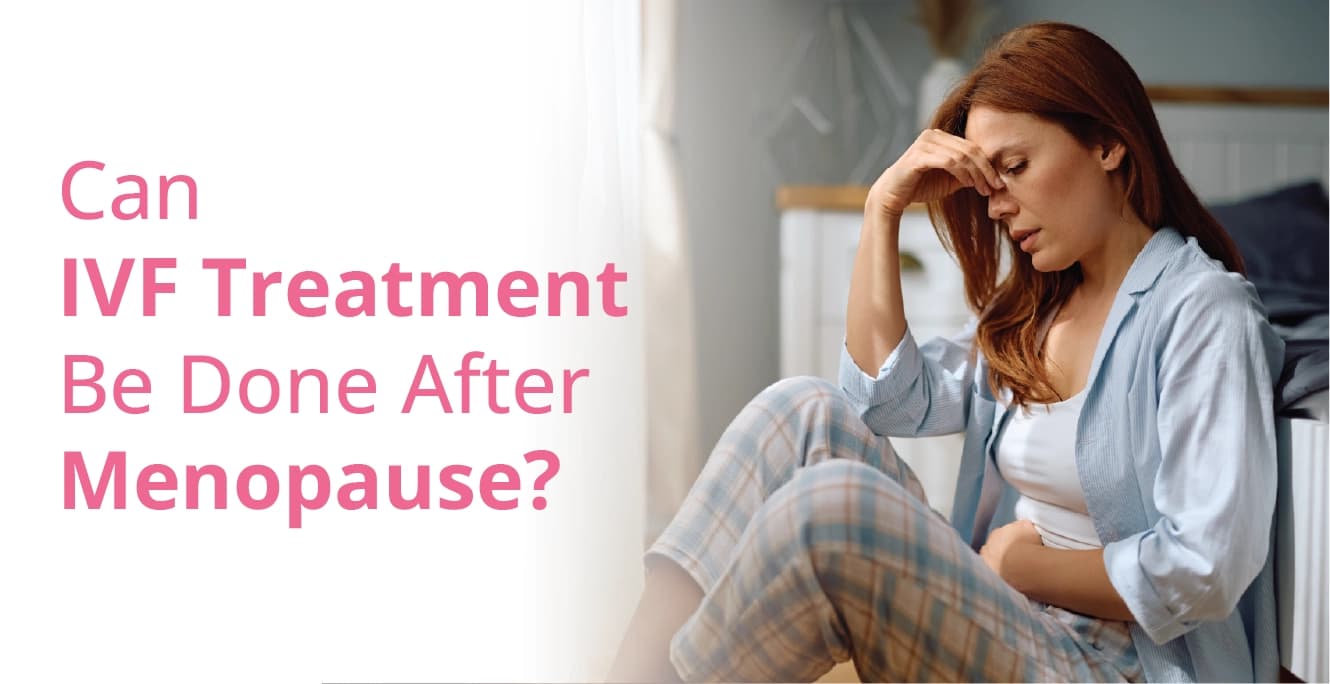
Menopause may feel like the moment when your door to becoming a biological mother closes. But thanks to advances in reproductive medicine, this belief has now changed. Today, IVF, an advanced fertility procedure, is not only making motherhood possible after menopause, but it is also a growing choice for women who want to build their families later in life. Whether manopause has occurred naturally or due to any medical reasons, IVF offers a reassuring path to many couples. Let’s understand how.
Understanding Menopause and IVF
What is Menopause?
Menopause is a phase in a woman’s life when the ovaries stop releasing eggs and hormone levels start dropping, especially the levels of oestrogen and progesterone. This usually happens between ages 45–55 and marks the end of natural fertility. Although the ovaries are not working, a pregnancy can still be supported by the uterus with the right medical planning and guidance.
Can You Get Pregnant After Menopause?
Naturally, no, but with the help of IVF – yes, depending upon your health condition. You should know that menopause does not affect the uterus; it affects the formation of eggs. If you have previously frozen eggs or donor eggs, you can achieve pregnancy with the right hormonal support and medical supervision.
How Does IVF Help in Pregnancy After Menopause?
Once a woman reaches menopause, there are no ovulating eggs, the hormones required for pregnancy are also insufficient, and ovulation medicines become ineffective. IVF is planned, considering all these challenges. With the help of donor or previously preserved eggs, the embryo is created outside the body. The best embryo is then transferred to the uterus after preparing it with hormones.
The Process of IVF After Menopause
The process of IVF after menopause involves a few additional steps compared to normal IVF. This is to ensure that the uterus is prepared to support pregnancy using a donor or frozen egg. The following are 5 key stages:
Initial Consultation and Medical Evaluation
This is the first stage, and it is important to know if you are in good health to safely carry a pregnancy. It also helps the doctors personalise your treatment. It starts with a comprehensive health assessment since pregnancy at a later age requires careful medical planning.
Your fertility specialist may suggest the following tests:
- Blood tests to check hormone levels
- ECG and heart health assessment
- Thyroid profile
- Pelvic scan and uterine evaluation
- Screening for diabetes and blood pressure
Choosing the Source of the Egg
Women who are in their menopause phase need an egg source. There are two options:
- Donor eggs: These are the eggs taken from young, healthy donors and have the highest success rate.
- Frozen eggs: If you had opted for egg freezing before menopause to preserve your fertility, then these preserved eggs will be used in IVF.
The eggs are fertilised with partners’ or donor sperm to create embryos, which will then be transferred to your uterus.
Hormonal Preparation of the Uterus
This stage usually lasts 2–3 weeks, during which the uterus is prepared to mimic a natural cycle for embryo implantation. Hormone medications help prepare the endometrium (uterine lining) by:
- Building thickness
- Supporting early pregnancy
- Creating a healthy environment for embryo attachment
Embryo Formation and Transfer
Once eggs are fertilised in the lab, embryos are monitored for quality. The healthiest embryo is selected and transferred into the uterus using a simple, painless procedure. No anaesthesia is needed, and you can go home the same day.
Pregnancy Support and Monitoring
Hormonal support continues even after embryo transfer. A pregnancy test is done after 12–14 days. If positive, doctors monitor hormone levels and the development of the pregnancy closely, especially in the first trimester.
Success Rates and Challenges of IVF After Menopause
Success Rates
The success of IVF after menopause depends largely on the following factors:
- Quality of donor eggs or frozen eggs
- Uterine health
- Overall maternal health
Some studies have revealed that the success rates of IVF with donor eggs are similar across age groups, even for women in their late 40s and early 50s. This is because it is the age of the egg that matters more than the age of the uterus.
Factors That Affect Success
The following factors can significantly impact the success rates
- Chronic medical conditions (such as diabetes, hypertension)
- Body mass index
- Endometrial thickness
- Lifestyle factors such as smoking or lack of sleep
- Embryo quality
Fertility specialists personalise treatment to overcome many of these challenges and boost success.
Potential Challenges
While IVF after menopause is medically possible, there are some considerations:
- Higher chances of pregnancy-related complications, such as high blood pressure
- Need for ongoing hormone medications
- More frequent monitoring is required
- Emotional and physical commitment to the process
- Limited family or societal support for late pregnancies
The challenges do not mean that pregnancy is not possible; these are just areas where additional care and attention are required to ensure a safe, healthy pregnancy.
Benefits of IVF After Menopause
IVF after menopause offers a meaningful choice to many women who want to embrace motherhood at a stage in life when clarity and confidence are stronger than ever. It comes with the following benefits:
A Second Chance at Motherhood
Women who could not pursue pregnancy earlier due to personal, medical, or financial reasons find IVF after menopause deeply empowering.
Possibility After Premature Menopause
If a woman faced early menopause due to genetics, surgery, chemotherapy, or autoimmune conditions, it does not have to end their dream of having a baby.
Use of Frozen Eggs
Women who planned their fertility by preserving their eggs can finally use them when they feel they are ready – emotionally, financially, and personally.
High Success Rates With Donor Eggs
Donor eggs from young and healthy donors offer high-quality embryos, which improve success rates and reduce genetic risks.
Medical and Emotional Preparedness
Motherhood is a very personal decision. Many women feel more stable, mature, and emotionally ready for it later in life.
Safe Uterine Environment
Menopause affects the ovaries, not the uterus. With proper hormonal support, your uterus can carry a healthy pregnancy.
The Closing Note
IVF after menopause is not about turning back time; it is about expanding possibilities for you. Modern fertility treatments give women the choice to pursue motherhood when it aligns with their life goals and not just their biological clock. With the right medical care, donor or preserved eggs, and careful monitoring, pregnancy after menopause can be safe, successful, and deeply fulfilling.
If you are considering this path, speak with our renowned fertility specialists at Birla Fertility & IVF, who deliver best-in-class success rates even in complex fertility cases. They will guide you through your individual options, walk you through the process, and help you understand what is best for your health and future.
Our Fertility Specialists


Gorakhpur, Uttar Pradesh
Dr. Akriti Gupta
MBBS, MS (Obstetrics & Gynaecology)

Kolkata New Town, West Bengal
Dr. Aaheli Maiti
MBBS, MS (Obstetrics & Gynaecology)

Rajouri Garden, Delhi
Dr. Devyani Mukherjee
MBBS, MS (Obstetrics and Gynaecology) FNB (Reproductive Medicine)

Allahabad, Uttar Pradesh
Dr. Ankur Pandey
MBBS, DGO, DNB
Rohini, Delhi
Dr. Karishma Makhija
MBBS, DGO, DNB
Related Blogs


To know more
Birla Fertility & IVF aims at transforming the future of fertility globally, through outstanding clinical outcomes, research, innovation and compassionate care.


Had an IVF Failure?
Talk to our fertility experts