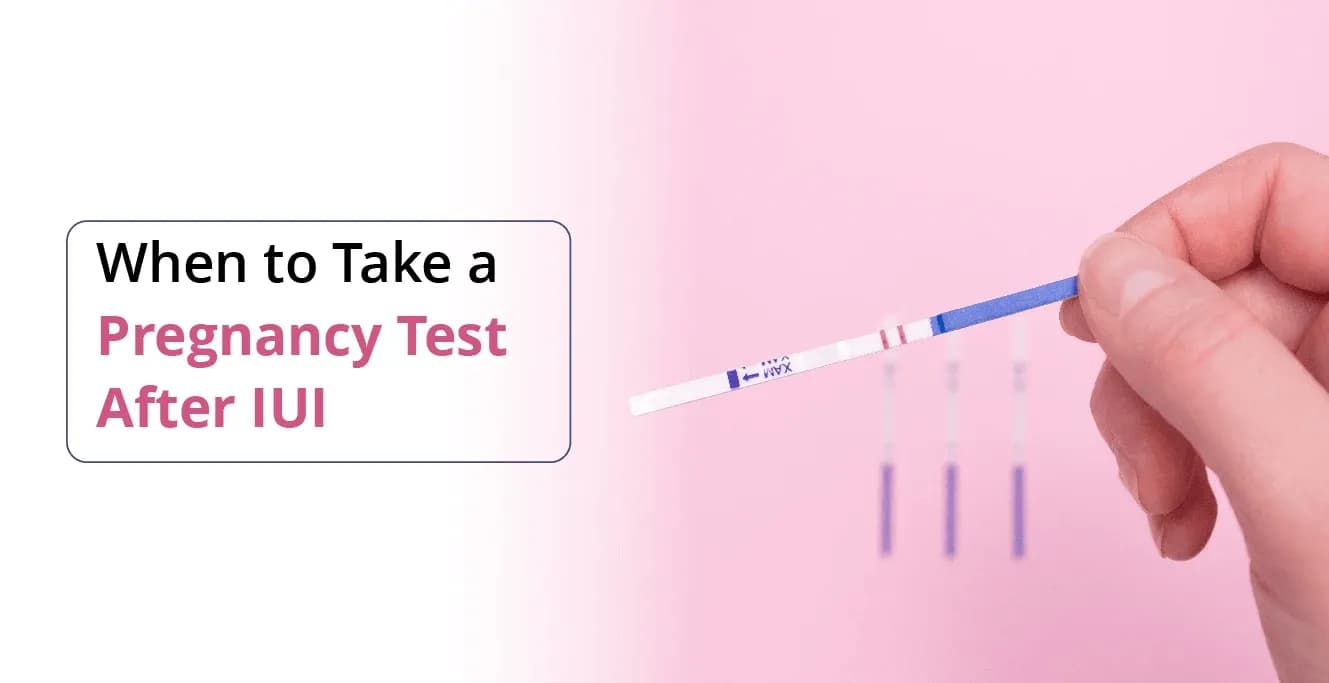
IUI க்குப் பிறகு கர்ப்ப பரிசோதனையை எப்போது எடுக்க வேண்டும்

எங்களை ஏன் தேர்வு செய்ய வேண்டும்?
 120+ IVF நிபுணர்கள்
 95% திருப்தி மதிப்பெண்
 50+ இந்தியா முழுவதும் கிளினிக்குகள்
 1,40,000+ தம்பதிகளுக்கு உதவி
Key examples
-
It is recommended to wait at least 14 days after IUI before taking a pregnancy test to ensure accurate results, as this allows enough time for fertilization and implantation.
-
There are two main types of pregnancy tests: blood tests, which are more sensitive and can detect pregnancy early, and urine tests, which are convenient but may require higher hCG levels for positive results.
-
Factors such as fertility drugs, timing of ovulation , luteal phase length, and individual variations can impact when taking a pregnancy test for accurate results.
-
The two-week wait can be emotionally challenging; engaging in self-care, staying busy, and seeking support from friends or communities can help you manage stress during this period.
The two-week wait after an intrauterine insemination (IUI) can be an emotional roller coaster filled with hope, anticipation, and sometimes uncertainty. You’re eager to know if the procedure was successful, but testing too early can lead to false positives and unnecessary disappointment. Timing is key when it comes to pregnancy testing after IUI . In this article, we’ll walk you through the process, help you understand when to test, and what factors affect the accuracy of your results.
The Two-Week Wait: Why Patience Is a Virtue
After your IUI procedure , your doctor will recommend waiting at least 14 days before taking a pregnancy test. This waiting period, often referred to as the ‘two-week wait,’ can be challenging, but it’s necessary for several reasons:
When sperm is injected into your uterus during IUI, it takes time for fertilization and implantation to occur:
-
Day 1-2: Ovulation and sperm injection
-
Day 3-10: Egg fertilization and implantation
-
Day 10-14: Rise in human chorionic gonadotropin (hCG) levels
Only after successful implantation does your body start producing detectable levels of the pregnancy hormone hCG? This is usually about 10 days after conception. Since your hCG levels are not yet high enough to register on a pregnancy test, testing too soon can result in a false negative, causing unnecessary stress and disappointment.
A guide to choosing the right pregnancy test
As the two-week mark approaches, there are two main options for pregnancy tests: blood tests and urine tests .
Blood tests: The most accurate option
A blood test, also known as a beta hCG test, measures the exact amount of hCG in your bloodstream. There are two types of blood tests:
-
Qualitative hCG test: This test checks for the presence of hCG and gives a ‘yes’ or ‘no’ answer.
-
Quantitative hCG test: This test measures the exact amount of hCG in your blood, which is useful for monitoring the progress of early pregnancy.
Blood tests are generally more sensitive than urine tests and can detect pregnancy earlier, usually about 10 days after IUI. However, they require a visit to your doctor’s office.
Urine tests: convenience and accessibility
Urine pregnancy tests are widely available over the counter and can be done in the privacy of your own home. These tests work by detecting the presence of hCG in your urine. While they are convenient, urine tests are not as sensitive as blood tests and may require a higher level of hCG to produce a positive result. When choosing a urine pregnancy test, consider the following factors:
-
Sensitivity: Look for tests that can detect low levels of HCG, as they can give you an accurate result sooner.
-
Ease of use: Some tests are designed to be very user-friendly with features like digital displays or color-changing indicators.
-
Cost: Pregnancy tests can vary in price, so consider your budget when choosing.
Here’s a quick comparison:
|
Test type |
Available |
Sensitivity |
Time |
|---|---|---|---|
|
Urine test |
At the counter |
Lower |
14+ days after IUI |
|
Blood test |
Health system |
High |
10-14 days after IUI |
Interpreting your pregnancy test results
Once you’ve taken a pregnancy test, you may be anxiously awaiting the results. Here’s what you need to know about interpreting those results:
-
Positive result: Congratulations! A positive test indicates that the IUI procedure was successful. Contact your doctor to schedule a confirmation appointment and discuss next steps.
-
Negative result: Don’t lose hope just yet. A negative result doesn’t necessarily mean the IUI failed . If you tested early, there wasn’t enough hCG to detect. Wait a few more days, and if your period still doesn’t come, take another test or consult your doctor.
-
Inconclusive result: In rare cases, you may receive an inconclusive result. This usually requires retesting or further evaluation by your doctor.
-
Dizziness positive test Lin es
A faint positive line may indicate early pregnancy due to low levels of the hormone hCG. However, it could also be an evaporation line if the test is read after the recommended time.
-
Next steps
Recheck: Wait 2-3 days and take another pregnancy test to see if the line darkens, which indicates an increase in hCG levels.
Consult your doctor: If the faint line persists or you have concerns, schedule an appointment with your doctor for further evaluation and possible blood testing.
Monitor symptoms : Monitor for any pregnancy symptoms such as missed periods , nausea, or breast tenderness, which can provide additional context for your situation.
-
Factors that affect the timing of your pregnancy test after IUI
While the two-week mark is a general guideline, several factors can influence when to take your pregnancy test after IUI :
-
Fertility drugs: If you use stimulant injections or other fertility drugs, they can cause false positives due to residual hormones. Wait at least 14 days to avoid false results.
-
Ovulation timing: If your IUI is timed right after ovulation , 10-12 days post-procedure, you can get an accurate result a little earlier.
-
Luteal phase length: The luteal phase is the time between ovulation and the start of your next period. If you have a short luteal phase, you may need to test a little earlier than the standard 14-day mark.
-
Multiple pregnancies: IUI slightly increases the chance of multiples, which can lead to higher hCG levels and earlier positive results.
-
Individual variation: Every woman’s body is unique, and some may produce detectable levels of hCG earlier or later than others. If you get a negative result but still feel pregnant, trust your gut and test again in a few days.
Managing Expectations and Emotional Well-Being
The two-week wait can be an emotionally trying time. Here are some tips for coping during this challenging period:
-
Stay busy: Engage in activities that bring you joy and help keep your mind occupied.
-
Practice self-care: Prioritize your physical and emotional well-being by eating well, getting enough sleep, engaging in stress-reducing activities like meditation or gentle exercise.
-
Connect with others: Reach out to supportive friends and family members or join an online community of women going through fertility treatments .
-
Be kind to yourself: Treat yourself with compassion and understanding, no matter the outcome.
Myth : You can’t get IUI if you’ve already had surgery.
Fact : Many women who have had surgery for endometriosis or fibroids may still be eligible for IUI, depending on their specific medical condition.
நாங்கள் உங்களை கவனிக்கிறோம்
நம்பிக்கையுடன் உங்கள் சிகிச்சை பயணத்தை தொடங்குங்கள்


செலவு இல்லா EMI

தனிப்பட்ட காப்பீட்டு ஆதரம்
Underline
When it comes to taking a pregnancy test after IUI, timing is key. For accurate results, it’s important to wait at least two weeks after the procedure. By understanding the factors that influence when to test after an IUI procedure and what to expect from the results, you can navigate this emotional time with more confidence and clarity. If you’re concerned about the timing or accuracy of your pregnancy test, don’t hesitate to consult your doctor for guidance.
A word from the expert
After IUI, it is best to wait about 14 days to take a pregnancy test. I know the wait can be interminable, but testing too soon can lead to heartbreak with false results. Patience is key to getting an accurate result. ~ Manika Singh
Our Fertility Specialists
Related Blogs





To know more
Birla Fertility & IVF aims at transforming the future of fertility globally, through outstanding clinical outcomes, research, innovation and compassionate care.


Had an IVF Failure?
Talk to our fertility experts

 Our Centers
 Select City

