
 Our Centers


IVF સારવાર: તમારે જે જાણવાની જરૂર છે તે બધું

ઇન વિટ્રો ફર્ટિલાઇઝેશન (IVF) એ ભારતમાં એક મોટી સફળતા બની છે. પ્રથમ IVF બાળકના જન્મને 4 દાયકા કરતાં વધુ સમય થઈ ગયો છે. તે બાળક સાથે, પ્રજનન દવામાં આશાનું કિરણ આવ્યું. વંધ્યત્વની સારવાર સમયાંતરે વિકસિત થઈ છે અને સુરક્ષિત, વધુ અસરકારક અને વધુ સફળ બની છે.
ઇન વિટ્રો ફર્ટિલાઇઝેશન (IVF) શું છે?
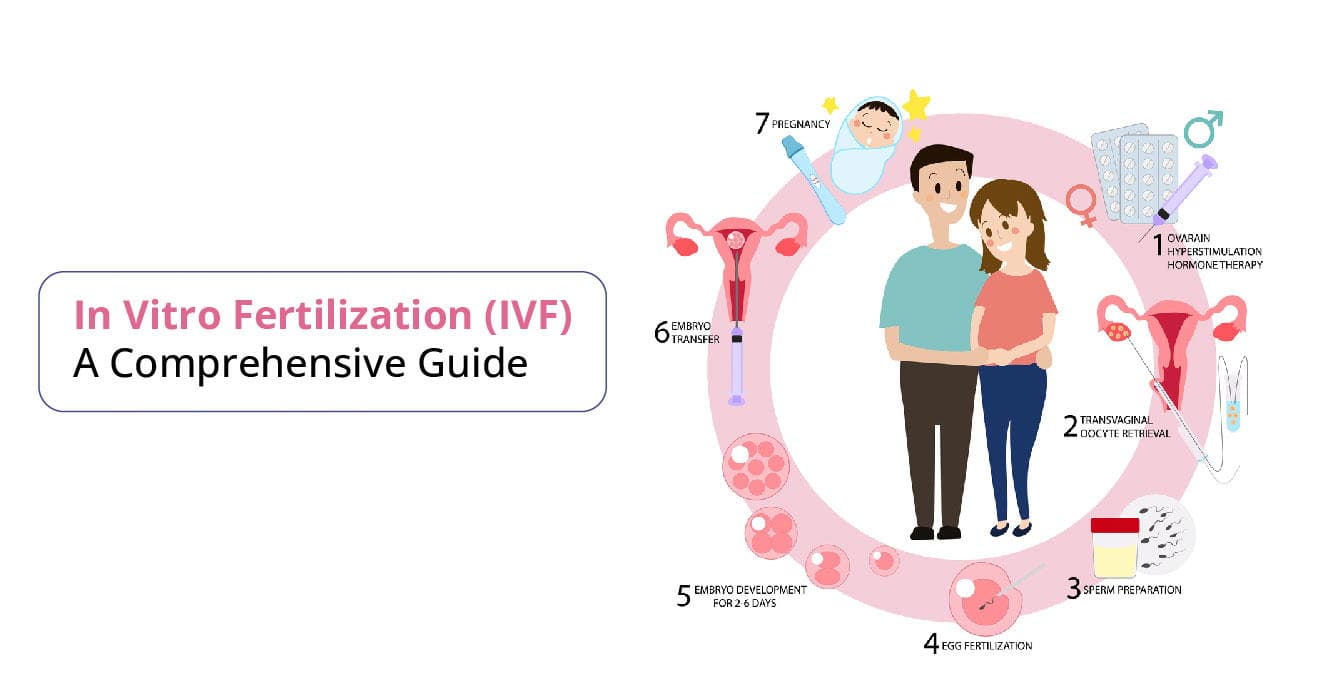
IVF નો અર્થ “ઇન વિટ્રો ફર્ટિલાઇઝેશન” થાય છે. આ એક તબીબી પ્રક્રિયા છે જે વ્યક્તિઓ અથવા યુગલો કે જેઓ વંધ્યત્વ સાથે સંઘર્ષ કરી રહ્યા છે તેઓને બાળકની કલ્પના કરવામાં મદદ કરે છે. આ પ્રક્રિયામાં, ઇંડા અને શુક્રાણુનું ગર્ભાધાન શરીરની બહાર, પ્રયોગશાળાની વાનગી અથવા ટેસ્ટ ટ્યુબમાં થાય છે (તેથી શબ્દ “ઇન વિટ્રો,” જેનો અર્થ લેટિનમાં “ગ્લાસમાં” થાય છે). એકવાર એમ્બ્રોયોની રચના થઈ જાય પછી, તેઓને ફરીથી સ્ત્રીના ગર્ભાશયમાં સ્થાનાંતરિત કરવામાં આવે છે, એવી આશા સાથે કે તેઓ પ્રત્યારોપણ કરશે અને સફળ ગર્ભાવસ્થામાં વિકાસ કરશે.
IVF પ્રક્રિયામાં અનેક પગલાંઓ સામેલ છે. શરૂઆતમાં, સ્ત્રી હોર્મોનલ ઉત્તેજનામાંથી પસાર થાય છે, ત્યારબાદ IVF સારવાર પ્રક્રિયાને પૂર્ણ કરવા માટે વિવિધ જરૂરી પગલાં લેવામાં આવે છે. આ સમય દરમિયાન, અલ્ટ્રાસાઉન્ડ સ્કેન અને રક્ત પરીક્ષણો દ્વારા મહિલાના પ્રતિભાવનું નિરીક્ષણ કરવામાં આવે છે.
IVF સારવારમાં કયા પગલાં સામેલ છે?
ઇન વિટ્રો ફર્ટિલાઇઝેશન (IVF) એ એક જટિલ પ્રજનન તકનીક છે જે વ્યક્તિઓ અથવા યુગલોને ગર્ભાવસ્થા પ્રાપ્ત કરવામાં મદદ કરે છે. IVF પ્રક્રિયામાં સામાન્ય રીતે અનેક પગલાંઓ સામેલ હોય છે. આખી IVF પ્રક્રિયાને તબક્કાવાર જાણવા માટે વાંચો, તે નીચે દર્શાવેલ છે. જો કે, એ જાણવું અગત્યનું છે કે દર્દીની ચોક્કસ પ્રજનન ક્ષમતાની જરૂરિયાતોને આધારે IVF પ્રક્રિયા શરૂ કરવા અને ચલાવવા માટે દરેક ક્લિનિકની અલગ સમયરેખા હોઈ શકે છે. IVF ચક્રમાં નીચેના પ્રમાણભૂત પગલાં સામેલ છે:
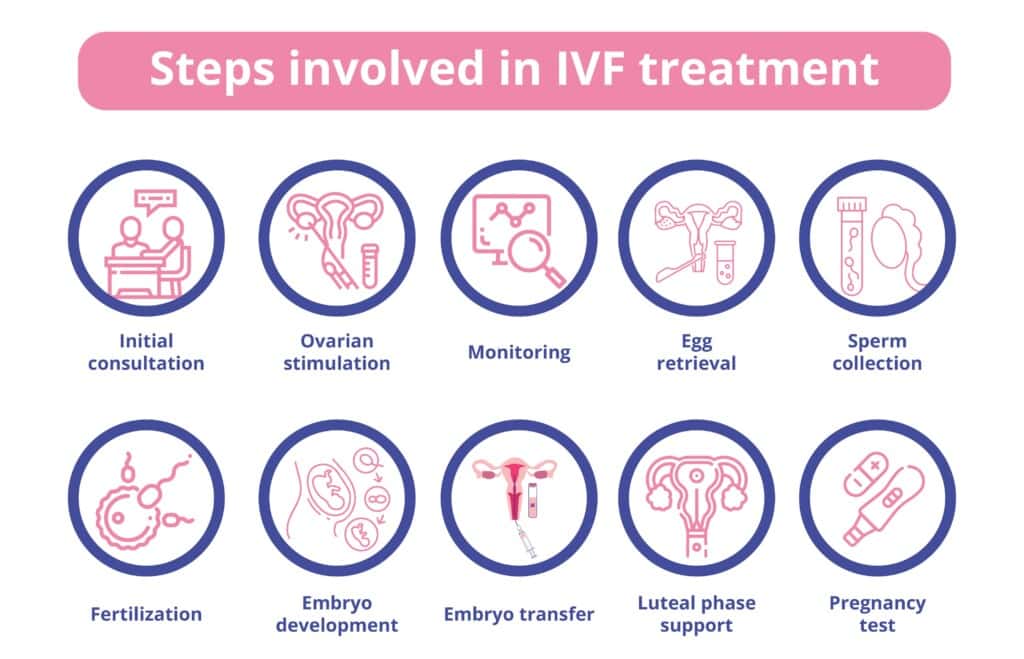
- પ્રારંભિક પરામર્શ: પ્રથમ પગલું એ પ્રજનન નિષ્ણાત અથવા પ્રજનનક્ષમ એન્ડોક્રિનોલોજિસ્ટ સાથે સંપર્ક કરવાનું છે. તેઓ તમારા તબીબી ઈતિહાસની સમીક્ષા કરશે, વિવિધ પરીક્ષણો કરશે અને ઉપલબ્ધ સંભવિત સારવાર વિકલ્પોની ચર્ચા કરશે.
- અંડાશયની ઉત્તેજના: આ તબક્કા દરમિયાન, સ્ત્રીને હોર્મોનલ દવા આપવામાં આવે છે જેથી તેણીના અંડાશયને સામાન્ય માસિક ચક્ર દરમિયાન વિકાસ પામેલા એક ઇંડાને બદલે ઘણા તંદુરસ્ત ઇંડા ઉત્પન્ન કરવા માટે ઉત્તેજીત કરે. આ દવાઓ સામાન્ય રીતે 8-14 દિવસ માટે લેવામાં આવે છે અને સ્વ-સંચાલિત ઇન્જેક્શન દ્વારા સંચાલિત થાય છે.
- મોનીટરીંગ: અંડાશયના ઉત્તેજનાના સમગ્ર તબક્કા દરમિયાન, નિયમિત દેખરેખ નિર્ણાયક છે. આમાં અંડાશયના ફોલિકલ્સ (ઇંડા ધરાવતી પ્રવાહીથી ભરેલી કોથળીઓ) અને હોર્મોન સ્તરોના વિકાસનું મૂલ્યાંકન કરવા માટે વારંવાર અલ્ટ્રાસાઉન્ડ અને રક્ત પરીક્ષણોનો સમાવેશ થાય છે.
- ઇંડા પુનઃપ્રાપ્તિ: ફોલિકલ્સ યોગ્ય કદ અને પરિપક્વતા પ્રાપ્ત કર્યા પછી ઇંડા પુનઃપ્રાપ્તિ તકનીક કરવામાં આવે છે. પ્રકાશ એનેસ્થેસિયા હેઠળ, ડૉક્ટર પાતળી સોય વડે અંડાશયમાંથી પ્રવાહી અને ઇંડાને મહાપ્રાણ કરવા માટે અલ્ટ્રાસાઉન્ડ માર્ગદર્શનનો ઉપયોગ કરે છે. સારવાર લગભગ 20-30 મિનિટ લે છે.
- શુક્રાણુ સંગ્રહ: જ્યારે ઇંડા પુનઃપ્રાપ્તિ પ્રક્રિયા થાય છે, ત્યારે શુક્રાણુ દાતા અથવા પુરૂષ ભાગીદારને વીર્યના નમૂના આપવા માટે કહેવામાં આવે છે. બાદમાં, તંદુરસ્ત શુક્રાણુને સેમિનલ પ્રવાહીમાંથી અલગ કરવા માટે પ્રયોગશાળામાં નમૂનાની પ્રક્રિયા કરવામાં આવે છે.
- ગર્ભાધાન: પ્રયોગશાળામાં, પુનઃપ્રાપ્ત ઇંડાને તૈયાર શુક્રાણુ સાથે મિશ્રિત કરવામાં આવે છે. ગર્ભાધાન પરંપરાગત ગર્ભાધાન દ્વારા થઈ શકે છે, જેમાં શુક્રાણુ ઇંડાની નજીક મૂકવામાં આવે છે, અથવા ઇન્ટ્રાસાયટોપ્લાઝમિક શુક્રાણુ ઇન્જેક્શન (ICSI) દ્વારા, જેમાં એક શુક્રાણુને દરેક પુખ્ત ઇંડામાં સીધું ઇન્જેક્ટ કરવામાં આવે છે.
- ગર્ભ વિકાસ: ફળદ્રુપ ઇંડા, જેને હવે એમ્બ્રોયો કહેવાય છે, પ્રયોગશાળામાં નિયંત્રિત વાતાવરણમાં સંવર્ધન થાય છે. કોષોના વિભાજન અને વૃદ્ધિ માટે ઘણા દિવસો સુધી તેમનું નિરીક્ષણ કરવામાં આવે છે.
- ગર્ભ સ્થાનાંતરણ: વિકસિત ભ્રૂણને સેવનના સમયગાળા પછી, સામાન્ય રીતે પુનઃપ્રાપ્તિના 3-6 દિવસ પછી સ્ત્રીના ગર્ભાશયમાં મૂકવામાં આવે છે. આ તકનીક સામાન્ય રીતે પીડારહિત હોય છે અને એનેસ્થેસિયાના ઉપયોગની જરૂર પડતી નથી. સ્થાનાંતરિત ગર્ભની સંખ્યા સામાન્ય રીતે સ્ત્રીની ઉંમર, ગર્ભની ગુણવત્તા અને અગાઉના માપદંડો દ્વારા નક્કી કરવામાં આવે છે. IVF સારવાર.
- લ્યુટેલ ફેઝ સપોર્ટ: ગર્ભ સ્થાનાંતરણ પછી, સ્ત્રીને ગર્ભાશયની અસ્તર અને પ્રારંભિક ગર્ભાવસ્થાને ટેકો આપવા માટે દવાઓ (જેમ કે પ્રોજેસ્ટેરોન) સૂચવવામાં આવી શકે છે.
- ગર્ભાવસ્થા પરિક્ષણ: ગર્ભના સ્થાનાંતરણના આશરે 10-14 દિવસ પછી, સ્ત્રીએ બાળકની કલ્પના કરી છે કે કેમ તે નક્કી કરવા માટે રક્ત પરીક્ષણ અથવા પેશાબ પરીક્ષણ હાથ ધરવામાં આવે છે. જો ટેસ્ટ પોઝિટિવ પાછો આવે છે, તો તે કહે છે કે ગર્ભાવસ્થાની પુષ્ટિ કરો. બીજી બાજુ, જો પરિણામ નકારાત્મક છે, તો તે નિષ્ફળ IVF સારવાર પ્રક્રિયાની નિશાની છે.
એ નોંધવું યોગ્ય છે કે તમામ IVF ચક્ર સગર્ભાવસ્થામાં પરિણમતા નથી, અને વ્યક્તિઓ અથવા યુગલોને સફળ સગર્ભાવસ્થા હાંસલ કરતા પહેલા બહુવિધ પ્રયાસોની જરૂર પડી શકે છે. આ પ્રક્રિયા ભાવનાત્મક અને શારીરિક રીતે માગણી કરી શકે છે, અને સમગ્ર પ્રવાસ દરમિયાન તમારા પ્રજનનક્ષમતા નિષ્ણાત પાસેથી યોગ્ય સમર્થન અને માર્ગદર્શન મેળવવું મહત્વપૂર્ણ છે.
IVF સારવારના પ્રકારો શું છે?
IVF એ વંધ્યત્વ સમસ્યાઓ ધરાવતા યુગલોને મદદ કરવા માટે સહાયિત પ્રજનન તકનીક (ART) ની એક પદ્ધતિ છે. દર્દીની પ્રજનન ક્ષમતાની જરૂરિયાતો અનુસાર, IVF ટેકનિક નક્કી કરવામાં આવે છે. અહીં વિવિધ છે IVF સારવારના પ્રકાર:
- કુદરતી IVF ચક્ર – કુદરતી IVF (ઇન વિટ્રો ફર્ટિલાઇઝેશન) ચક્રમાં, તેનો ઉદ્દેશ્ય તે ઇંડાને એકત્રિત કરવાનો છે જે કુદરતી રીતે પસંદ કરવામાં આવે છે અને સ્ત્રીના શરીર દ્વારા તેના કુદરતી માસિક ચક્ર દરમિયાન છોડવામાં આવે છે. પરંપરાગત IVF ચક્રથી વિપરીત, જેમાં બહુવિધ ઇંડા ઉત્પન્ન કરવા માટે દવાઓ વડે અંડાશયને ઉત્તેજીત કરવાનો સમાવેશ થાય છે, કુદરતી IVF કુદરતી રીતે વિકસિત એક ઇંડાને પુનઃપ્રાપ્ત કરવા પર ધ્યાન કેન્દ્રિત કરે છે.
- ન્યૂનતમ ઉત્તેજના – ન્યૂનતમ ઉત્તેજના, જેને ઓછી ઉત્તેજના અથવા ન્યૂનતમ દવા તરીકે પણ ઓળખવામાં આવે છે, તેનો ઉપયોગ IVF સારવાર માટે થાય છે. ઇંડાના ઉત્પાદન માટે અંડાશયને ઉત્તેજીત કરવા માટે તે ઇન વિટ્રો ફર્ટિલાઇઝેશન (IVF) માટેનો સંશોધિત અભિગમ છે. ન્યૂનતમ ઉત્તેજનાનો એકમાત્ર ઉદ્દેશ્ય દવાઓનો ઉપયોગ ઘટાડવાનો અને ગૂંચવણોના જોખમને ઘટાડવાનો છે. તેને મિની-IVF અથવા હળવી ઉત્તેજના IVF તરીકે પણ ઓળખવામાં આવે છે.
પરંપરાગત IVF સારવાર પ્રક્રિયામાં, અંડાશયને ઉત્તેજીત કરવા માટે પ્રજનનક્ષમતા દવાઓના ઉચ્ચ ડોઝનો ઉપયોગ કરવામાં આવે છે, જે બહુવિધ ઇંડાના વિકાસ તરફ દોરી જાય છે. જો કે, આ અભિગમ અંડાશયના હાયપરસ્ટિમ્યુલેશન સિન્ડ્રોમ (OHSS) અને અન્ય આડઅસરોના ઊંચા જોખમ સાથે સંકળાયેલ હોઈ શકે છે. પરંપરાગત IVF માં ઉપયોગમાં લેવાતા દૈનિક ઇન્જેક્શનને બદલે, ન્યૂનતમ ઉત્તેજના IVF માં ઇન્જેક્ટેબલ દવાઓ અથવા ક્લોમિફેન સાઇટ્રેટ અથવા લેટ્રોઝોલ જેવી મૌખિક પ્રજનનક્ષમતા દવાઓના ઓછા ડોઝનો ઉપયોગ શામેલ હોઈ શકે છે. આ દવાઓ અંડાશયને ઓછી સંખ્યામાં ઇંડા ઉત્પન્ન કરવા ઉત્તેજીત કરવામાં મદદ કરે છે.
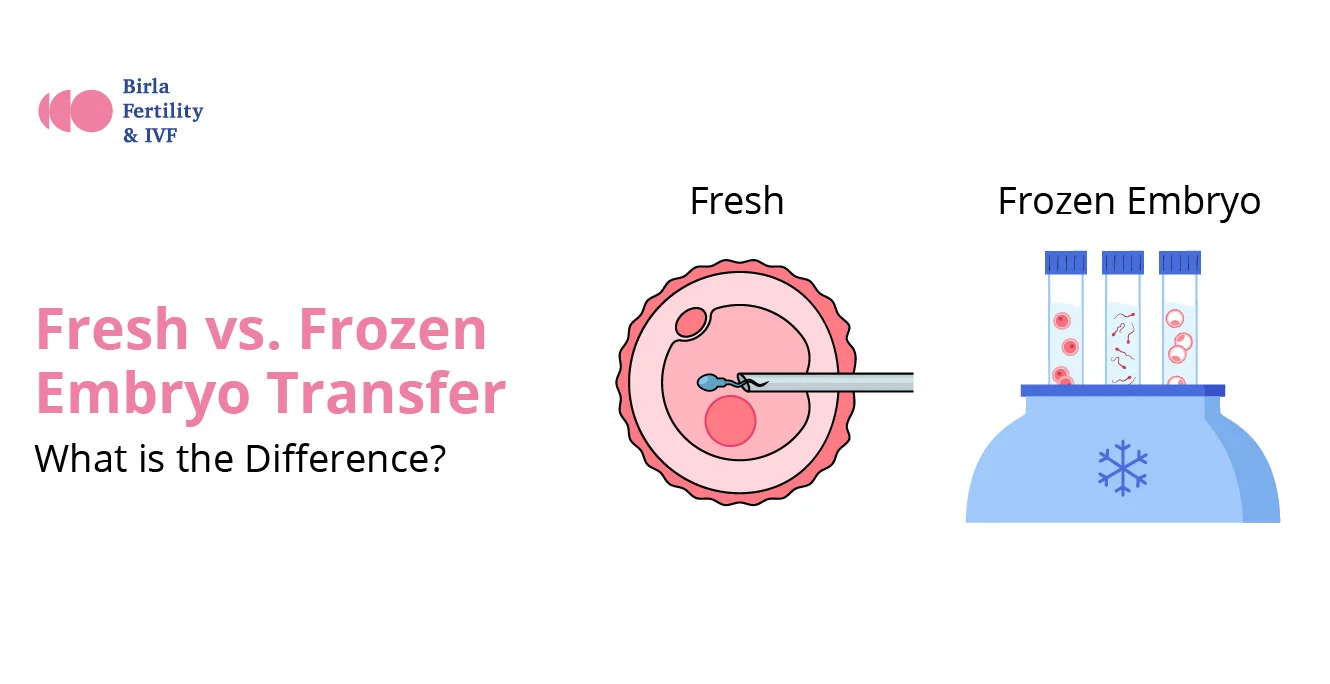
- ફ્રોઝન એમ્બ્રીયો ટ્રાન્સફર (FET) સાથે IVF – IVF માં લેબોરેટરી સેટિંગમાં શરીરની બહાર શુક્રાણુ સાથે ઇંડાનું ગર્ભાધાન સામેલ છે. ગર્ભાધાન પછી, પરિણામી એમ્બ્રોયો સામાન્ય રીતે થોડા દિવસો માટે સંવર્ધિત થાય છે, અને પછી તેમાંથી એક અથવા વધુ ગર્ભ ટ્રાન્સફર તરીકે ઓળખાતી પ્રક્રિયામાં સ્ત્રીના ગર્ભાશયમાં સ્થાનાંતરિત થઈ શકે છે. બીજી બાજુ, FET, સ્થિર ગર્ભ ટ્રાન્સફર માટે વપરાય છે. તે IVF માં ઉપયોગમાં લેવાતી એક તકનીક છે જ્યાં પ્રારંભિક તાજા ચક્રમાં સ્થાનાંતરિત ન થયેલા ભ્રૂણને ભવિષ્યના ઉપયોગ માટે ક્રિઓપ્રીઝર્વ્ડ (સ્થિર) કરવામાં આવે છે. આ સ્થિર ભ્રૂણને પીગળી શકાય છે અને પછીના સમયે, સ્થિર ગર્ભ ટ્રાન્સફર ચક્ર દરમિયાન સ્ત્રીના ગર્ભાશયમાં સ્થાનાંતરિત કરી શકાય છે.
- વૈકલ્પિક સિંગલ એમ્બ્રીયો ટ્રાન્સફર (eSET) સાથે IVF: IVF ની આ તકનીક દરમિયાન, નિષ્ણાત મોટી સંખ્યામાં ફળદ્રુપ ઇંડામાંથી એક જ ગર્ભ પસંદ કરે છે. બાદમાં, પસંદ કરેલ, તંદુરસ્ત ગર્ભ ગર્ભાશયની અસ્તરમાં પ્રત્યારોપણ કરવામાં આવે છે જેથી ગર્ભાવસ્થા પ્રાપ્ત થાય.
- ઇન્ટ્રાસાયટોપ્લાઝમિક સ્પર્મ ઇન્જેક્શન (ICSI) સાથે IVF – ICSI સાથે IVF (ઇન્ટ્રાસાયટોપ્લાઝમિક સ્પર્મ ઇન્જેક્શન) એ ઇન વિટ્રો ફર્ટિલાઇઝેશન (IVF)નું વિશિષ્ટ સ્વરૂપ છે જેનો ઉપયોગ અમુક પ્રકારના પુરૂષ વંધ્યત્વને દૂર કરવા માટે થાય છે. ગર્ભાધાન માટે ઉપલબ્ધ શુક્રાણુઓની ગુણવત્તા અથવા જથ્થાને લઈને નોંધપાત્ર સમસ્યાઓ હોય ત્યારે મુખ્યત્વે ICSI ની ભલામણ કરવામાં આવે છે. ICSI પ્રક્રિયા દરમિયાન, એક શુક્રાણુ પસંદ કરવામાં આવે છે અને સ્ત્રી પાસેથી મેળવેલા ઇંડાના સાયટોપ્લાઝમમાં સીધું ઇન્જેક્ટ કરવામાં આવે છે. ICSI સાથે IVF પુરૂષ-પરિબળ વંધ્યત્વને દૂર કરવા માટે અત્યંત અસરકારક હોવાનું દર્શાવવામાં આવ્યું છે, જેમ કે શુક્રાણુઓની ઓછી સંખ્યા, શુક્રાણુઓની નબળી ગતિશીલતા અથવા અસામાન્ય શુક્રાણુ આકાર. તે પ્રજનનક્ષમતાના પડકારોનો સામનો કરી રહેલા યુગલોને સગર્ભાવસ્થા પ્રાપ્ત કરવા અને બાળકને જન્મ આપવાની તક પૂરી પાડે છે. શુક્રાણુ સંગ્રહ: વીર્યનો નમૂનો પુરૂષ પાર્ટનર પાસેથી હસ્તમૈથુન અથવા સર્જિકલ નિષ્કર્ષણ પદ્ધતિઓ જેમ કે ટેસ્ટિક્યુલર સ્પર્મ એસ્પિરેશન (TESA) અથવા ટેસ્ટિક્યુલર સ્પર્મ એક્સટ્રક્શન (TESE) દ્વારા મેળવવામાં આવે છે. પ્રથમ વીર્ય તૈયાર કરવા માટે, નમૂના ગતિશીલ અને તંદુરસ્ત શુક્રાણુઓને અલગ કરવા માટે પ્રયોગશાળા પ્રક્રિયાઓની શ્રેણીમાંથી પસાર થાય છે. આમાં શુક્રાણુને સેમિનલ પ્રવાહીથી અલગ કરવા અને ઈન્જેક્શન માટે સૌથી વધુ સક્ષમ શુક્રાણુ પસંદ કરવાનો સમાવેશ થાય છે. આ પગલું નિષ્ણાત ગર્ભવિજ્ઞાની દ્વારા કરવામાં આવે છે, એક વિશિષ્ટ માઇક્રોસ્કોપ અને માઇક્રોમેનીપ્યુલેશન સાધનોનો ઉપયોગ કરીને, દરેક પરિપક્વ ઇંડાના સાયટોપ્લાઝમમાં એક શુક્રાણુ કાળજીપૂર્વક ઇન્જેક્ટ કરવામાં આવે છે.
IVF with Donor Sperm: It is one of the most popular IVF methods for single mothers who want to conceive and raise a child alone. However, in this technique, the woman is given ovarian stimulation drugs to prepare her eggs for egg retrieval to be combined with donor sperm for embryo development.
What is the cost of IVF treatment?
The average IVF cost in India can start from Rs. 85,000 and can go as high as Rs. 3,50,000. The above cost for IVF in India is an approximate range to give you an idea of the costs involved in the treatment. However, the final cost may differ from one person to another depending on various factors, such as –
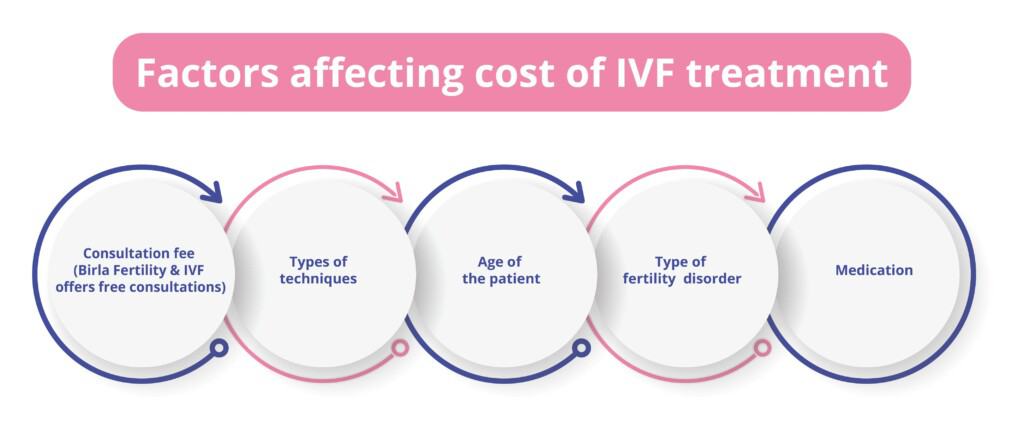
- Fertility specialist consultation fees (Birla offers free fertility and IVF consultations)
- Types of techniques used for IVF treatment
- Patient’s age
- Type of reproductive disorder
- Medication is given and recommended throughout IVF treatment.
Why is IVF recommended?
In vitro fertilization (IVF) is the most successful technique among all fertility treatments. However, in general, the reason and requirements for undergoing IVF may differ from one patient to another. Below are some of the reasons and reasons why IVF is advised for both male and female partners.
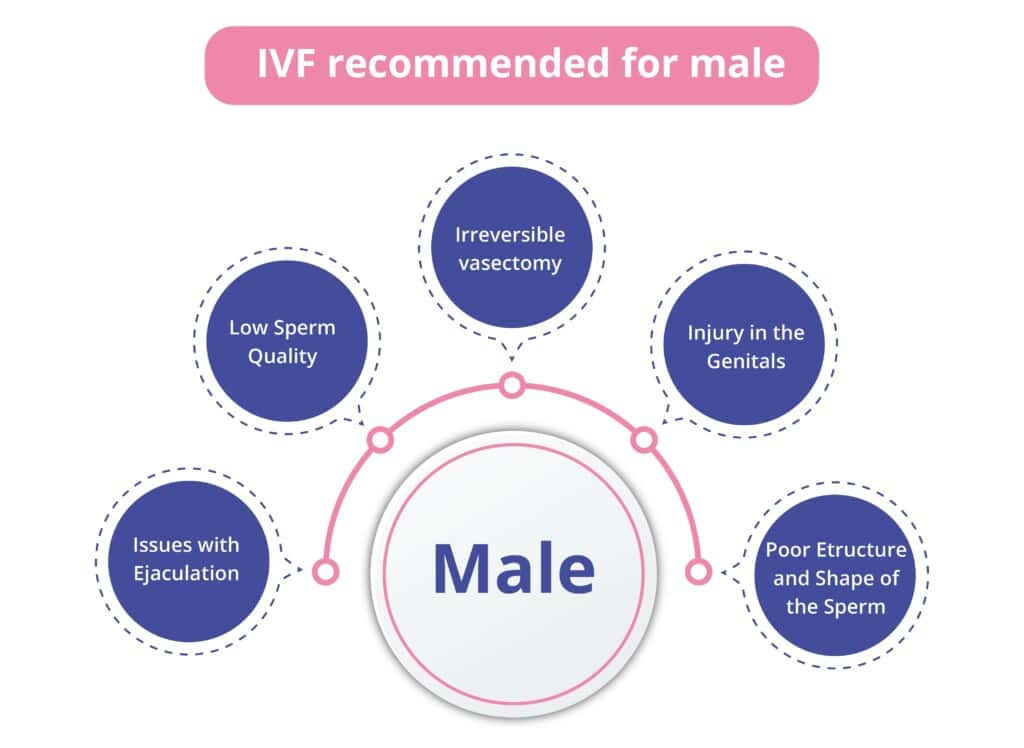
Male needs:
- Problems with ejaculation
- Low sperm quality
- Irreversible sterilization
- Injury to the genitals
- Poor sperm structure and shape
- Affected by paralysis etc.
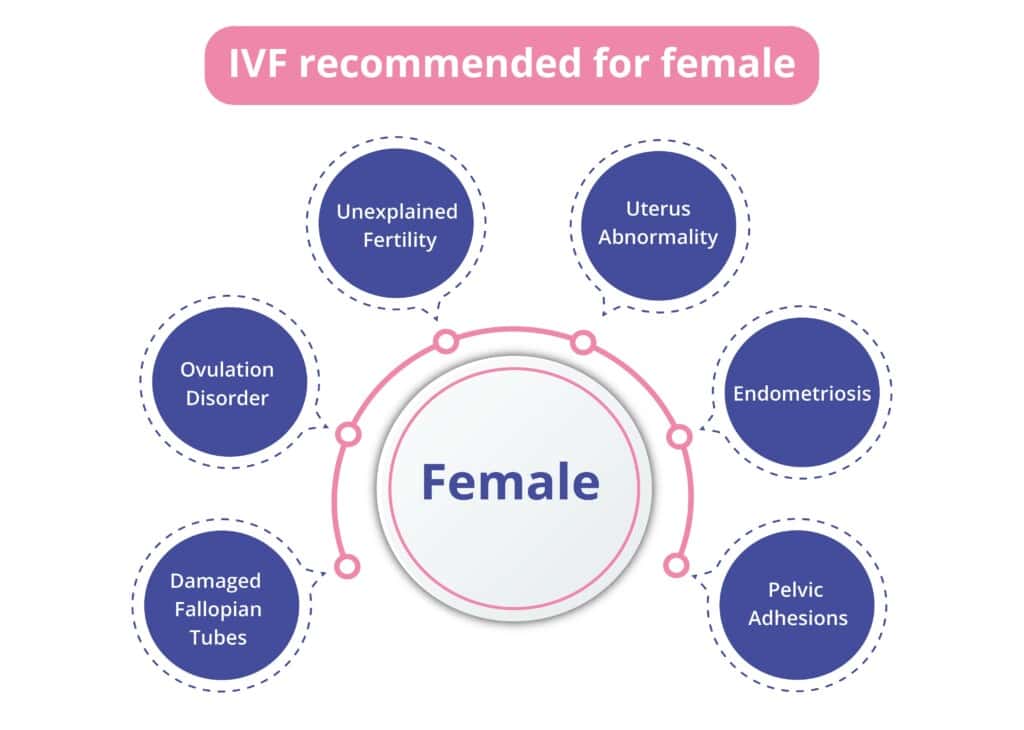
Female needs:
- Damaged fallopian tubes
- Ovulation disorders
- Unexplained fertility
- Uterine abnormality
- Endometriosis
- Pelvic adhesions
What is the IVF success rate?
According to reports, the average IVF success rate in India is between 30% and 35%. However, the success rate of IVF varies depending on various factors including the age of the woman, the type of infertility disorder, the quality of the sperm and eggs, the expertise of the fertility specialist and the reputation of the fertility clinic you are from. Getting IVF Treatment. Birla Fertility & IVF has an IVF success rate of 85% and a success rate of 100% for multi-cycles. To know more, contact us on the given number.
IVF success rates are usually given as a percentage of live births per IVF cycle or embryo transfer. IVF success rates are often higher for younger women but decline with age. The following IVF success rates are reported according to the age of the woman. However, IVF success rates may vary depending on the overall reproductive health of the patient. Refer to the table below to get an idea of the success rates by age for IVF treatment.
| Patient’s age | Average success rate |
| Under 35 | 35% – 40% |
| 35 – 37 | 25% – 35% |
| 38 – 40 | 20% – 25% |
| 41 – 42 | 10% – 15% |
| Over 42 | 3% – 8% |
*The above table, which shows the success rate by age, is meant to give you an idea. However, results may vary depending on factors such as IVF technique, comorbidities, weight and overall health of the woman.*
Who is the best candidate for IVM?
The best candidates for IVM should meet the following criteria:
- Under 35 years of age (under 30 would be best)
- There is a significant number of follicles per ovary (preferably >15), as shown on vaginal ultrasound
- Have undergone a stimulated IVF cycle, which resulted in the production of a large number of eggs
- To maintain a healthy weight
How can I prepare before IVF treatment?
It is always a good idea to prepare yourself for IVF treatment. By doing so, you can improve your chances of successful IVF treatment and expect a smooth journey. Here are some tips that can help you prepare before undergoing IVF treatment:
- Learn the IVF process – Learn about the IVF method, including all stages of treatment, potential risks, success rates, and any lifestyle adjustments that may be required.
- Consult a fertility specialist – It is advisable to schedule your appointment with a fertility specialist. They will perform a thorough diagnosis to check your overall reproductive health and decide on the IVF technique based on the report results.
- Lifestyle changes – Follow healthy lifestyle practices to increase your chances of a successful outcome. Lifestyle changes may include maintaining an 8-hour sleep pattern, eating a healthy and well-balanced diet rich in nutrients, managing your stress, and quitting drugs, tobacco, and alcohol.
- Pre-Genetic Testing – Undergoing genetic testing before IVF treatment can help you rule out hereditary diseases or chromosomal abnormalities during embryo development. The results of such tests can increase the chances of a successful pregnancy.
- Budget considerations – You can always discuss your finances with your chosen fertility clinic. Also, fertility treatments like IVF can be expensive, so, to cope with that, you can seek help with loans and cost pressures upfront to avoid any stress in the future.
- Supplements and Medications – Take your recommended supplements and medications on time to manage your menstrual cycle and stimulate healthy egg production. Supplements like folic acid and prenatal vitamins are advised to enhance overall reproductive health.
- Join groups – Consider joining groups to manage your stress levels. IVF treatment can be physically and mentally exhausting, so it’s better to seek help from your friends, family, and partner.
- Prepare your home – Prepare your home for the IVF process by arranging any medications, supplies, or equipment you may need. Familiarize yourself with drug storage and administration guidelines.
What to do after an IVF cycle
Every patient’s IVF journey is different. Therefore, there are various complex steps that need to be taken after IVF treatment. Below are some general guidelines that can help you take better care of yourself –
- Rest – Get proper rest after your IVF cycle. Proper rest is essential to avoid any kind of fatigue.
- Sleep Pattern – It becomes important to strictly maintain 8 hours of sleep. Lack of sleep leads to constant fatigue and also results in stress.
- Light activities – It is better to avoid any kind of strenuous activity. Experts advise not to lift any heavy objects and avoid any physical activities that can put pressure around the pelvic area.
- Follow the doctor’s guidelines – After an IVF cycle, it is important to follow all the instructions given by your fertility specialist. Every case is different, and to avoid any complications and achieve positive results, experts provide a set of tailored guidelines.
- Medications – Take your recommended medications and supplements at the advised times. These medications are given to support the post-implantation process and its development. Also, if you are experiencing any side effects, contact your doctor immediately. The doctor will either change the medication or suggest a better alternative.
- Lifestyle – Follow the given diet chart and recommendations. Diet has a major impact on the results of an IVF cycle. You should always engage in recommended light exercise to improve blood circulation in the body. A healthy diet and proper routine can directly affect the development of the implanted embryo and lead to a successful pregnancy.
What are the signs of a successful IVF cycle?
A successful IVF cycle is indicated by some of the signs mentioned below. These signs are usually the result of successful implantation. Once the cultured embryo is transferred to the uterine wall, you will experience some changes in your body. Here are some signs that indicate successful implantation –
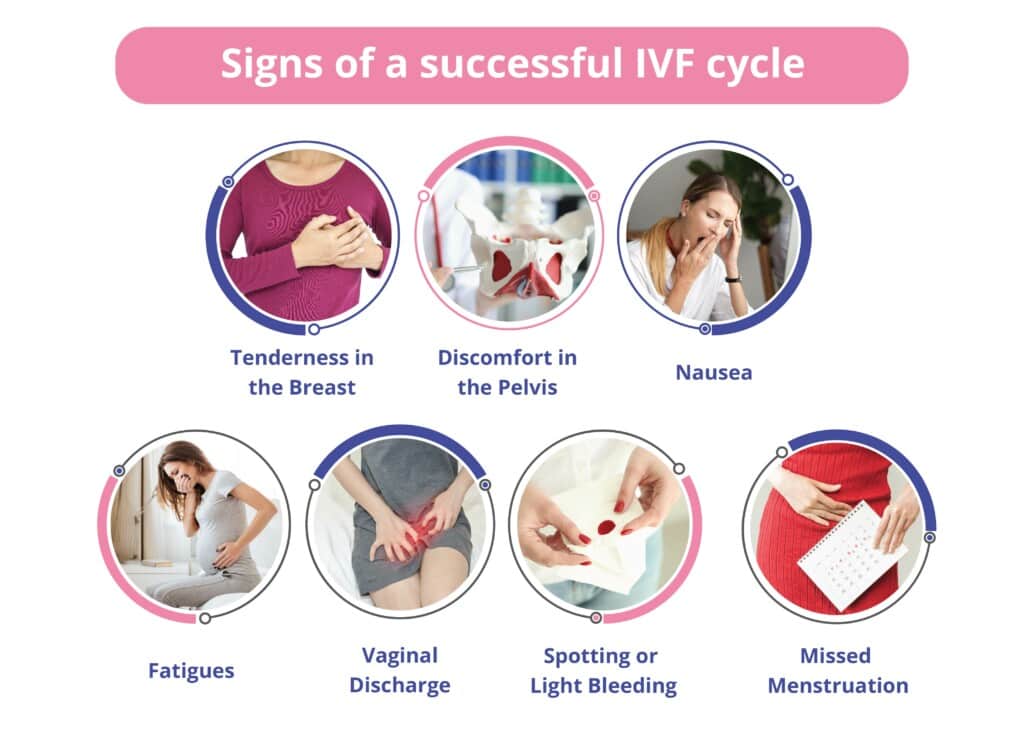
- Breast tenderness – Some women may experience swelling, pain, and tenderness around the areola region of their breasts.
- Pelvic discomfort – You may experience mild discomfort or slight pain around the pelvic area. Some doctors also call it implantation cramps as the embryo settles into the uterine cavity and makes room for growth in the uterus.
- Nausea – A woman may also experience nausea and vomiting several times a day. Commonly, this is also known as morning sickness.
- Fatigue – There is a chance that you will complain about feeling constantly tired and exhausted due to changes in hormone levels and the progression of pregnancy.
- Vaginal discharge – You may notice a change in your vaginal discharge after IVF. Doctors say it is due to changes in the body.
- Spotting or light bleeding – This is known as one of the significant signs that indicates a positive pregnancy. This is also called implantation bleeding and usually occurs 2 weeks to a week after implantation.
- Missed period – Missing periods after implantation can be a sign of successful implantation, which also means that implantation may be progressing to a confirmed pregnancy.
Reasons for IVF cycle failure
Several reasons can lead to a failed IVF cycle. There are various factors that can also affect the final outcome of IVF treatment. Below are some of the reasons that can lead to a failed IVF cycle –
- Sperm related disorders – Poor sperm quality, low sperm count, and abnormally structured sperm are some of the reasons that can result in failure of an IVF cycle.
- Quality of cultured embryos – If the cultured embryo is of poor quality, it will not develop favorably and may result in chromosomal abnormalities.
- Implantation failure – It is one of the crucial and complex stages of an IVF cycle, and at some point the selected embryo fails to successfully implant in the uterine lining, leading to a failed IVF cycle.
- Uterine abnormalities – This can be a significant factor that can affect the chances of success of IVF results. Uterine abnormalities such as a thin wall or endometrium can directly affect implantation.
- Hormonal imbalances – Inadequate levels of hormones like progesterone can affect the outcome of implantation. Fluctuations in hormone levels can lead to failure of an IVF cycle.
- Lifestyle choices – If you follow unhealthy practices like smoking, drinking alcohol or taking illegal drugs. Then such lifestyle choices can adversely affect the outcome of IVF treatment.
- Unexplained factors – Sometimes, in some cases, it becomes difficult to find the exact cause of a failed IVF cycle. Infertility is a complex problem with various contributing factors, especially if you are suffering from any comorbidities.
- Ovarian dysfunction – Sometimes, the medications given to stimulate the ovaries for egg production fail to show any positive results. Therefore, the retrieved eggs may not be of the best quality for fertilization and it can negatively affect the process of the IVF cycle.
What should I avoid after IVF?
There are some precautions and lifestyle decisions to consider to increase your chances of success after undergoing IVF treatment. Here are some things to generally avoid:
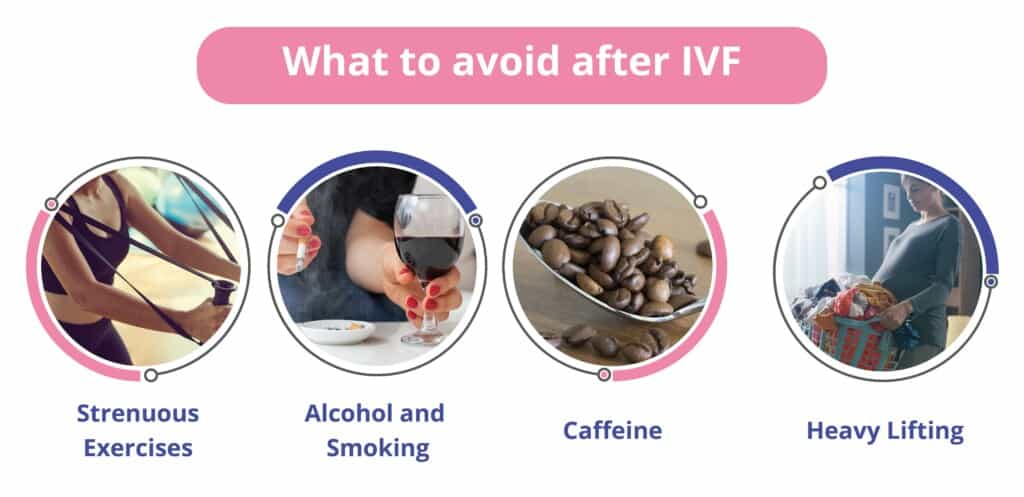
Strenuous exercise can affect the success of the implant or increase the risk of problems. Light to moderate exercise, such as walking or light yoga, can be helpful. Therefore, a person should avoid strenuous physical activities or workouts that put undue stress on the body.
It is advisable to avoid drinking alcohol and smoking during IVF treatment. Both alcohol consumption and smoking cigarettes can harm fertility and increase the chances of problems during pregnancy.
Caffeine consumption should be limited during IVF and pregnancy. For specific caffeine consumption recommendations, consult your healthcare professional. As excessive caffeine intake has been associated with decreased fertility and an increased risk of miscarriage.
Avoid heavy lifting or carrying anything that requires significant physical exertion, as this can strain your abdominal muscles and potentially interfere with the implantation process.
Putting your body in a hot bath, sauna, or hot tub can increase your body’s core temperature. Elevated body temperature can hinder embryo implantation. These activities are often discouraged throughout IVF treatment.
While it is difficult to completely eliminate stress from your life, it is important to manage it effectively. High levels of stress can negatively impact fertility and IVF success rates. Relaxation strategies, such as deep breathing exercises, meditation, or engaging in activities that help you relax and unwind, should be used.
It is recommended that you avoid sexual intercourse after embryo transfer as part of the IVF process unless your healthcare practitioner advises otherwise. Sexual activity during this period may disrupt the implantation process.
Are there any complications with IVF?
IVF is a complex procedure but it is safe, effective and performed with modern assisted reproductive technology. However, it is important to know that with every treatment, there are some potential complications and risks involved. Here are some of the risks that are associated with IVF treatment:
Ectopic pregnancy – It usually occurs when a fertilized egg implants outside the uterus instead of implanting in the inner lining of the uterus. Ectopic pregnancy can be fatal in some cases, therefore, it is always advisable to seek immediate medical attention for it.
Multiple pregnancy – Sometimes, IVF treatment increases the chances of multiple pregnancies, such as twins, triplets, or more. Also, it involves a higher risk of complications for both the babies and the mother. Multiple pregnancies can result in low birth weight, developmental problems, and premature birth.
Ovarian hyperstimulation syndrome (OHSS) – It is a condition in which the ovaries become painful and swollen as a side effect of medications given to the ovaries to produce healthy eggs. Although the early stages of OHSS may resolve on their own, in rare cases it can get worse and require medical intervention.
Implantation Failure – It is important to note that not all IVF cycles are successful. It occurs due to the failed fertilization and implantation of the cultured embryo. The most common reasons for implantation failure are that the sperm fails to penetrate the egg or there is no viable egg formation for embryo fertilization.
Ovarian torsion – This is a rare but serious condition in which the ovaries twist, potentially cutting off their blood supply. This condition usually requires immediate surgical intervention to untwist the ovaries and restore blood flow.
Depression – The entire process of IVF can be overwhelming for some patients and can take a toll on their psychological health. IVF treatment can be very demanding, emotionally draining, resulting in anxiety and depression.
It is always suggested that you discuss all the risks and complications with your fertility specialist in advance to avoid any unexpected situations that may stress you out. By being aware, you will be able to detect early signs of any kind of risk or complications and inform your specialist in time.
Side effects of IVF injections
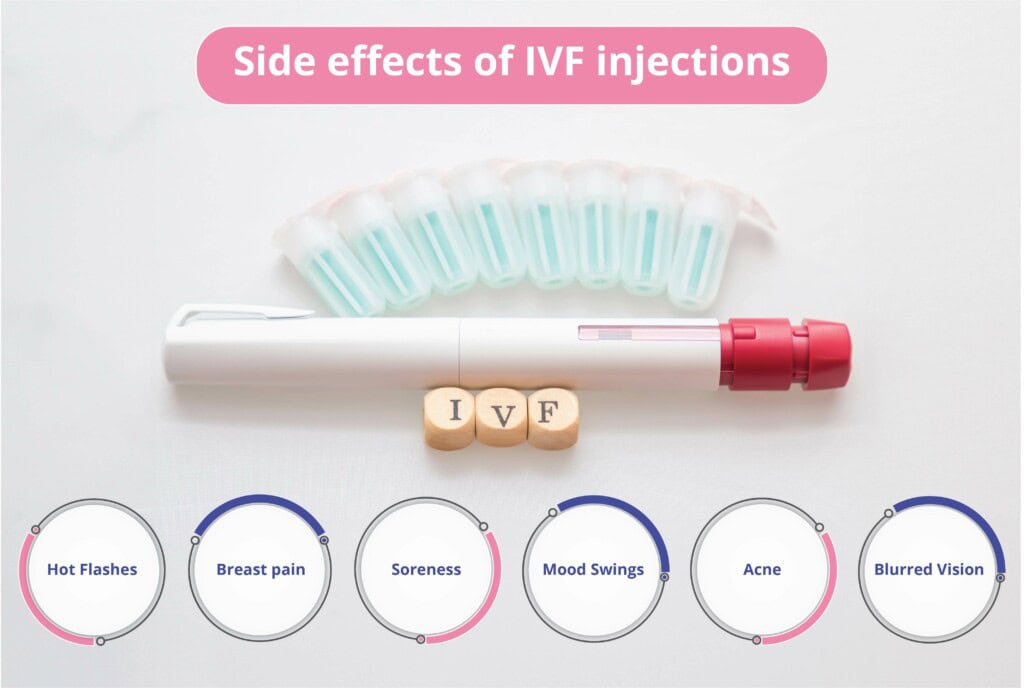
Injections are given during IVF treatment to stimulate the ovaries to produce healthy eggs for fertilization. Common IVF injections and fertility drugs that are given during the first few steps of the process are Clomid, Letrozole, Gonadotropin, Lupron and more, as per the requirements. The quality and dosage of fertility drugs can vary from one person to another depending on their fertility needs. Some of the side effects that patients may experience after IVF injections are:
| Type of fertility drug | Possible side effects |
| Clomid |
|
| Letrozole |
|
| Lupron |
|
| Gonadotropin |
|
How do I choose an IVF clinic in India?
It is always a good idea to look for the best IVF clinic in India before going to any random fertility clinic. To find or choose the best IVF clinic in India, one should consider several factors. Here are some factors that can help you make an informed decision for yourself and will also help you prepare better for the treatment –
Research for information – You can always do thorough research to find the best IVF clinic in India. As you are planning to take an important step in your life, it is essential to look for a clinic with a good track record, better success rate, and a good reputation. Also, you can always look at the reviews, ratings, and patient testimonials of the chosen clinic to get an idea about the facilities through their experiences.
Expertise of the specialist – Shortlist clinics that have highly qualified fertility specialists who have a good record of experience and expertise in their careers as fertility consultants.
Infrastructure – IVF clinics equipped with advanced technology and modern infrastructure always provide safe and effective fertility treatments. This can greatly affect the chances of successful IVF treatment.
Patient Care – IVF treatment or any type of fertility treatment can be emotionally draining and exhausting for some patients. Therefore, it is always good to consider how well the clinic is caring for the patients undergoing treatment.
Clinic Location – Check the location of the clinic to note its accessibility from your residence. This can help you make your treatment journey easier.
Phone Consultation – After shortlisting the IVF clinics, you can choose the most convenient one. Later, you can always schedule a phone consultation before visiting the clinic.
Range of services – Also, check the range of fertility services that the chosen clinic offers, including diagnostic tests, fertility counseling, and genetic screening. This will help you get services under one roof instead of having to go to different places for the services you need.
IVF Treatment Cost – Inquire about the cost of IVF offered by the shortlisted clinic. You can always ask them about payment options, insurance coverage, and any available treatment package programs.
What questions can you ask your fertility specialist?
Here are some common questions you can ask your fertility specialist and get an idea of what to expect before undergoing IVF treatment:
- Why can’t I conceive a baby naturally?
- Are there any alternative methods other than IVF?
- What should I eat and avoid during IVF treatment?
- Is IVF treatment very demanding?
- What are the benefits of IVF treatment?
- Can I go to the gym during IVF treatment?
- How long does IVF treatment take?
- Is IVF treatment painful?
- What diagnostic tests are included in IVF treatment?
- What is the cost of IVF treatment?
- What is the success rate of IVF treatment?
Conclusion
IVF is a well-known Assisted Reproductive Technology (ART) that is helping many couples and individuals achieve their fertility needs. The above article gives you detailed information about IVF treatment, from what it is, to its diagnosis, to side effects, and covers many other important aspects that are necessary to know. If you still have any concerns and want to know more about IVF treatment, call us or book an appointment with us for a free consultation.
Frequently Asked Questions (FAQ)
- I am 45 years old, can I still undergo IVF treatment?
If you are not experiencing menopause, you can always undergo IVF treatment to try your chances.
- How long does it take for IVF to show results?
Experts say that you can take a pregnancy test 8-10 days after IVF treatment. If it shows a positive sign, it means it is a confirmed pregnancy.
- Can I conceive through IVF after menopause?
Menopause is considered ovarian failure, and the female body stops producing viable eggs. Therefore, it is difficult to conceive through IVF treatment after menopause.
- How long will I have to take off work for the IVF procedure?
It is said that one can resume work a day or two after the IVF procedure after taking proper rest. However, the condition may differ from one patient to another, so it is better to consult your doctor about it to get an exact timeline for resuming work.
- Is IVF treatment stressful?
IVF treatment can be stressful for some people and can be emotionally and physically draining. However, it can be managed by joining support groups and telling friends and family about the treatment.
Our Fertility Specialists
Related Blogs



To know more
Birla Fertility & IVF aims at transforming the future of fertility globally, through outstanding clinical outcomes, research, innovation and compassionate care.


Had an IVF Failure?
Talk to our fertility experts