
 Our Centers


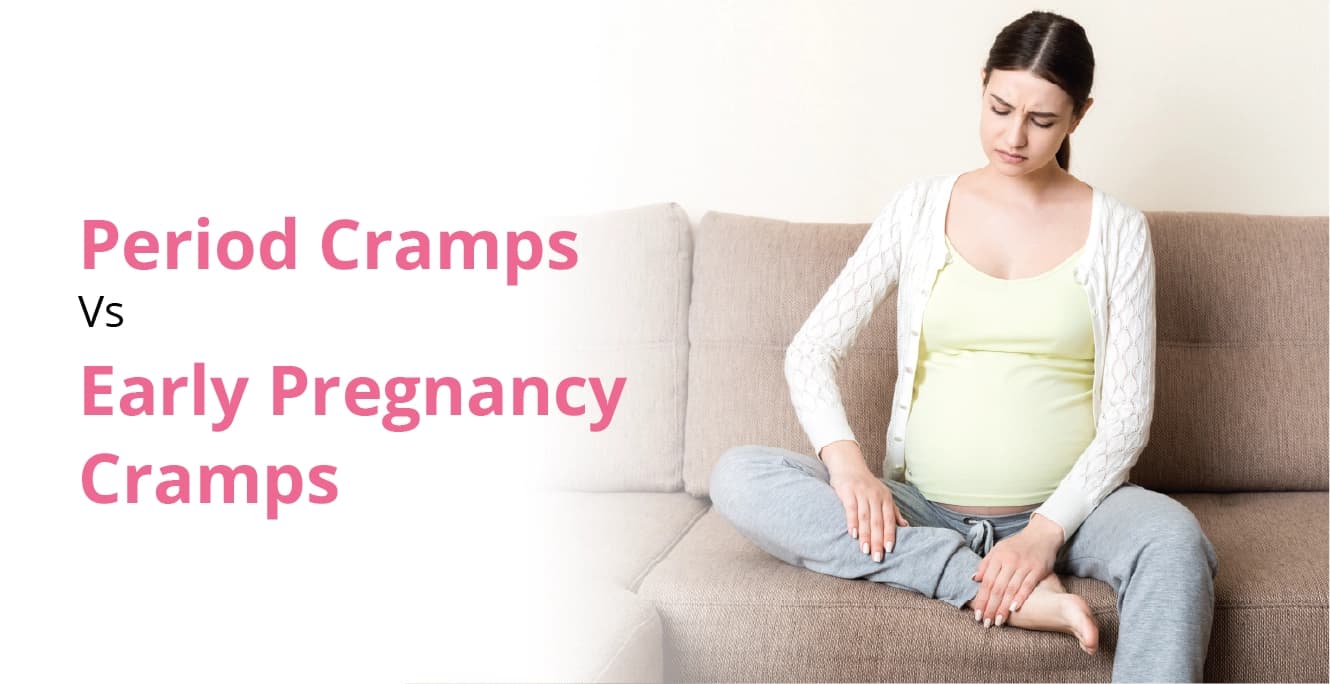
Period Cramps vs Early Pregnancy Cramps

Table of Contents
Your period is late. Your stomach feels off. Every cramp hits like a tiny volcano. But with the discomfort also comes a swirl of confusion.
Is it just PMS… or could it be an early sign of pregnancy?
It might be challenging to distinguish between the early signs of pregnancy and the onset of your menstrual cycle due to the numerous overlapping symptoms. Understanding the subtleties of your body can be challenging, regardless of how well you believe you know it.
But how do we differentiate between them?
Do we need to take a pregnancy test to be sure?
Or are there other ways to decode what your body is trying to tell you?
Do not worry, this blog will help you understand the differences between period cramps vs early pregnancy cramps.
Let’s get started.
What are Period cramps?
Lower abdominal throbbing or cramping is a common gynaecological sign of period cramps. For 3-5 days every month, many women face severe cramps that interfere with their daily life, while others just experience slight discomfort.
Uterine contractions are triggered by prostaglandins, which aid in the shedding of the uterine lining. However, they can also induce discomfort and inflammation. These are among the main reasons for period cramps.
What are Early Pregnancy Cramps?
As the body adapts to the changes, cramps are common during the first trimester of pregnancy. According to the specialists, these discomforts, which are typically felt in the lower back or lower abdomen as a result of implantation, can even happen before pregnancy confirmation. As the uterus expands to accommodate the developing baby, mild cramping may continue after pregnancy confirmation.
Difference: Period Cramp vs Early Pregnancy Cramp
|
Category |
Period Cramp |
Early Pregnancy Cramps |
|
When do they happen? |
Period cramps generally happen 1-2 days before the period, and they continue for the first 1-2 days of bleeding |
These cramps happen 6-12 days after ovulation, often around the time of a missed period |
|
Type of pain |
Throbbing, cramping, intense type of pain |
Mild, stretching, dull type of pain |
|
Location of the pain |
Majorly around the lower abdomen, pelvis, and lower back |
The early pregnancy pain areas are majorly around the lower abdomen or one side of the pelvis |
|
Duration |
A couple of hours to 2-3 days |
A couple of minutes on to off for a few days |
|
Reason |
It generally happens due to the uterus contracting to shed its lining |
It generally happens because the uterus is preparing for implantation bleeding |
|
Intensity of pain |
Moderate to severe |
Mild to moderate |
|
Associated symptoms |
Bloating, mood swings, acne, cravings, fatigue, breast tenderness |
Light spotting (implantation bleeding), mild nausea, fatigue, sensitive breasts |
|
Bleeding pattern |
Normal period flow: light → moderate → heavy → light |
Very light spotting (pink/brown), usually short and minimal |
|
Clotting |
It is common to have small clots |
There are no clots to be found |
While period cramps and early pregnancy cramps can feel similar, it is essential to understand the subtle differences to better comprehend your body. If you notice period-like cramps during early pregnancy or feel abdominal pain after a missed period, then we recommend that you monitor the symptoms. Consult with a healthcare professional for more clarity and reassurance.
What Causes Early Pregnancy?
Early pregnancy occurs when a fertilized egg implants itself into the lining of the uterus, marking the beginning of conception. This process is triggered due to various physical changes in the body. Most common changes include hormonal imbalance, which can lead to mild cramping, fatigue, breast tenderness, and at times, light spotting. Many women may experience period-like cramps in early pregnancy, which can feel similar to regular menstrual pain, or notice abdominal pain after a missed period.
But why do these happen?
These early signs of pregnancy are typically caused by the uterus expanding, increased blood flow, and hormonal adjustments. These changes take place to support the developing embryo. Understanding where early pregnancy cramps are felt, how long they last, and the subtle difference between period cramps and early pregnancy cramps can help women seek timely guidance.
When to Take a Pregnancy Test?
The best way to find out if you suspect you might be pregnant is to do a home pregnancy test. It’s preferable to wait until the first day of your missed period for the most accurate results, while some tests can identify pregnancy up to five days before a missed period.
Since the hCG pregnancy hormone that tests check for is most concentrated in your urine early in the morning, taking the test first thing in the morning can increase accuracy. The next step is to make an appointment with a healthcare professional if the test results are positive.
When to Seek a Doctor?
While mild cramps are common throughout the early stages of pregnancy and menstruation, some symptoms may call for medical intervention.
A medical professional can help identify the underlying cause if you’re unsure what’s causing your cramps or if your symptoms seem unusual.
If you get any of the following early pregnancy cramps, consult a doctor:
- Severe or ongoing cramps, particularly when accompanied by severe bleeding, may be a sign of an ectopic pregnancy or miscarriage.
- Fainting, dizziness, or sharp, one-sided discomfort could indicate an ectopic pregnancy
- Severe lower abdomen discomfort that persists or gets worse over time
- Chills, fever, or odd discharge might be signs of an illness.
For menstrual cramps, consult a medical professional if you:
- Suffer from pain so much that it prevents you from going about your everyday routine
- Cramps that don’t go away with over-the-counter medications or natural solutions
- Abrupt changes in your menstrual cycle, like noticeably heavier or more uncomfortable periods
- Severe cramps combined with symptoms including nausea, vomiting, diarrhoea, or dizziness
- Cramping outside of your period or in between cycles may be a sign of fibroids or endometriosis.
You can receive the care you require by being aware of your body and identifying when cramps appear unusual. A healthcare professional can provide clarification and comfort if you’re ever in doubt.
The Bottom Line
Understanding the differences between period-like cramps in early pregnancy and regular menstrual pain is essential for every woman. While mild cramping, leg pain before period or pregnancy, or cramps like period pain in early pregnancy can be normal, being aware of unusual patterns helps you take timely action.
You can decide on when to get a pregnancy test or see a doctor by keeping an eye on symptoms like period cramps in the early stages of pregnancy or sudden stomach ache after your period.
You can make informed decisions about your reproductive health and overall well-being by paying attention to your body, identifying subtle changes, and understanding where early pregnancy symptoms are typically felt.
FAQ’s
Is it normal to have period-like cramping in early pregnancy?
Yes, it is completely normal to have period-like cramping during the early stage of pregnancy. These cramps are generally mild to moderate and are caused by your body trying to adjust to the new changes. Like the uterus starts to expand, blood flow changes, and there is a hormonal shift as well.
Can a period & early pregnancy cramp occur at the same time?
Yes, early pregnancy cramps and what feel like period-type cramps can overlap because the sensations are similar. But true menstrual bleeding and pregnancy don’t occur together, so any unusual pain or bleeding should be evaluated.
For how many days period like cramps occur in early pregnancy?
Period-like cramps that occur during the early stages of pregnancy generally last for either a couple of minutes or go on and off for 2-3 days.
Is cramping normal in the last weeks of pregnancy?
Yes, cramping in the last weeks of pregnancy is usually normal as your body prepares for labour through Braxton Hicks contractions. However, if cramps become regular, more painful, or are accompanied by bleeding, fluid leakage, or decreased baby movement, you should contact your doctor immediately.
Our Fertility Specialists


Kolkata New Town, West Bengal
Dr. Aaheli Maiti
MBBS, MS (Obstetrics & Gynaecology)


Gorakhpur, Uttar Pradesh
Dr. Akriti Gupta
MBBS, MS (Obstetrics & Gynaecology)

Lucknow, Uttar Pradesh
Dr. Shreya Gupta
MBBS, MD (Obstetrics & Gynaecology), DNB (Obstetrics & Gynaecology)

Varanasi, Uttar Pradesh
Dr. Deepika Mishra
MBBS, MS (Obstetrics & Gynaecology)

Lajpat Nagar, Delhi
Dr. Muskaan Chhabra
MBBS, MS (OBGY), DNB (OBGY), MNAMS, MRCOG1

Kolkata, West Bengal
Dr. Swati Mishra
MBBS, MS (Obstetrics & Gynaecology)

Koramangala, Karnataka
Dr. Snehadarshini Karanth
MBBS, MS (Obstetrics & Gynaecology), FRM
Related Blogs



To know more
Birla Fertility & IVF aims at transforming the future of fertility globally, through outstanding clinical outcomes, research, innovation and compassionate care.


Had an IVF Failure?
Talk to our fertility experts