
 Our Centers


Paraovarian Cysts: Causes, Symptoms & Treatment

Table of Contents
If you have recently come across the term paraovarian cyst in an ultrasound report, it is completely normal to feel unsure about what it means. Many people are familiar with ovarian cysts, but paraovarian cysts are a different entity and are often less talked about. Even though they are usually harmless, knowing what they are and when you should pay attention can bring a lot of clarity and peace of mind. This guide explains ovarian cysts in a simple, human way so that you can understand the condition without feeling overwhelmed.
What is a Paraovarian Cyst?
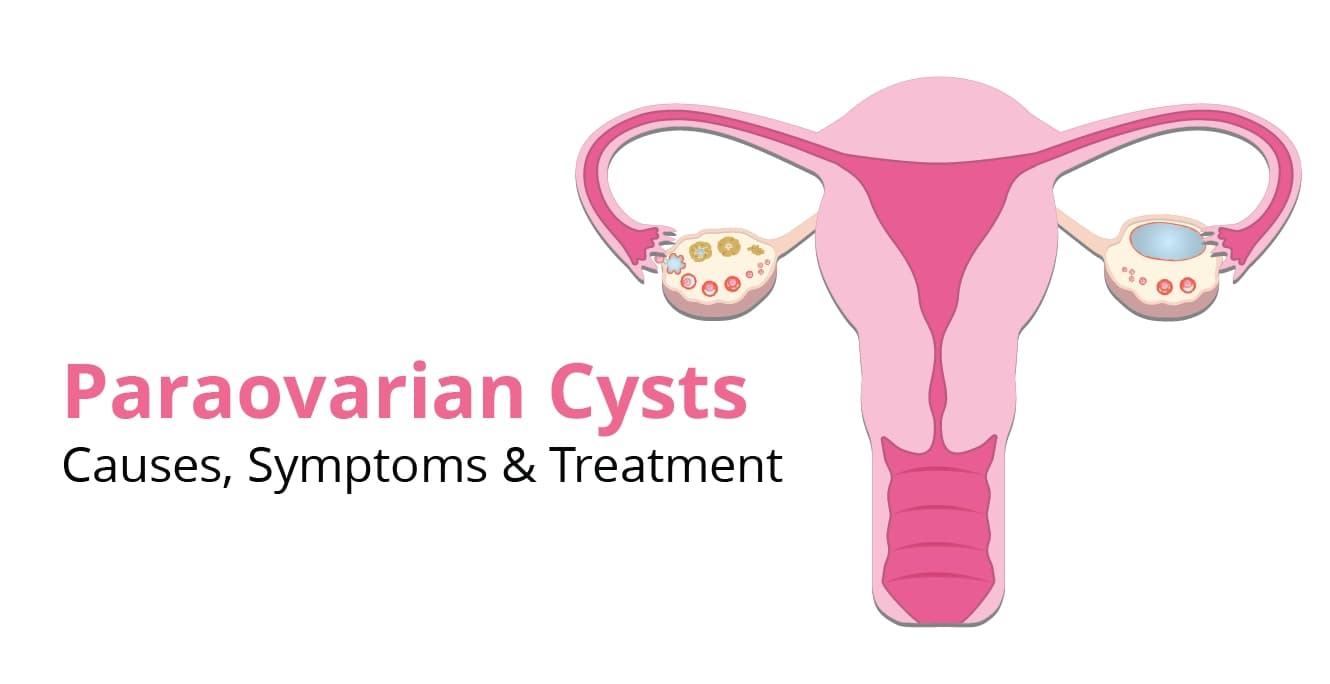
A paraovarian cyst is a fluid-filled sac that grows beside the ovary rather than inside it. The word “para” means “near,” which explains why a paraovarian cyst means a cyst that develops close to the ovary and fallopian tube. These cysts originate from the tissues that surround the ovary and not from the ovary itself.
They are also known as paratubal cysts and are usually found within the broad ligament, which is the sheet-like structure that holds the reproductive organs in place. A report may mention a left paraovarian cyst or a right paraovarian cyst, simply indicating the side where the cyst is located. The side does not change the seriousness of the condition.
How Common Are Paraovarian Cysts?
Paraovarian cysts are not rare. Research suggests that they make up about 5 to 20% of all adnexal masses, which refers to growths found around the ovaries and fallopian tubes. Many people do not even realise they have one because most paraovarian simple cysts do not cause symptoms, especially when they are small.
They can occur at any age, including adolescence, but are most commonly detected in women between 20 and 40 years of age.
Symptoms of Paraovarian Cysts
A large number of paraovarian cysts do not lead to any discomfort. People often discover them accidentally during an ultrasound done for another reason. Symptoms usually appear when the cyst becomes larger, presses on nearby organs, or twists.
Common symptoms include:
- A dull or persistent pain in the lower abdomen
- Feeling of pressure or heaviness in the pelvis
- Bloating or a sense of fullness
- Discomfort during sexual intercourse
- Frequent urination if the cyst presses against the bladder
- Sudden sharp pain, which may suggest torsion (twisting)
A very sudden and intense pain should always be taken seriously. It can signal rupture or torsion of the cyst, both of which require urgent medical attention.
Causes of Paraovarian Cysts
Paraovarian cysts usually develop due to embryological factors. This means that the tissues that later form into reproductive organs may leave behind small remnants that can grow into cysts at some point in life.
The possible causes include:
- Remnants of Müllerian or Wolffian ducts. These ducts are part of the reproductive system during fetal development. If remnants remain, they can later form cysts.
- Fluid retention in the tissues near the ovary or fallopian tube.
- Hormonal influences. Although hormones are not as strongly linked to paraovarian cysts as ovarian cysts, hormonal changes may occasionally play a role in the growth of a cyst.
It is important to note that para-ovarian cysts are not caused by stress, sexual activity, lifestyle habits, infections, or anything you did or did not do.
How Paraovarian Cysts Are Detected?
Most paraovarian cysts are diagnosed during routine imaging tests. The main tool used is a pelvic ultrasound. A paraovarian cyst ultrasound helps doctors differentiate between ovarian and paraovarian structures. During the scan, the doctor can observe where the cyst is located in relation to the ovary.
A typical paraovarian simple cyst appears as:
- A clear, fluid-filled sac
- Located close to but separate from the ovary
- Having smooth and thin walls
- Not containing any solid areas or unusual growths
Sometimes a transvaginal ultrasound provides more detailed information. In rare cases where the cyst looks complex or unusually large, a CT scan or MRI may be recommended for better clarity.
Treatment of Paraovarian Cysts
The treatment approach depends entirely on the size of the cyst, the symptoms it causes, and the appearance of the cyst on imaging.
Observation
Small cysts that do not cause any discomfort usually do not need immediate treatment. Doctors commonly recommend monitoring the cyst over time. This involves repeat ultrasounds every few months to ensure that it is not growing or causing problems.
Medication
There is no specific medication that can shrink or dissolve a paraovarian cyst. Pain relief medicines may be used for mild discomfort.
Surgical Removal
Surgery is suggested when:
- The cyst is large (generally more than 5 to 7 centimetres)
- The cyst is causing ongoing pain
- The doctor suspects torsion
- The cyst has complex features on imaging
- The cyst continues to grow over time
Laparoscopic surgery is the most common method used. It involves small cuts, quicker recovery, and minimal scarring. The aim is to remove the cyst while preserving the ovary and fallopian tube.
Difference Between Ovarian Cysts and Paraovarian Cysts
Even though the two conditions may sound similar, there are important differences that help doctors identify them accurately.
| Feature | Ovarian Cyst | Paraovarian Cyst |
| Origin | Develops within the ovary | Develops beside the ovary |
| Cause | Usually hormonal or due to ovulation | Usually due to developmental tissue remnants |
| Impact on fertility | May affect fertility if large or related to conditions like PCOS | Usually does not affect fertility |
| Treatment | Depends on type (functional, dermoid, etc.) | Mostly observation unless large or symptomatic |
| Symptoms | Can cause menstrual changes | Does not usually affect periods |
Understanding this difference often helps reduce confusion when people read their ultrasound reports.
Paraovarian Cysts and Pregnancy
One of the most common concerns is whether a paraovarian cyst and pregnancy can safely coexist. In most cases, the answer is yes.
Small paraovarian cyst pregnancy cases are usually monitored with regular scans. They do not typically interfere with conception or the growth of the baby.
However, a very large cyst may sometimes cause discomfort during pregnancy or twist due to increased movement within the abdomen. Your doctor may decide to monitor it more closely or plan removal if necessary.
Final Thoughts
A paraovarian cyst can sound unfamiliar, but in most cases, it is a harmless finding that simply needs monitoring. Understanding paraovarian cyst causes, symptoms, diagnosis, and treatment can help reduce unnecessary worry. If you have been diagnosed with one, speak openly with your doctor and do not hesitate to ask questions. Knowing what your body is experiencing is the first step to feeling more in control and reassured.
FAQs
Do paraovarian cysts affect fertility?
Most paraovarian cysts do not affect fertility because they do not grow from the ovary and do not interfere with the release of eggs. If the cyst becomes extremely large or causes torsion, it can temporarily affect reproductive health, but this is uncommon.
Can lifestyle changes impact paraovarian cysts?
Lifestyle changes cannot prevent or shrink paraovarian cysts because they are not caused by diet, hormones, or habits. However, adopting a healthy lifestyle can help manage any discomfort and support overall reproductive health.
Is a paraovarian cyst harmful?
A paraovarian cyst is usually harmless. Most are simple, fluid-filled, and non-cancerous. Problems arise only when the cyst grows large, causes pain, or twists. These situations are rare and can be treated effectively when addressed early.
Our Fertility Specialists


Kolkata New Town, West Bengal
Dr. Aaheli Maiti
MBBS, MS (Obstetrics & Gynaecology)


Gorakhpur, Uttar Pradesh
Dr. Akriti Gupta
MBBS, MS (Obstetrics & Gynaecology)

Allahabad, Uttar Pradesh
Dr. Ankur Pandey
MBBS, DGO, DNB

Kozhikode, Kerala
Dr. Celine Aricatt
MBBS, MS, Fellowship in Reproductive Medicine

Kannur, Kerala
Dr. Deepa Menon
MBBS, MD (Obstetrics and Gynecology) Diploma in ART (Kiel, Germany)

J P Nagar, Karnataka
Dr. Chaithanya C
MBBS, MS, Fellowship in Reproductive Medicine

Koramangala, Karnataka
Dr. Snehadarshini Karanth
MBBS, MS (Obstetrics & Gynaecology), FRM
Related Blogs





To know more
Birla Fertility & IVF aims at transforming the future of fertility globally, through outstanding clinical outcomes, research, innovation and compassionate care.


Had an IVF Failure?
Talk to our fertility experts