
 Our Centers


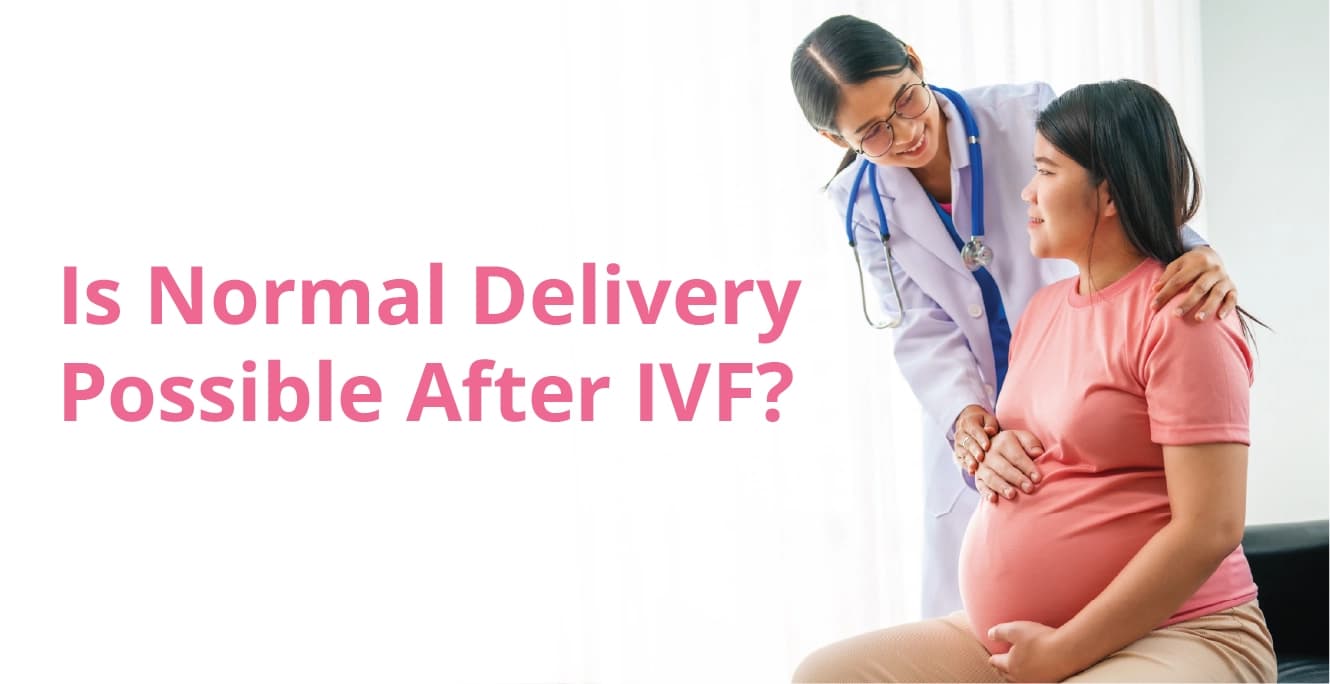
Is Normal Delivery Possible After IVF

Table of Contents
- What is an IVF Pregnancy?
- How is an IVF Pregnancy Different From a Natural Pregnancy?
- Does IVF Affect the Delivery Process?
- Can an IVF Pregnancy Have a Normal Delivery?
- 5 Key Benefits of Natural Birth After IVF
- 7 Factors That Affect the Chances of Normal Delivery After IVF
- Things to Consider for Normal Delivery in IVF Pregnancy
- When is a C-Section Recommended in IVF Pregnancy?
- The Closing Note
IVF (In Vitro Fertilisation) has helped millions of couples across the world become parents, but for many of them, the joy of pregnancy through IVF is a long-awaited milestone.
Once the pregnancy journey begins after IVF success, there is a common question that arises: “Is a normal delivery possible after IVF?” The answer is yes, but this may vary depending on a number of factors. Let’s find out how IVF pregnancies differ from natural ones and what influences the possibilities of a vaginal birth.
What is an IVF Pregnancy?
For couples facing fertility problems and unable to conceive despite multiple attempts, assisted reproductive technology (ART) has emerged as a hope. IVF (In Vitro Fertilisation) is one such advanced technology that helps couples achieve pregnancy. The process involves collecting the woman’s egg and fertilising it with sperm inside a laboratory setup. The resulting embryo is then transferred into the woman’s uterus, where it can implant and grow naturally, just like in a normal pregnancy.
IVF is mostly advised in the following cases:
- Blocked or damaged fallopian tubes
- Male infertility (low sperm count or motility)
- Ovulation disorders
- Unexplained infertility
- Endometriosis or age-related fertility decline
Once the embryo successfully implants, the pregnancy proceeds much like any other with regular scans, prenatal care, and monitoring.
How is an IVF Pregnancy Different From a Natural Pregnancy?
After successful implantation, the IVF pregnancy continues the same as a natural pregnancy. However, the journey leading up to conception is more medically guided, and the pregnancy is often monitored more closely.
Here are a few key differences:
| Aspect | IVF Pregnancy | Natural Pregnancy |
| Conception | Achieved in a lab through assisted fertilisation | Occurs naturally inside the fallopian tube |
| Hormonal Support | Extra hormonal supplements (like progesterone) may be given to support implantation | Hormonal balance happens naturally |
| Monitoring | Frequent scans and blood tests in the early weeks | Fewer check-ups unless complications arise |
| Parental Anxiety | Often higher due to emotional and financial investment | Comparatively lower, though it varies by person |
| Delivery Mode | Usually guided by medical recommendations | Decided by natural labour progression |
Does IVF Affect the Delivery Process?
The method of conception, whether it is IVF or natural, does not directly determine the mode of delivery. What can influence it, however, are medical, maternal, and obstetric factors that may develop during pregnancy.
Doctors tend to closely monitor IVF pregnancies because:
- The mother’s age is often on the higher side.
- There may be a higher risk of multiple pregnancies (twins or more).
- Pre-existing health issues like thyroid disorders, hypertension, or diabetes are more common.
- The placenta may sometimes attach lower than usual (placenta previa).
While these factors may raise caution, they do not automatically rule out a normal delivery. If the pregnancy progresses smoothly, a vaginal delivery after IVF is absolutely possible.
Can an IVF Pregnancy Have a Normal Delivery?
Yes, a woman can have a normal (vaginal) delivery after IVF, provided there are no medical complications. In fact, many IVF mothers successfully experience natural births without surgical intervention.
According to studies published in journals like Human Reproduction, the rate of vaginal delivery in IVF pregnancies tends to be lower, not because normal delivery is not possible, but because doctors and parents often opt for elective C-sections as a precaution. However, when the pregnancy progresses without complications, there is no medical reason why a woman who conceived through IVF cannot have a natural birth.
A normal delivery after IVF is very much achievable. If:
- The pregnancy involves a single baby (not twins or triplets),
- The baby’s position is head-down,
- There are no complications such as placenta previa or preeclampsia, and
- The mother’s health is stable
5 Key Benefits of Natural Birth After IVF
If medically feasible, a normal delivery after IVF offers the following advantages, both physically and emotionally.
- Vaginal birth or normal delivery usually involves a shorter hospital stay and quicker recovery.
- There is a lower risk of infection compared to surgical birth, which has a comparatively higher risk of post-operative infections.
- Immediate skin-to-skin contact is easier in normal delivery, which aids bonding and breastfeeding.
- Labour during normal pregnancy stimulates oxytocin, which promotes emotional well-being and uterine recovery.
- C-sections can sometimes affect future pregnancies, while vaginal delivery avoids this risk.
7 Factors That Affect the Chances of Normal Delivery After IVF
There are a range of factors that play a role in deciding whether a vaginal birth is safe and suitable in IVF pregnancies:
| Factor | How Does it Impact? |
| Maternal Age | Many women opt for IVF post-30 or 35 years of age. As age increases, the risks of high bp, gestational diabetes, and delayed labour increase. This may sometimes lead to a planned C-section. |
| Type of Embryo Transfer | Frozen embryo transfers usually do not affect delivery mode, but pregnancies with multiple embryos increase the likelihood of complications that may necessitate surgical delivery. |
| Placental Position | If the placenta lies low (placenta previa), vaginal birth is not possible. This condition is slightly more common in IVF pregnancies. |
| Multiple Pregnancy | If you have twins or triplets, it raises the chances of preterm labour and C-section delivery due to limited uterine space and foetal positioning. |
| Baby’s Position | If the baby is in breech or transverse position at term, doctors may recommend a C-section to ensure the baby’s safety. |
| Maternal Health | Pre-existing medical conditions, for instance, diabetes, hypertension, uterine abnormalities, or cervical issues may affect the chances of a normal delivery. |
| Patient Preference | Many couples opt for IVF after years of trying and if they conceive, they prefer an elective C-section to minimise perceived risks. However, this should be a shared decision between the couple and the healthcare team. |
Things to Consider for Normal Delivery in IVF Pregnancy
Though normal delivery is possible, IVF pregnancies carry certain unique considerations that require extra medical attention.
- Maternal Age: Older mothers have slightly higher risks of prolonged labour or emergency interventions.
- Emotional Stress: IVF pregnancies often come with a long journey behind them, so parents and doctors may be extra cautious. This sometimes leads to choosing a C-section to avoid the last-minute risks.
- Labour Induction: In some cases, doctors may induce labour if the pregnancy extends beyond the due date or if there is concern about placental function.
- Emergency C-Section: Even if normal delivery is planned, complications like foetal distress or slow labour progression can prompt an emergency C-section.
It is the overall safety of both mother and baby that remains the top priority. A systematic approach with experienced obstetric care can ensure the best outcome.
When is a C-Section Recommended in IVF Pregnancy?
There are certain medical situations that make a C-section the safer and life-saving choice in many cases. These include:
- Multiple pregnancy (twins, triplets)
- Placenta previa or placenta accreta
- Breech or abnormal baby position
- Foetal distress during labour
- Previous uterine surgery or C-section
- Severe preeclampsia or uncontrolled gestational diabetes
- Advanced maternal age with other risk factors
The Closing Note
It must be clear to you now that a normal delivery after IVF is possible, and many women experience it successfully. IVF may change the path to pregnancy, but it does not have to change the way you give birth. However, since every pregnancy is unique, the mode of delivery largely depends on multiple crucial factors that cannot be overlooked, such as, health of the mother, pregnancy progress, baby’s position, and any medical complication that may arise. With regular monitoring, a healthy lifestyle, and a supportive medical team, women who conceive through IVF can look forward to a safe and positive birthing experience, regardless of a normal delivery or a C-section.
Our Fertility Specialists


Lucknow, Uttar Pradesh
Dr. Shreya Gupta
MBBS, MD (Obstetrics & Gynaecology), DNB (Obstetrics & Gynaecology)


Rewari, Haryana
Dr. Nandini Jain
MBBS, MS (Obstetrics & Gynaecology), FMAS

Chandigarh
Dr. Rakhi Goyal
MBBS, MD (Obstetrics and Gynaecology)

Patna, Bihar
Dr. Anupam Kumari
MBBS, MS (Obstetrics and Gynaecology)

Gurgaon – Sector 14, Haryana
Dr. Prachi Benara
MBBS (Gold Medalist), MS (OBG), DNB (OBG), PG Diploma in Reproductive and Sexual health

Lajpat Nagar, Delhi
Dr. Muskaan Chhabra
MBBS, MS (OBGY), DNB (OBGY), MNAMS, MRCOG1
Related Blogs




To know more
Birla Fertility & IVF aims at transforming the future of fertility globally, through outstanding clinical outcomes, research, innovation and compassionate care.


Had an IVF Failure?
Talk to our fertility experts