
 Our Centers


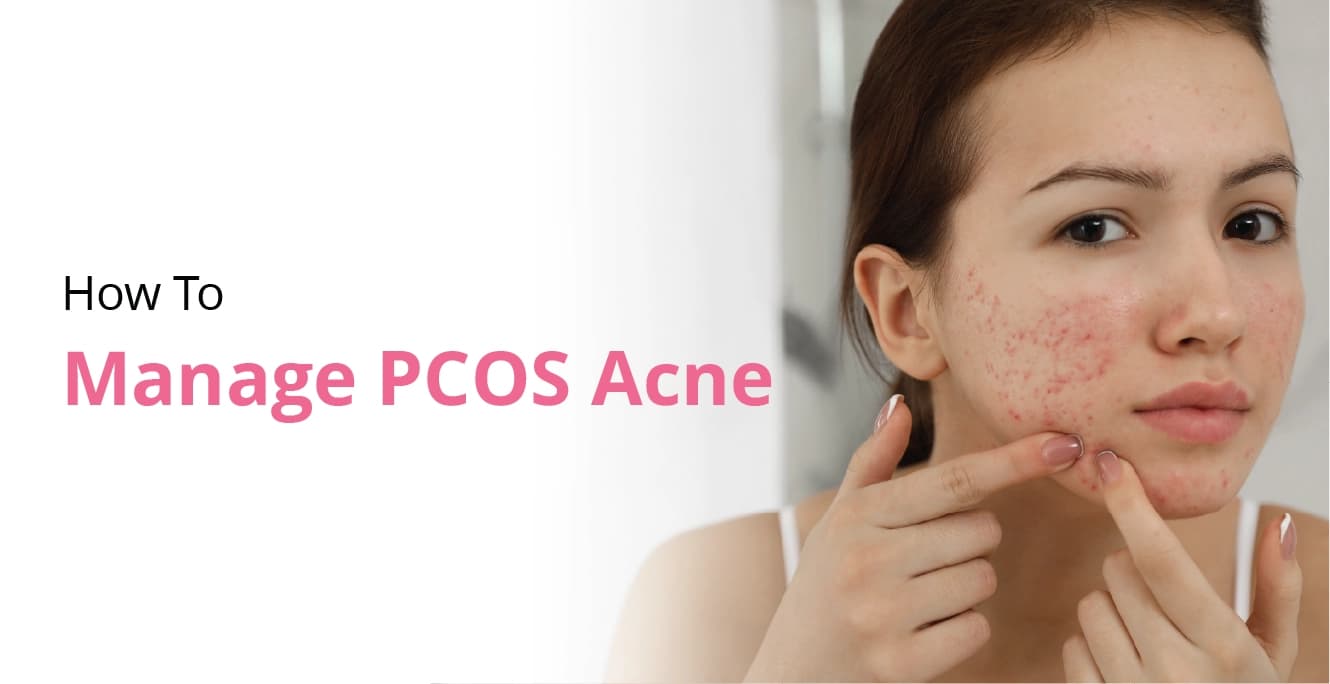
How To Manage PCOS Acne

Table of Contents
Is PCOS-related acne causing you trouble?
Whenever we think about PCOS, what normally comes to our mind is irregular periods, weight gain, or fertility issues. But for many women, there is one more distressing concern, and it is persistent acne. This type of acne is often stubborn and may not respond well to regular acne treatments. So, is there any solution? Yes, PCOS-related acne can be managed, and this article will provide you with a detailed guide.
What is the Link Between PCOS and Acne Breakout?
PCOS is a condition that affects hormone levels in the body. Women with PCOS often produce higher-than-normal amounts of certain male hormones, called androgens. These hormones stimulate the oil glands in the skin, causing them to produce excessive sebum (the oily substance produced by your skin, which keeps it moisturised). Excess oil, combined with dead skin cells and bacteria, can clog pores, which leads to acne, blackheads, and cysts. Because hormonal imbalance is involved, these breakouts are often deeper, inflamed, and slow to heal.
In addition, many women with PCOS have insulin resistance. This means their bodies do not respond effectively to insulin, leading to higher insulin levels. Increased insulin can stimulate androgen production, which may further worsen acne.
How Does PCOS Acne Look Compared to Regular Acne?
Hormonal acne, such as PCOS acne, often shows a different pattern than typical teenage or stress-related acne. Here are some common characteristics:
| Feature | PCOS Acne | Regular Acne |
| Area impacted | Areas sensitive to hormones such as the lower face, jawline, chin, neck, and sometimes upper chest or back. | Commonly on the forehead, cheeks, nose, and sometimes the back or shoulders. |
| Type of pimples | Deeper, painful, cystic, or nodular bumps that take longer to heal. | Whiteheads, blackheads, and small, inflamed pimples that stay on the surface. |
| Pattern of breakouts | Persistent. Often flares around the menstrual cycle due to hormonal shifts. | May come and go depending on hygiene, stress, or skincare habits. |
| Healing time | Slow healing. Spots may remain for weeks and leave dark marks. | Comparatively faster healing. Marks fade quickly if treated well. |
| Triggers | Hormonal imbalance, high androgen levels, insulin resistance, stress, and sleep issues. | Skin hygiene issues, clogged pores, diet choices, stress, and bacterial buildup. |
| Age group | Common in adult women, especially in their twenties, thirties, and forties. | Common in teenagers, but can also appear in adults. |
| Response to treatment | Slower response. Often needs a combination of medical treatment, lifestyle changes, and skincare. | Faster improvement with regular acne treatments and good skincare habits. |
Because of these differences, women often refer to this type of acne as PCOS acne to distinguish it from regular acne.
How to Treat PCOS Acne?
There is a direct connection between PCOS acne and hormonal balance. Therefore, using a random acne cream might not help, and a holistic approach is required, which not only addresses skin issues but also the underlying hormonal problem.
Medical Treatments
| Treatment Type | How Does it Help? |
| Hormonal therapy |
|
| Anti-androgen medication |
|
| Topical acne treatments |
|
| Combined approaches |
|
Medicines should be taken under expert supervision only.
Lifestyle, Diet, and Skin-Care
- Follow a gentle skincare routine.
- Wash your face twice daily with a mild cleanser.
- Do not use harsh scrubs
- Use non-comedogenic moisturisers.
- Apply sunscreen regularly.
- Avoid pore-clogging products. Over-exfoliation can irritate the skin and worsen acne.
- Pcos Diet is very important in acne management. Foods rich in vegetables, healthy fats, and nuts may help reduce inflammation. Excessive sugar and refined carbohydrates may worsen hormone-driven acne.
- Manage insulin resistance. Balanced meals, regular exercise, maintaining a healthy weight, and stress management can improve hormone balance and reduce acne severity.
With a proper and consistent schedule, PCOS-related acne can be effectively managed.
7 Key Tips to Manage PCOS Acne
The following are some tips that can help you manage PCOS acne:
- If you notice persistent acne in adulthood, breakouts along the jawline and chin, irregular periods, or excess hair growth, consult a healthcare professional for hormone testing and PCOS evaluation.
- Follow a healthy skincare routine.Use mild cleansers, avoid harsh scrubs, and moisturise with non-comedogenic products. Avoid touching or popping pimples.
- Include fresh vegetables, nuts, healthy fats, and whole grains in your diet. Avoid high-sugar and processed foods.
- Engage in regular physical activity, ensure adequate sleep, manage stress with activities such as yoga or meditation, and maintain a healthy weight.
- Take hormonal or anti-androgen medications only under medical supervision.
- Hormonal acne takes longer to improve than typical acne. Consistency in skincare, diet, and lifestyle is essential.
- Avoid relying solely on miracle creams or home remedies. Addressing the hormonal and metabolic factors is key to long-term results.
Other Skin and Hair Issues Linked to PCOS
Acne is not the only symptom of PCOS. Other issues may include:
- Excess facial or body hair, especially on the chin, upper lip, chest, abdomen, and back.
- Oily skin and clogged pores due to overactive sebaceous glands.
- Dark patches in skin folds, such as the neck or underarms.
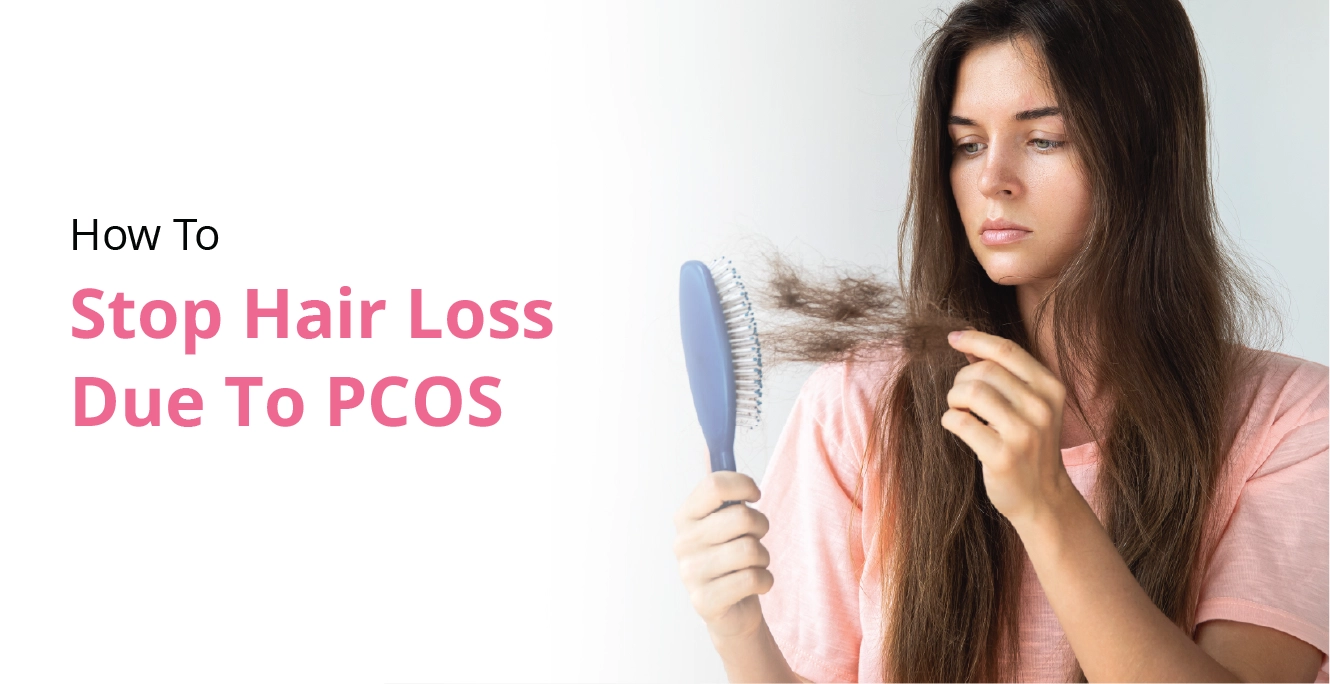
- Hair thinning or hair loss on the scalp despite increased hair growth elsewhere.
The Closing Note
If you are struggling with PCOS-related acne, do not stress yourself. Dealing with those stubborn PCOS acne can be emotionally challenging, but it is manageable. Patience is the key. Follow a steady and healthy skincare routine, take medications, if any are prescribed by your doctor and make some positive lifestyle changes that will support PCOS acne management. Do not worry, you are not alone, and there are measures to support your skin and overall health.
Feel free to speak to our leading dermatologists at Birla Fertility & IVF to get a personalised and effective treatment plan for your PCOS acne.
FAQs
Can we reverse or cure PCOS acne?
Although PCOS cannot be completely cured, acne caused by PCOS can be significantly controlled or cleared with proper treatment, diet, skincare, and lifestyle adjustments.
Can diet modification help reduce PCOS acne?
Diet cannot cure PCOS acne by itself, but eating a balanced, anti-inflammatory pcos diet can reduce insulin resistance and inflammation, which may lower androgen levels and improve acne over time.
Are home remedies enough to treat PCOS acne?
Home remedies can support overall skin health, but hormonal acne requires medical evaluation. A combination of treatment, lifestyle changes, and skincare usually gives the best results.
How long does it take to see improvement?
Improvement varies for each person. Hormonal acne may take several weeks to months to show noticeable results. Consistency is key.
Our Fertility Specialists

Kolkata New Town, West Bengal
Dr. Aaheli Maiti
MBBS, MS (Obstetrics & Gynaecology)


Allahabad, Uttar Pradesh
Dr. Ankur Pandey
MBBS, DGO, DNB

Rajouri Garden, Delhi
Dr. Devyani Mukherjee
MBBS, MS (Obstetrics and Gynaecology) FNB (Reproductive Medicine)

Kozhikode, Kerala
Dr. K U Kunjimoideen
MBBS, MD, DNB (Obstetrics and Gynaecology), Chairperson Of Kerala ISAR 2022-2024

Kozhikode, Kerala
Dr. Celine Aricatt
MBBS, MS, Fellowship in Reproductive Medicine

Koramangala, Karnataka
Dr. Snehadarshini Karanth
MBBS, MS (Obstetrics & Gynaecology), FRM

Gorakhpur, Uttar Pradesh
Dr. Akriti Gupta
MBBS, MS (Obstetrics & Gynaecology)
Related Blogs




To know more
Birla Fertility & IVF aims at transforming the future of fertility globally, through outstanding clinical outcomes, research, innovation and compassionate care.


Had an IVF Failure?
Talk to our fertility experts