
 Our Centers


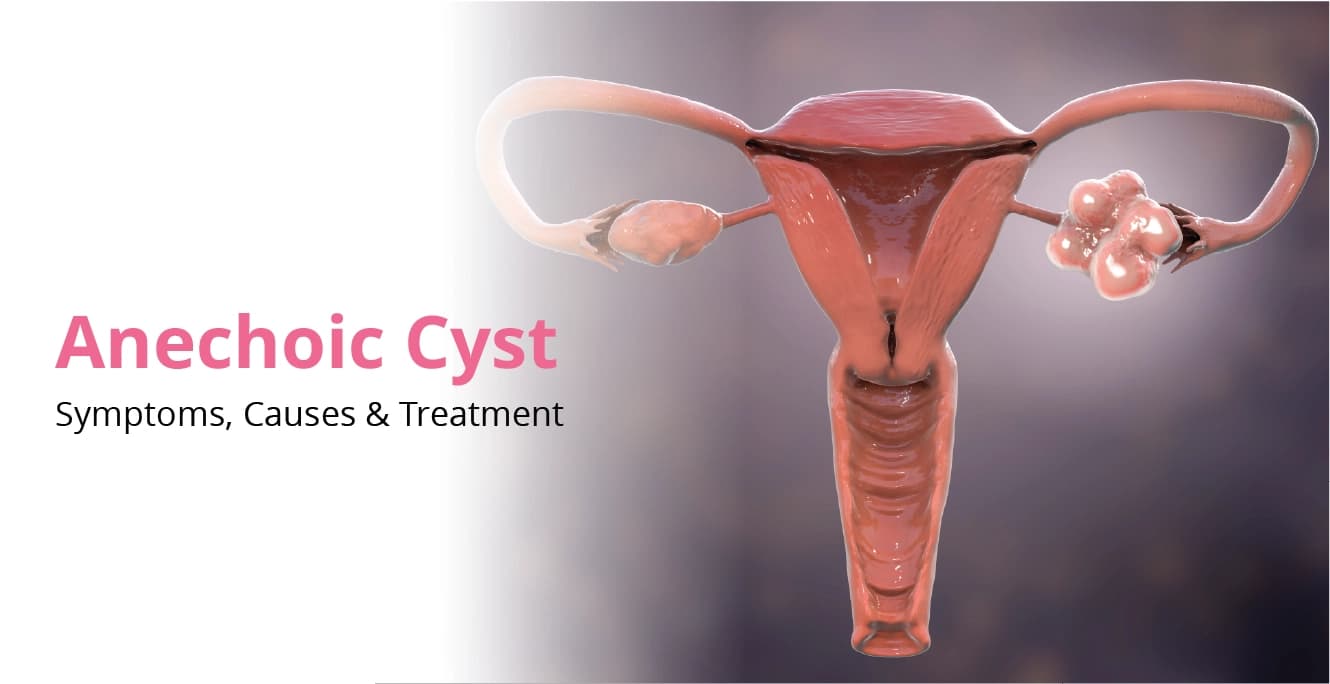
Anechoic Cyst: Symptoms, Causes & Treatment

Table of Contents
Hearing the term ‘anechoic cyst’ on a scan report can be confusing and a little worrying.
If you’re wondering about the anechoic cyst meaning or what is anechoic cyst is, you’re not alone. This common type of cyst is essentially a fluid-filled sac that appears completely dark on ultrasound due to the clear fluid it contains.
You can find them in different parts of the body, such as the kidneys, breasts, or ovaries, and are often detected during routine checkups that include imaging.
While the word “cyst” can sound alarming, an anechoic cyst usually doesn’t cause symptoms and may resolve on its own.
Understanding what it is can help ease anxiety and guide the right next steps.
What is an Anechoic cyst?
Pure fluid that appears black on ultrasonography because it doesn’t reflect sound waves back is referred to as “anechoic” in radiology terminology. “Cyst” refers to a pocket or sac. When combined, this indicates that the scan detected a straightforward, fluid-filled pocket with thin walls and no solid components. That’s all. It doesn’t teach you about suffering, peril, or fate on its own. It provides you with an image of the pocket, allowing you to make an informed decision about what to do next.
Symptoms of Anechoic Cyst
Many anechoic cysts are found by accident during regular imaging and don’t produce any symptoms. But some people might encounter:
- Pelvic discomfort
- Swelling or bloating in the abdomen
- Menstrual cycle changes
- Discomfort during sexual activity
- Signs of increased urgency or pressure when urinating
- Sudden, intense pain brought on by twisting or rupture
One should undergo a medical checkup if any of the aforementioned symptoms worsen or persist for an extended period.
Causes of Anechoic Cyst
There are several causes of an anechoic cyst. Here are the most common ones:
- Hormonal fluctuations during the menstrual cycle
- Blockage of glands or ducts
- Normal aging changes, particularly in organs such as the kidneys or ovaries
- Inflammation or mild infections
- Underlying conditions such as PCOS or endometriosis
Regular monitoring helps determine whether the cyst is temporary or needs further evaluation.
Types of Anechoic Cyst
The main types of anechoic cysts are:
1. Anechoic cyst in the ovary
Anechoic ovarian cysts can develop inside or on the surface of the ovaries, frequently as a result of typical hormonal changes that occur during pregnancy or the menstrual cycle. Birth control drugs and other hormonal treatments may also cause them.
The majority of these cysts are benign, simple, or functional, such as corpus luteum or follicular cysts, and they often resolve spontaneously. Anechoic ovarian cysts typically don’t cause any symptoms. But if they continue or worsen, they may cause pelvic pain, irregular menstrual periods, or trouble getting pregnant. Find out more about the symptoms of ovarian cysts.
2. Anechoic cyst in the breast
The most common cause of anechoic cysts in the breast is fluid accumulation in the mammary glands, often triggered by hormonal fluctuations during the menstrual cycle. Women of reproductive age (15 to 50 years old) are most commonly affected by these cysts, which are usually benign. Postmenopausal women, especially those receiving hormone therapy, may also experience them.
Some anechoic breast cysts can be more complicated, but the majority are straightforward. Learn more about breast cysts.
3. Anechoic cyst in the kidney
Kidney anechoic cysts can be simple or complicated. Most of the time, they require observation by a medical professional and don’t produce any symptoms. However, these cysts may become infected, bleed, or enlarge to the point that they cause symptoms such as fever, back pain, pelvic or abdominal discomfort, or blood in the urine.
Loss of kidney function or even kidney cancer can result from many cysts, as in polycystic kidney disease. Medical care is necessary in these situations.
4. Anechoic cyst in the liver
Liver anechoic cysts can develop later in life as a result of trauma, inflammation, or infections, such as tapeworms, or they can be congenital, meaning they are present from birth. These cysts often resolve on their own and typically don’t produce any symptoms. Look at the hepatic cyst. Drainage or surgery may be necessary to treat symptoms like jaundice or stomach pain if the cysts enlarge considerably or obstruct the bile ducts.
5. Anechoic cyst in the thyroid
Thyroid anechoic cysts usually don’t create any symptoms and are not dangerous. It is usually advised to keep an eye on the cyst to observe if its size or characteristics change over time. On the other hand, if the cyst grows large, it may cause symptoms such as breathing or swallowing difficulties, or a palpable bump in the neck.
Diagnosis of Anechoic Cyst
Here is how the diagnosis of an anechoic cyst is done:
- The first step is for the radiologist to evaluate the size, shape, and borders of the cyst. This ensures that the cyst is benign in nature to prevent complications.
- Next, a Doppler ultrasound is done to ensure there is no internal blood flow.
- Repeated ultrasound scans may be recommended to monitor changes in size or appearance over time.
- An MRI or CT scan is done if the results are ambiguous.
- Imaging data are taken into account in addition to clinical history and symptoms.
- Blood tests and additional assessments can be used if complications arise or if experts suspect an underlying disease.
Treatment of Anechoic Cyst
The primary treatments for an anechoic cyst include:
Consistent Medical Monitoring
Regular medical monitoring (sometimes known as “watchful waiting“) is advised for small, asymptomatic anechoic cysts. This enables medical professionals to monitor the cyst’s growth or shrinkage and evaluate its features using ultrasound or other imaging techniques.
Drainage of Cysts
Drainage may be required if an anechoic cyst is big or producing symptoms. To determine if the cyst is benign or potentially malignant, the drained fluid is sent to a laboratory for analysis. In such situations, a biopsy may also be performed.
Surgery
An anechoic cyst may require surgery to be removed, especially if it is a complicated cyst that causes symptoms or raises the possibility of cancer.
Do Anechoic Cysts Affect Fertility?
The simple answer to the question is no. Anechoic cysts do not affect fertility. It is especially true when they are small and functional in nature. As already mentioned, these cysts often develop as part of the normal menstrual cycle. They normally resolve on their own without affecting ovulation or hormonal balance.
However, there can be some complications related to fertility in case the cysts become large, especially if they are linked to underlying conditions such as endometriosis or PCOS. Even then, it is often the associated condition rather than the anechoic cyst itself that impacts reproductive health. With regular monitoring and timely medical guidance, most women with anechoic cysts can conceive without difficulty.
Pregnancy and Anechoic Cysts Relation
Most of the time, anechoic cysts have no effect on pregnancy and do not endanger either the mother or the unborn child. Many anechoic cysts, particularly simple ovarian cysts, are frequently found during early pregnancy ultrasounds and frequently go away on their own as the pregnancy goes on. They often don’t affect normal pregnancy development, foetal growth, or implantation.
However, if an anechoic cyst is large or causes discomfort, doctors may closely monitor it to prevent complications, such as pain or torsion. With regular prenatal check-ups and imaging, most pregnancies with anechoic cysts proceed safely without the need for treatment.
FAQs
Is an Anechoic cyst cancerous?
No, an anechoic cyst is not cancerous in nature.
Is an Anechoic cyst dangerous?
An anechoic cyst is usually harmless and often resolves on its own; however, it should be evaluated by a doctor to rule out any potential concerns.
What is the normal size of an anechoic cyst?
The normal size of an anechoic cyst is 3-5 cm in diameter.
What are the symptoms of anechoic cysts?
The most common symptoms of anechoic cysts are discomfort in the pelvic region, swelling or bloating in the abdomen, changes in the menstrual cycle, discomfort during sexual activity, and more.
What are the treatment options for anechoic cysts?
There are three different treatment options for anechoic cysts, including medication, drainage, and surgery. The treatment depends on the size, severity of the anechoic cyst, and its location.
Do anechoic cysts affect fertility?
They generally don’t affect fertility, especially when they are small in size. However, if the cyst becomes large, persists over time, or is linked to underlying conditions such as PCOS or endometriosis, then it might affect fertility.
Do anechoic cysts happen after pregnancy?
Yes, anechoic cysts can develop after pregnancy, often due to hormonal changes or ovarian activity, and are usually benign.
Our Fertility Specialists


Gorakhpur, Uttar Pradesh
Dr. Akriti Gupta
MBBS, MS (Obstetrics & Gynaecology)


Allahabad, Uttar Pradesh
Dr. Ankur Pandey
MBBS, DGO, DNB

Kozhikode, Kerala
Dr. Celine Aricatt
MBBS, MS, Fellowship in Reproductive Medicine

Lucknow, Uttar Pradesh
Dr. Saumya Kulshreshtha
MBBS, MS (Obstetrics and Gynaecology), DNB, MRCOG1

Chennai, Tamil Nadu
Dr. Shyla Usman Ali
MBBS, DGO, DNB(OBGYN), MRCOG-1, Advanced Diploma in ART and Reproductive Medicine

Nagpur, Maharashtra
Dr. Pramod Madhukar Yerne
MBBS, DGO, DNB, MRCOG1, FMAS, FRM

Koramangala, Karnataka
Dr. Snehadarshini Karanth
MBBS, MS (Obstetrics & Gynaecology), FRM
Related Blogs







To know more
Birla Fertility & IVF aims at transforming the future of fertility globally, through outstanding clinical outcomes, research, innovation and compassionate care.


Had an IVF Failure?
Talk to our fertility experts