
 Our Centers


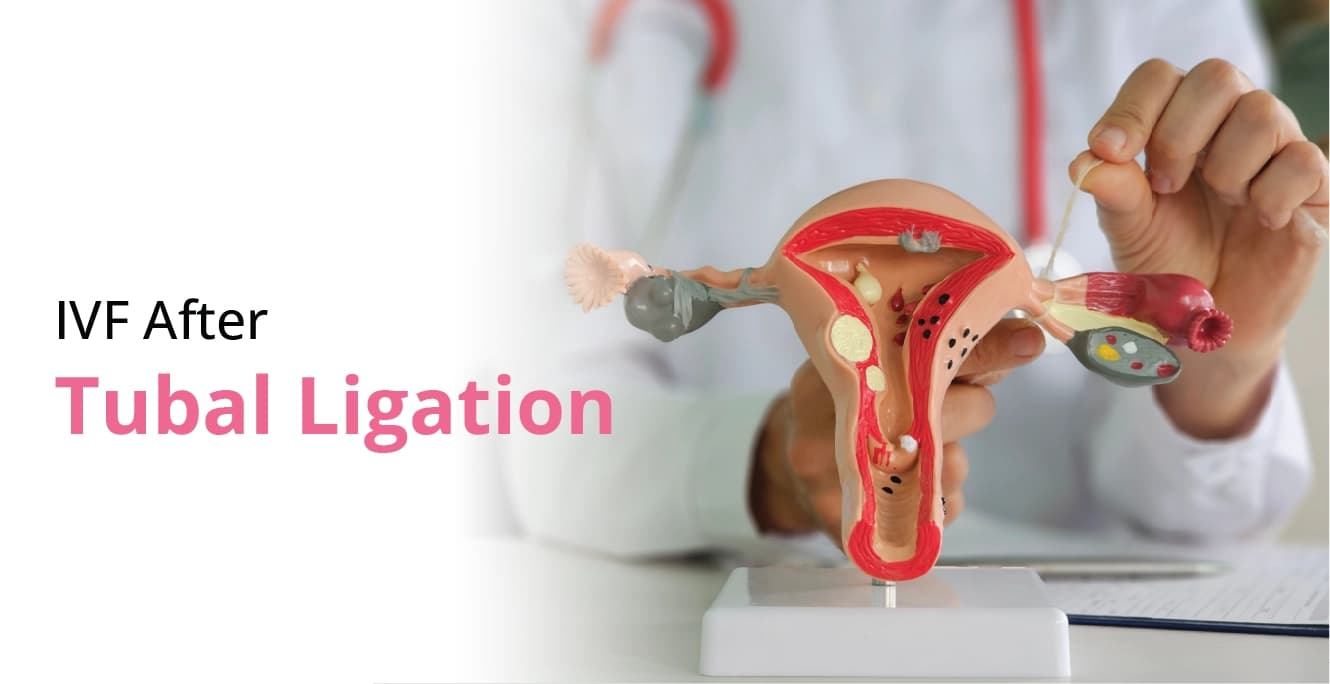
IVF After Tubal Ligation: Success Rates & Steps

Table of Contents
When a woman has undergone a tubal ligation, often called having her “tubes tied”, it is done as a permanent form of birth control. Tubal ligation stops the egg and the sperm from meeting by blocking or closing the fallopian tubes. Most people choose it when they are sure they do not want more children.
However, life can change and many couples later want to have another child. In those cases, there are options. One of the most important and effective options is in vitro fertilisation (IVF), which allows a woman to become pregnant even when her fallopian tubes are not working.
Pregnancy After Tubal Ligation
After tubal ligation, the chances of becoming naturally pregnant are very low. The procedure is designed to prevent natural conception by stopping eggs from travelling through the tubes to meet sperm. It is a highly effective form of contraception. If pregnancy does happen unintentionally after tubal ligation, there is a higher risk of it implanting outside the uterus. This is called an ectopic pregnancy and it needs immediate medical care.
Some women consider reversing the tubal ligation. This surgery attempts to reconnect the fallopian tubes so natural pregnancy may occur. The success of reversal depends on many things such as the type of ligation, the length of the remaining tubes, age, and overall fertility. Success rates can range widely.
IVF After Tubal Ligation
IVF is a fertility treatment that bypasses the fallopian tubes altogether. In simple terms, the eggs are removed from the ovaries, fertilised with sperm in a laboratory, and then one or more resulting embryos are placed directly into the uterus. This process makes the fallopian tubes irrelevant to achieving pregnancy, which is why IVF works well for women who have had their tubes tied.
Because IVF does not rely on functioning fallopian tubes, women with tubal ligation can have the same chances of success as other women undergoing IVF. The success of IVF depends on factors like age, egg quality, sperm quality, and the health of the uterus rather than the fact that tubes were previously tied.
IVF vs Tubal Reversal
When a couple first considers options after tubal ligation, they often ask whether to go for tubal reversal or IVF.
Tubal reversal is surgery to reconnect the fallopian tubes. It allows for natural pregnancy, and it can be a good choice for women with healthy, long tubes and good fertility overall. However, not all tubal ligations can be reversed. The success also depends on the type of ligation and age. Tubal reversal can carry a risk of ectopic pregnancy.
IVF uses technology to achieve pregnancy without needing the tubes to work at all. IVF often leads to pregnancy faster and can be a more predictable process. It also allows for genetic testing of embryos if desired, and can address additional fertility issues at the same time. Many doctors will recommend IVF when reversal is not medically suitable or when the tubes are badly damaged.
The choice between these options should be made on a case-by-case basis with a fertility specialist, taking into account age, fertility health, time preferences, and personal goals.
IVF Success After Tubal Ligation
The success of IVF after tubal ligation is very similar to success rates in women who have not had tubal surgery. Age remains the most important factor.
A general overview of IVF success rates by age group shows that younger women have higher chances of achieving a live birth with IVF than older women. For example:
- Women under 35 years of age often have a higher than 50% chance of success.
- Women between about 35 and 37 see moderate success.
- Women between 38 and 40 have lower success rates.
- Women over 40 have more limited chances without additional options like donor eggs.
Having had a tubal ligation does not reduce your chances with IVF, because the tubes are not needed for the process to work.
Steps of IVF After Tubal Ligation
The IVF process follows several key steps. Each step is aimed at creating the best chance of pregnancy:
Consultation and Tests: You first meet with a fertility specialist. Tests are done to check ovarian reserve, hormone levels, uterus condition, and the partner’s sperm quality.
- Ovarian Stimulation: Medications are given to stimulate the ovaries to produce more eggs than in a normal cycle. Doctors monitor progress with blood tests and scans.
- Egg Retrieval: Once eggs are mature, a minor procedure collects them from the ovaries. This is done under sedation.
- Fertilisation: In the laboratory, sperm is introduced to the eggs. Sometimes a special technique is used to inject a single sperm into an egg if needed.
- Embryo Culture: Fertilised eggs grow into embryos in a carefully controlled lab environment for several days.
- Embryo Transfer: One or more embryos are placed into the uterus through a small catheter.
- Pregnancy Test: Two weeks later, a blood test confirms whether pregnancy has occurred.
The entire cycle typically takes about four to six weeks from start to transfer, but timelines may vary.
Who Should Be Recommended for IVF After Tubal Ligation?
IVF after tubal ligation is usually recommended when:
- The fallopian tubes are blocked, damaged, or removed and cannot be repaired.
- A tubal reversal is not possible or not desired.
- There are additional fertility challenges such as age-related decline in egg quality or other reproductive factors.
A fertility doctor will review your medical history, test results, and overall health before recommending IVF. Many specialists will involve both partners in the evaluation to understand all factors affecting fertility.
Conclusion
Tubal ligation was meant to be permanent, but in today’s world, IVF offers a reliable way to achieve pregnancy even after the tubes have been tied. By bypassing the tubes entirely, IVF opens up a path to conception that is not dependent on natural tube function. Success depends most on age and general reproductive health. If you are considering pregnancy after tubal ligation, a thoughtful discussion with a fertility specialist can help you understand your best course of action.
FAQs
Q: Can you get pregnant after a tubal ligation?
Natural pregnancy after tubal ligation is rare and has a higher risk of ectopic pregnancy. However, it is medically possible in very rare cases.
Q: How do you increase the chances of IVF success after tubal ligation?
Chances improve when ovarian reserve is good, age is younger, sperm quality is healthy, and overall reproductive health is supported. A personalised IVF plan and clinic experience also matter.
Q: Does tubal ligation affect egg quality?
No. Tubal ligation does not change the quality of the eggs, because the ovaries continue to function normally.
Q: What is the success rate of IVF after tubal ligation?
Success is similar to standard IVF success rates, with rates over 50% for younger women and lower rates as age increases. Having had knots in the tubes does not reduce the chances of success.
Our Fertility Specialists


Kolkata New Town, West Bengal
Dr. Aaheli Maiti
MBBS, MS (Obstetrics & Gynaecology)


Bhubaneswar, Odisha
Dr. Amrita Nanda
MBBS, MS (OBG)

Siliguri, West Bengal
Dr. Angana De
MBBS, MD, Fellowship in Reproductive Medicine

Vijayapura, Karnataka
Dr. Ashwini Karjol
MBBS, MS, FRM

Kannur, Kerala
Dr. Deepa Menon
MBBS, MD (Obstetrics and Gynecology) Diploma in ART (Kiel, Germany)

Kozhikode, Kerala
Dr. Shifa Safarulla
MBBS, MS (Obstetrics & Gynaecology)

Koramangala, Karnataka
Dr. Snehadarshini Karanth
MBBS, MS (Obstetrics & Gynaecology), FRM
Related Blogs





To know more
Birla Fertility & IVF aims at transforming the future of fertility globally, through outstanding clinical outcomes, research, innovation and compassionate care.


Had an IVF Failure?
Talk to our fertility experts