
 Our Centers
 Select City


 Select City
hCG Levels at 2 Weeks of Pregnancy: What Do They Mean?

Table of Contents
- What Happens at 2 Weeks of Pregnancy?
- Signs of 2-Week Pregnancy
- What is hCG and Why is It Important in Early Pregnancy?
- Importance of Tracking HCG Levels in Early Pregnancy
- What Are the hCG Levels at 2 Weeks of Pregnancy?
- Pregnancy Dating by Last Menstrual Period vs Conception
- HCG Level Chart: Week by Week
- Normal HCG Levels in Pregnancy
- Factors Affecting HCG Levels
- What If You Have Low or High HCG Levels in Pregnancy?
- How Do hCG Levels Change in Early Pregnancy?
- What Do Low or High hCG Levels Mean?
- When Should You Take an hCG or Pregnancy Test?
- When to Consult a Doctor?
- Conclusion
- FAQs
- What is the normal range for HCG levels in 2 weeks of pregnancy?
- What HCG levels are good for 5 weeks?
- Can high HCG levels at 2 weeks indicate a problem?
- Should I be concerned about symptoms or lack of symptoms at 2 weeks pregnant?
- Can hCG be detected at 2 weeks?
- What hCG level confirms pregnancy?
- Can hCG levels be low in a healthy pregnancy?
- Do hCG levels double every 48 hours?
- Can hCG levels indicate twins?
- Can hCG levels confirm pregnancy viability?
The first trimester is very critical in any pregnancy. This is the time when the mother is going through physical and hormonal changes and the organs of the baby start forming. When it comes to two weeks of pregnancy, your journey to motherhood has just started. Although this is too early to observe any significant physical changes, there is one hormone that starts playing its role. It is human chorionic gonadotropin, also known as HCG. This hormone is important in ensuring a healthy pregnancy.
Let’s understand everything that you should know about HCG levels in 2 weeks of pregnancy, their significance, and what to expect.
What Happens at 2 Weeks of Pregnancy?
The 2 weeks of pregnancy is not an actual pregnancy. Confused? Your pregnancy is calculated from the first day of your last menstrual period. So, after your periods when you ovulate (after 12-14 days in a 28-day menstrual cycle) and try to conceive at that time and if fertilisation happens, then this will be considered as your 2 weeks of pregnancy. Know that, the fertilized egg has not been implanted in the uterus yet.
Let’s summarise it!
Understanding 1 week pregnant HCG levels can be helpful when interpreting early pregnancy tests. At this stage, hCG may not be detectable yet because pregnancy is typically dated from the first day of the last menstrual period.
- Stage 1: When the ovary releases an egg, the process is called ovulation. It happens around day 14 of a regular cycle if your menstrual cycle is of 28 days.
- Stage 2: The process in which the egg meets the sperm in the fallopian tube and forms a zygote is called as fertilisation.
- Stage 3: This comes by the end of week two. The fertilised egg moves to the uterus and starts implantation.
The HCG levels start rising after two weeks, which helps confirm the pregnancy.
Signs of 2-Week Pregnancy
At 2 weeks pregnant, symptoms are usually not significant because your body is just beginning to prepare for implantation. Although a pregnancy can’t be confirmed, some early signs may suggest that it is underway.
To make it easier to understand, here is a list of common symptoms in 2 weeks of pregnancy:
| Symptoms | What Happens? |
| Light spotting or cramping | Mild spotting or cramping occurs as the fertilised egg attaches to the uterine lining during implantation. |
| Increased basal body temperature | A slight rise in basal body temperature (BBT) may persist after ovulation if pregnancy occurs. |
| Tenderness in breasts | Hormonal fluctuations can make breasts feel tender, swollen or sensitive to touch. |
| Heightened sense of smell | Some women report an increased sensitivity to certain smells, even at this early stage. |
| Mild nausea | Occasional nausea may occur as hormone levels begin to rise. |
| Fatigue or mood swings | Feeling unusually tired or experiencing mood swings may signal hormonal shifts. |
Key Takeaways
- Not all women experience these symptoms at this stage. It varies from person to person.
- Some symptoms are similar to the signs of an approaching menstrual period, which is why tracking HCG levels at 2 weeks pregnancy can provide clarity.
- Consult your doctor in case you suspect pregnancy.
- During the early stages of pregnancy, HCG levels begin to rise after implantation and can differ from person to person. By this stage, 3 weeks pregnant HCG levels may still be relatively low, depending on when ovulation and implantation occurred.
What is hCG and Why is It Important in Early Pregnancy?
Human chorionic gonadotropin (hCG) is a hormone produced by cells that develop into the placenta after a fertilised egg begins to implant in the uterus. It plays an important role in supporting early pregnancy by helping maintain the corpus luteum, which produces progesterone.
Progesterone helps prepare and maintain the uterine lining, creating a suitable environment for the developing pregnancy. As pregnancy progresses, hCG levels generally increase during the first trimester. This is why the hormone is an important marker in early pregnancy testing and clinical assessments.
When Does the Body Start Producing hCG?
The body starts producing hCG after implantation begins. This usually happens around 6–10 days after ovulation, although the timing can vary.
Once implantation takes place, hCG enters the bloodstream and gradually increases. It can usually be detected in a blood test before it reaches levels that are high enough to be detected by a home urine pregnancy test.
This timing also explains why testing too early may give a negative result, even if conception has occurred.
How Does hCG Help Confirm Pregnancy?
Pregnancy tests work by detecting hCG in the blood or urine. A blood beta-hCG test measures the amount of the hormone in the bloodstream. Home pregnancy tests detect hCG in urine and generally provide a positive or negative result. A blood test can detect even lower levels of hCG than most home pregnancy tests. This makes it useful for confirming an early pregnancy and monitoring hCG changes when a doctor feels further assessment is needed.
Importance of Tracking HCG Levels in Early Pregnancy
HCG is often referred to as the pregnancy hormone. Tracking HCG levels in 2 weeks of pregnancy is helpful because:
- It helps confirm pregnancy: HCG is produced after implantation, so rising levels may indicate pregnancy.
- It helps monitor progress: Steady increases in HCG levels can signal a healthy pregnancy.
- It helps detect issues: Abnormal levels may point to problems like ectopic pregnancy or miscarriage. Although further examination is required to confirm the case.
Early tracking ensures that any concerns are addressed promptly by your doctor.
What Are the hCG Levels at 2 Weeks of Pregnancy?
When discussing hCG levels at 2 weeks pregnancy, it is important to understand how pregnancy weeks are calculated.
Doctors generally calculate pregnancy from the first day of the last menstrual period (LMP). This means that the first two weeks of the pregnancy timeline usually occur before fertilisation. Ovulation generally happens around the end of the second week in a typical 28-day menstrual cycle.
As a result, hCG levels are usually not detectable at this stage because implantation has not yet taken place.
What Is Considered a Normal hCG Level?
At two weeks of gestational age, there is no established pregnancy-related hCG range because conception may not have occurred yet.
For reference, hCG levels below 5 mIU/mL are generally considered negative for pregnancy. Levels between 5 and 25 mIU/mL are often considered borderline or indeterminate, while levels above 25 mIU/mL generally indicate pregnancy. However, the cut-offs may vary between laboratories.
It is also worth noting that 1 week pregnant hCG levels are generally expected to be below the detectable pregnancy range. This is because the first week is also counted from the last menstrual period, well before ovulation and implantation in a typical cycle.
Why hCG May Not Be Detectable at This Stage
There are a few reasons why hCG may not show up in a pregnancy test at two weeks:
- Ovulation may be taking place: The egg may have just been released from the ovary, and fertilisation may not have happened yet.
- Implantation has not occurred: Even if fertilisation takes place, the fertilised egg needs time to travel towards the uterus and implant.
- hCG production has not started: The hormone is produced after implantation begins, so there may not be enough hCG in the bloodstream or urine to detect.
Therefore, a negative pregnancy test at this stage does not necessarily rule out pregnancy in the coming days.
Pregnancy Dating by Last Menstrual Period vs Conception
Pregnancy Dating by Last Menstrual Period (LMP)
Doctors generally calculate pregnancy from the first day of the last menstrual period (LMP), rather than the date of conception.
- Week 1: Menstruation begins. Pregnancy has not yet occurred.
- Week 2: Ovulation usually takes place towards the end of this week.
- Week 3: Fertilisation may occur, followed by early cell division and movement towards the uterus.
- Week 4: Implantation generally takes place, and hCG levels may become detectable.
Pregnancy Dating by Conception
When pregnancy is calculated from conception, the timeline starts from the day the egg is fertilised by sperm. In a typical 28-day cycle, this happens around two weeks after the last menstrual period.
- Week 1: The fertilised egg begins dividing as it travels towards the uterus.
- Week 2: Implantation usually occurs during this period, and hCG production begins.
- Week 3: hCG levels continue to rise and may be detectable through a pregnancy test.
- Week 4: The pregnancy continues to develop, with hCG levels generally increasing.
Remember: Two weeks of pregnancy by LMP is approximately the same as the time of conception, whereas two weeks after conception is approximately four weeks of gestational age. These timelines can vary depending on ovulation and implantation.
HCG Level Chart: Week by Week
The HCG levels by week chart provides a general overview of how hCG levels may change throughout early pregnancy. These levels can vary from person to person, so the chart should be used as a general reference rather than an exact range.
Check the below table to know the normal HCG levels on a weekly basis.
| Week of Pregnancy | Normal HCG Levels (mIU/mL) |
| 2 weeks | 1–10 |
| 3 weeks | 5–50 |
| 4 weeks | 5 – 426 |
| 5 weeks | 18 – 7,340 |
| 6 weeks | 1,080–56,500 |
| 7-8 weeks | 7,650–229,000 |
| 9-12 weeks | 25,700–288,000 |
Let’s understand these levels in detail:
1. hCG Levels at 3 and 4 Weeks
At 3 weeks of pregnancy, fertilisation may have occurred, but implantation may still be a few days away. As a result, hCG levels can be very low or undetectable. By the fourth week, implantation has generally taken place and hCG levels may start rising enough to be detected through blood or urine testing.
For someone checking 4 weeks pregnancy hCG levels, the readings can vary widely. Some may have levels just above the pregnancy detection threshold, while others may have considerably higher readings. A single reading should not be used to determine whether a pregnancy is progressing normally.
2. hCG Levels at 5 and 6 Weeks
By weeks five and six, hCG levels generally rise more noticeably as the pregnancy develops.
A blood test during this period can help doctors assess how the hormone is changing, particularly if there is a history of pregnancy loss, bleeding, pain or uncertainty about the pregnancy’s location.
However, even at this stage, there is a wide range of expected hCG levels. A lower reading does not automatically mean something is wrong, just as a higher reading does not always indicate a problem.
3. How to Read an hCG Reference Range?
An hCG reference range shows the approximate hormone levels commonly seen at a particular stage of pregnancy. It is not a target that every pregnant woman needs to reach.
- Check the unit: hCG levels are commonly reported in mIU/mL or IU/L.
- Consider pregnancy dating: Make sure the pregnancy week is calculated from the LMP or adjusted based on an ultrasound, where appropriate.
- Look at the change over time: Two readings taken approximately 48 hours apart may provide more useful information than a single result.
- Consider the laboratory range: Different laboratories may use slightly different reference values.
If you are wondering about the beta hCG test normal range in early pregnancy, remember that there is no single number that applies to everyone. Your doctor will interpret the result based on your pregnancy stage, symptoms and previous test readings.
Normal HCG Levels in Pregnancy
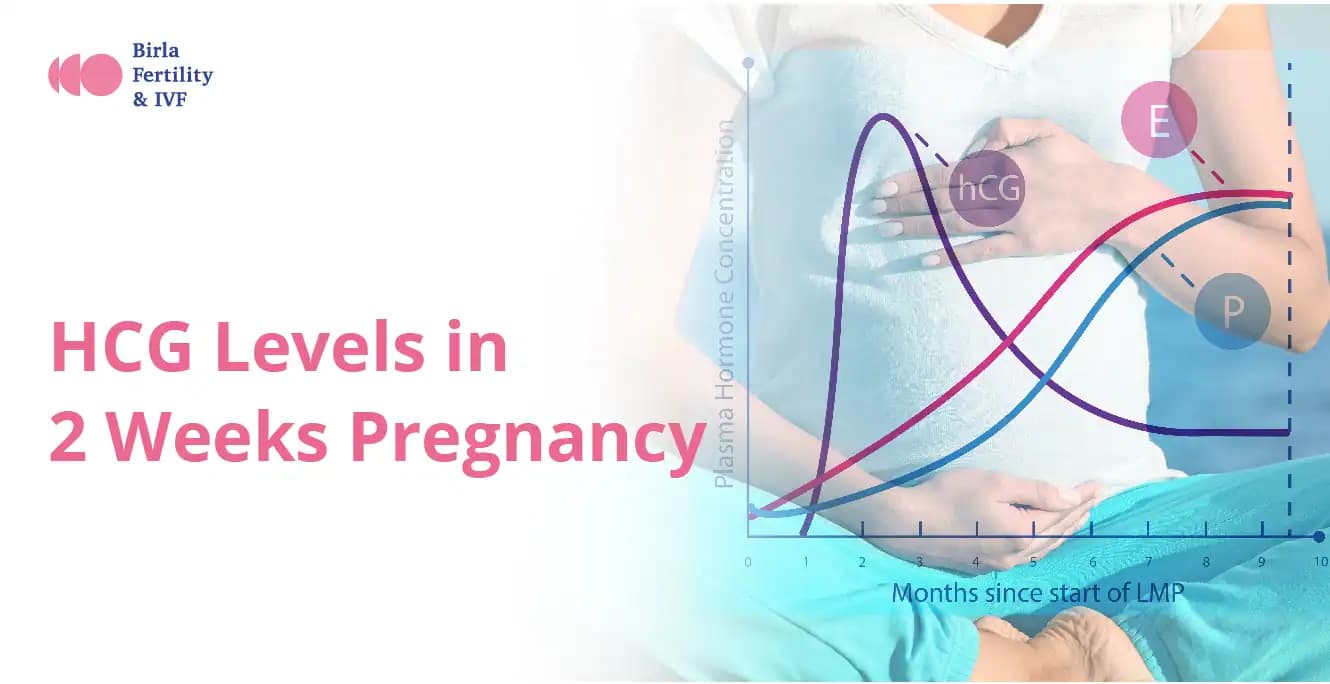
In a healthy pregnancy, HCG levels generally double every 48 to 72 hours during the first trimester. By week 10, these levels peak and then gradually decline as the placenta takes over hormone production.
- Normal pattern: Steady rise in early weeks, peaking around 8–10 weeks.
- Abnormal pattern: Levels that rise too slowly or decrease suddenly may signify some abnormality.
Suggestion: It is important to keep track of your HCG levels in 2 weeks of pregnancy and consult your doctor for clarity.
Factors Affecting HCG Levels
Several factors can influence HCG levels in pregnancy. These include
- Multiple Pregnancies: Twin or triplet pregnancies can result in higher HCG levels.
- Gestational Age: Variations in implantation timing can lead to differing HCG readings.
- Ectopic Pregnancy: Abnormally low HCG may indicate implantation outside the uterus.
- Health Conditions: Conditions like Molar Pregnancy: This condition causes abnormally raised HCG levels. Molar pregnancy is the implantation of a fertilised egg in the uterus but without the development of a baby.
The 1 week pregnant hcg levels can depend on when ovulation and implantation occur. Since hCG rises after implantation, testing later may provide a more meaningful indication of pregnancy.
What If You Have Low or High HCG Levels in Pregnancy?
Abnormal HCG levels at 2 weeks of pregnancy or beyond can indicate various conditions. The following chart explains potential causes and what steps to take:
| HCG Level | Possible Causes | What It May Indicate | Recommended Actions |
| Low HCG Levels | Miscalculation of pregnancy dates. | Normal if ovulation/implantation occurred later than expected. | Confirm gestational age with an ultrasound. |
| Ectopic pregnancy (fertilised egg implants outside the uterus). | Serious condition needing immediate attention. | Seek urgent medical care; ultrasound and serial HCG monitoring are essential. | |
| Risk of miscarriage (threatened or incomplete). | Warning sign of potential pregnancy loss. | Monitor HCG levels and get an ultrasound to assess fetal viability. | |
| High HCG Levels | Multiple pregnancies (twins, triplets, etc.). | HCG levels are typically higher in multifetal pregnancies. | Confirming through an ultrasound can help. Consult your doctor. |
| Molar pregnancy (abnormal tissue growth in the uterus). | A rare condition requiring treatment. | Consult a specialist; it requires monitoring and potential removal of molar tissue. | |
| Other Causes | Ovulation occurred earlier than expected. | Consult your healthcare provider and adjust the pregnancy timeline. |
Key Takeaways
- Low as well as high levels of HCG in the 2 weeks of pregnancy may not always point towards a complication and can be normal.
- To get clarity, consult your doctor. Regular monitoring can help prevent complications.
How Do hCG Levels Change in Early Pregnancy?
After implantation, hCG levels generally rise quickly during early pregnancy. This increase is one of the reasons doctors sometimes recommend repeat blood tests to understand how a pregnancy is progressing.
However, the hormone does not rise at exactly the same rate in everyone.
How Quickly Should hCG Rise?
In early pregnancy, hCG levels often increase substantially over 48–72 hours. They may double in approximately two to three days, particularly at lower starting levels.
However, the idea that hCG must double every 48 hours is not a strict rule.
The expected rate of increase also depends on the initial hCG level. As the starting level becomes higher, the rate of increase generally slows down.
A slower-than-expected rise does not automatically confirm a pregnancy complication. It needs to be interpreted alongside other test results, symptoms and ultrasound findings.
Why Doctors May Repeat a Beta-hCG Blood Test
A doctor may recommend repeating a beta-hCG blood test after approximately 48 hours to understand how the hormone levels are changing.
This is particularly useful when:
- The pregnancy is very early and an ultrasound cannot yet confirm its location.
- There is vaginal bleeding or abdominal pain.
- Previous pregnancy loss or ectopic pregnancy raises concerns.
- The initial hCG reading is unclear or needs further assessment.
What Do Low or High hCG Levels Mean?
hCG levels can vary significantly during early pregnancy. While readings outside the expected range may sometimes indicate a concern, they do not always mean that something is wrong.
Possible Reasons for Low hCG
Lower-than-expected hCG levels may occur for several reasons, including:
- Early pregnancy: The pregnancy may be at an earlier stage than estimated, especially if ovulation or implantation happened later than expected.
- Incorrect pregnancy dating: An irregular menstrual cycle or delayed ovulation can affect pregnancy week calculations.
- Early pregnancy loss: Falling or inadequately rising hCG levels may sometimes be associated with a pregnancy that is not progressing.
- Ectopic pregnancy: When a fertilised egg implants outside the uterus, commonly in a fallopian tube, hCG levels may rise more slowly or follow an unusual pattern.
It is important to remember that a low hCG reading alone cannot diagnose an ectopic pregnancy or confirm a pregnancy loss.
For example, ectopic pregnancy hCG levels at 2 weeks cannot be identified using a specific number or reference range. At two weeks of gestational age, hCG is generally not detectable even in a typical cycle. If an ectopic pregnancy is suspected later, doctors assess serial beta-hCG readings along with ultrasound findings and symptoms.
Possible Reasons for High hCG
Higher-than-expected hCG levels can also have different explanations. Some possible reasons include:
- Incorrect pregnancy dating: The pregnancy may be further along than initially estimated.
- Multiple pregnancy: Carrying twins or triplets may result in higher hCG levels, although this is not always the case.
- Molar pregnancy: This is an uncommon complication in which abnormal tissue develops in the uterus and can produce unusually high hCG levels.
- Individual variation: Some healthy pregnancies naturally have higher hCG levels than others.
A high reading does not automatically indicate a multiple or complicated pregnancy. Your doctor may recommend further testing to understand the reason.
Can One hCG Test Confirm a Healthy Pregnancy?
No. A single hCG test can help confirm whether pregnancy is likely, but it cannot establish whether the pregnancy is healthy or progressing normally.
For a better assessment, doctors may consider:
- Changes in hCG levels over 48 hours or longer, if repeat testing is needed.
- Ultrasound findings to check the location and development of the pregnancy.
- Symptoms such as abdominal pain or vaginal bleeding.
- The estimated gestational age and medical history.
When Should You Take an hCG or Pregnancy Test?
The timing of a pregnancy test matters because hCG takes time to build up after implantation. If your menstrual cycle is regular, testing around the time your period is due is generally a good starting point.
Blood Beta-hCG Test vs Home Urine Test
Both blood and urine pregnancy tests detect hCG, but they differ in how they work and when they can identify pregnancy.
| Parameter | Blood beta-hCG test | Home urine pregnancy test |
| Sample required | Blood | Urine |
| What it measures | hCG levels in the blood | Presence of hCG in urine |
| Result | Numerical value or positive/negative | Usually positive or negative |
| Detection | Can detect lower hCG levels earlier | Usually detects pregnancy around the time of a missed period |
| Common use | Early pregnancy assessment and monitoring when needed | Initial pregnancy confirmation at home |
What to Do if Your Pregnancy Test Is Negative
A negative pregnancy test does not always mean you are not pregnant, particularly if you have tested before your expected period.
If your period has not started, consider the following:
- Wait a few days before testing again.
- Use the first urine of the morning, as it is generally more concentrated.
- Follow the test instructions carefully and check the expiry date.
- Speak to your doctor if your period remains delayed or you continue to get negative results despite a missed period.
When to Consult a Doctor?
- Your 2-week pregnancy HCG levels are significantly lower or higher than expected.
- You experience severe symptoms like heavy bleeding or sharp pain.
Suggestion: Prompt evaluation ensures early intervention and the best care for both you and your baby.
Conclusion
Each pregnancy is different, and HCG levels can vary significantly. Understanding and tracking HCG levels can help in the smoother progression of your pregnancy. If you experience any issues on matters concerning your pregnancy, feel free to contact Birla Fertility & IVF specialists. We are here to assist and accompany you and make your parenthood as comfortable and as easy as possible.
FAQs
What is the normal range for HCG levels in 2 weeks of pregnancy?
During the second week of pregnancy, normal HCG levels range between 1–10 mIU/mL, depending on whether implantation has occurred.
What HCG levels are good for 5 weeks?
At five weeks, HCG levels can vary between 18 – 7,340 mIU/mL. However, there can be differences on an individual basis.
Can high HCG levels at 2 weeks indicate a problem?
Not necessarily. High HCG levels can occur in multiple pregnancies (twins or triplets) or due to early implantation. However, in rare cases, excessively high levels may indicate a molar pregnancy.
Should I be concerned about symptoms or lack of symptoms at 2 weeks pregnant?
Symptoms at 2 weeks can vary widely. Not all women may report symptoms and some can experience mild ones, including light spotting, exhaustion, and tenderness in breasts. Both situations are usually normal. For clarity, monitoring HCG levels offers a more reliable indicator of early pregnancy health.
Can hCG be detected at 2 weeks?
Usually, no. At two weeks of gestational age, ovulation may just be occurring. Since hCG production begins after implantation, it is generally not detectable yet.
What hCG level confirms pregnancy?
An hCG level above 25 mIU/mL generally indicates pregnancy. Below 5 mIU/mL is usually negative, while 5–25 mIU/mL is considered borderline.
Can hCG levels be low in a healthy pregnancy?
Yes. Healthy pregnancies can have lower hCG levels, especially in the early stages. Later ovulation or implantation may also affect the readings.
Do hCG levels double every 48 hours?
Not always. hCG levels generally rise every 48–72 hours in early pregnancy, but they do not have to double exactly. The rate of increase varies with pregnancy stage and initial levels.
Can hCG levels indicate twins?
Higher hCG levels may be associated with twin pregnancies, but they cannot confirm twins. An ultrasound is needed for confirmation.
Can hCG levels confirm pregnancy viability?
No. hCG levels alone cannot confirm pregnancy viability. Doctors also consider repeat blood tests, ultrasound findings and clinical symptoms.
Our Fertility Specialists
To know more
Birla Fertility & IVF aims at transforming the future of fertility globally, through outstanding clinical outcomes, research, innovation and compassionate care.


Had an IVF Failure?
Talk to our fertility experts