
 Our Centers


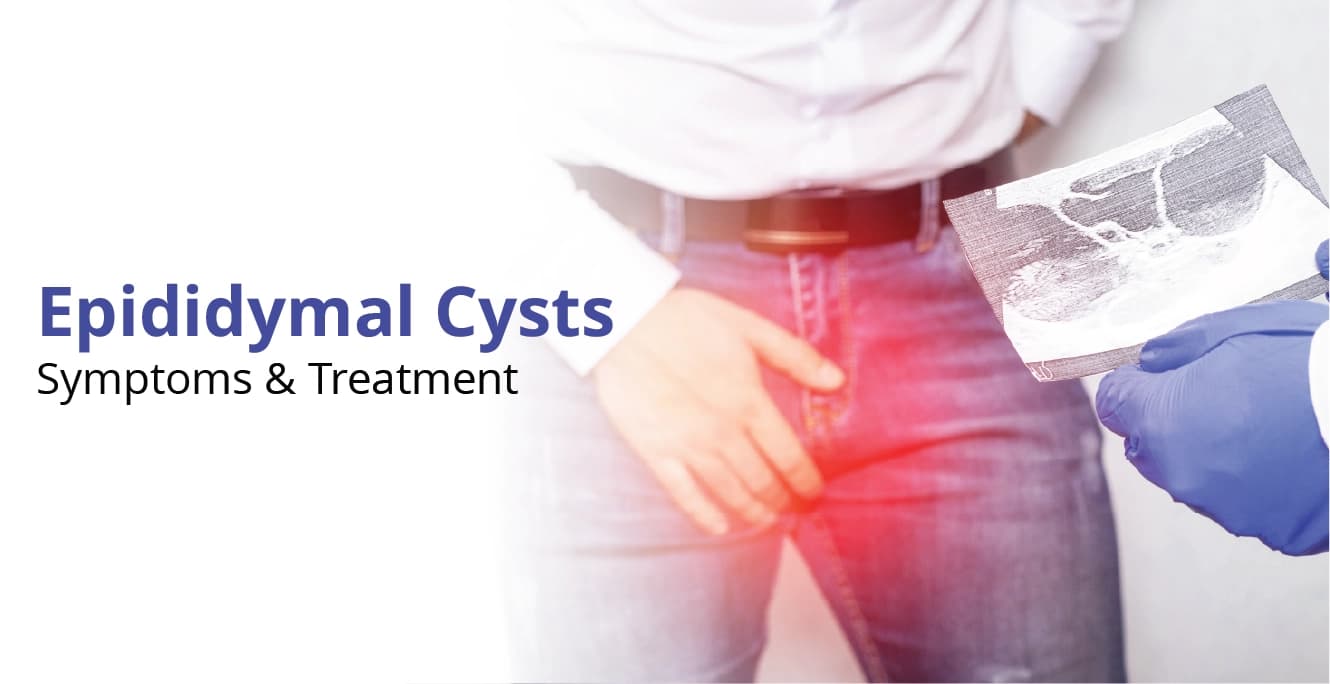
Epididymal Cysts: Symptoms & Treatment

Table of Contents
Noticing a lump in the scrotum can make anyone feel anxious. Men often discover it accidentally, sometimes while bathing or during a routine self-examination. The immediate thought is often fear of something serious. However, a very common and usually harmless reason for such a lump is an epididymal cyst. These cysts are benign, slow-growing, and in most cases, they do not affect fertility or long-term health. Still, understanding them in detail can help men feel more informed and less alarmed.
What is an Epididymal Cyst?
An epididymal cyst is a small sac filled with clear fluid. It forms in the epididymis, which is a tightly coiled tube located behind each testicle. The epididymis plays an important role in storing and carrying sperm. Cysts often form in the head of the epididymis, but they can appear anywhere along the tube. When they appear, only on one side, they are called a left epididymal cyst or a right epididymal cyst. Some men may have cysts on both sides, which doctors describe as bilateral epididymal cysts.
When the fluid inside the cyst contains sperm cells, the cyst is called a spermatocele. Many men use both terms interchangeably, although a spermatocele is technically a specific type of epididymal cyst. Both are non-cancerous. These cysts can be seen in all age groups, including children, but they are most common in adults.
Symptoms of Epididymal Cysts
A large number of men do not experience any symptoms at all. The cyst may be so small that it goes unnoticed. Others may feel a tiny lump that does not cause pain.
When symptoms do appear, they may include:
- A smooth, round lump in the scrotum
- A sense of heaviness in one testicle
- Mild discomfort after physical activity
- Dull aching pain that comes and goes
- Swelling on one side of the scrotum
- A dragging sensation, especially if the cyst becomes large
Severe pain is uncommon. Pain usually appears only if the cyst grows large enough to stretch the surrounding tissues. Small epididymal cysts rarely interfere with routine activities.
Causes of Epididymal Cysts
Researchers have not identified one single cause for epididymal cysts. However, several factors are believed to contribute to their formation.
Blocked Tubules
The epididymis contains very thin tubes. If one of these tubes gets blocked, fluid may collect and form a cyst.
Inflammation or Infection
Conditions such as epididymitis can lead to inflammation. When inflammation heals, it may leave behind small cysts.
Trauma
A direct hit or injury to the scrotum can sometimes cause fluid build-up.
Developmental Factors
In younger boys, cysts may form due to natural developmental changes in the reproductive system.
Age-Related Changes
Cysts are quite common in men over 40. The ducts may lose elasticity with age, increasing the chance of fluid trapping.
These causes are not related to hygiene, sexual habits, or lifestyle choices. An epididymal cyst is simply a structural change and is not anyone’s fault.
Who Suffers From Epididymal Cysts?
Men of all ages may develop these cysts. They are often found in:
- Children and Teenagers: Some boys develop them before or during puberty. Many cysts shrink or disappear naturally over time.
- Adults: Most cases are diagnosed in men between 20 and 50 years of age.
- Older Men: With age, the ducts in the epididymis become less flexible. This increases the likelihood of cyst formation.
Cysts appear in men who are otherwise healthy. They are not a marker of any tumour, hormonal problem, or fertility issue. In fact, most men who have an epididymal cyst father children without any difficulty.
When is the Treatment Required for Epididymal Cysts?
Many men never need any treatment. Doctors often advise a “watch and wait” approach because these cysts grow slowly and may remain stable for years.
Treatment becomes necessary when:
- The cyst becomes painful
- It grows large enough to be visible
- There is scrotal swelling that affects walking or exercise
- There is uncertainty about the nature of the lump
- There is concern that it may be affecting fertility
- The patient feels mentally distressed even after reassurance
It is important to see a doctor if a lump grows quickly or becomes very painful, as these symptoms may indicate a different condition.
How to Diagnose Epididymal Cysts?
Diagnosis is quite straightforward and usually involves a combination of the following steps.
- Physical Examination: A doctor will gently examine the scrotum. Epididymal cysts are usually smooth and separate from the testicle.
- Scrotal Ultrasound (USG): Ultrasound is the most reliable method. It helps confirm whether the lump is fluid-filled or solid. A simple epididymal cyst appears as a clear, fluid-filled sac on imaging. This test also helps differentiate between a cyst and conditions like varicocele, hydrocele, or testicular tumours.
Treatment of Epididymal Cysts
Treatment depends on the size, symptoms, and impact on daily life.
- Observation Only: For most men, no immediate treatment is required. Doctors simply monitor the size and symptoms during routine visits.
- Medicines: There is no specific epididymal cyst medicine that can dissolve the cyst. Medicines may be prescribed only to reduce pain or inflammation. These may include simple analgesics or anti-inflammatory tablets.
- Epididymal Cyst Surgery: If the cyst becomes large or painful, a minor surgery may be recommended. The procedure is known as epididymal cyst excision. It involves removing the cyst through a small incision in the scrotum. It is usually a day-care surgery, and recovery is fairly quick. Men are advised to avoid heavy lifting or strenuous exercise for a few weeks.
- Aspiration: This involves draining the fluid with a needle. It is rarely recommended because the cyst tends to return after a few weeks. It is used only when a patient cannot undergo surgery for medical reasons.
Currently, there is no scientifically proven epididymal cyst treatment without surgery that can permanently remove the cyst.
How To Manage Epididymal Cysts Naturally?
Although natural measures do not make the cyst disappear, they can help ease discomfort.
- Wearing supportive underwear that holds the scrotum in place
- Applying warm compresses to relax the tissues
- Avoiding activities that strain the groin
- Using mild pain relievers after consulting a doctor
- Maintaining a healthy lifestyle to reduce inflammation
- Gentle exercise to improve local blood flow
Natural methods do not shrink the cyst. They only help with symptom control.
FAQs
What size of epididymal cyst needs surgery?
Surgery is usually considered when the cyst is around 2 to 3 centimetres or larger. However, the decision is based more on symptoms than size. A smaller cyst that causes significant discomfort may also require removal.
Is an epididymal cyst serious?
No, an epididymal cyst is generally not serious. It is a benign condition. It does not turn into cancer. It rarely causes complications. Pain or swelling may occur if the cyst grows large, but this can be managed.
How common are epididymal cysts?
They are very common. Many men have them without ever realising it. Scrotal ultrasound studies show that epididymal cysts are among the most frequently found benign lumps in men of all age groups.
Our Fertility Specialists


Kolkata New Town, West Bengal
Dr. Aaheli Maiti
MBBS, MS (Obstetrics & Gynaecology)


Gorakhpur, Uttar Pradesh
Dr. Akriti Gupta
MBBS, MS (Obstetrics & Gynaecology)

Allahabad, Uttar Pradesh
Dr. Ankur Pandey
MBBS, DGO, DNB

Siliguri, West Bengal
Dr. Angana De
MBBS, MD, Fellowship in Reproductive Medicine

Rajouri Garden, Delhi
Dr. Devyani Mukherjee
MBBS, MS (Obstetrics and Gynaecology) FNB (Reproductive Medicine)

Kozhikode, Kerala
Dr. Shifa Safarulla
MBBS, MS (Obstetrics & Gynaecology)

Koramangala, Karnataka
Dr. Snehadarshini Karanth
MBBS, MS (Obstetrics & Gynaecology), FRM
Related Blogs




To know more
Birla Fertility & IVF aims at transforming the future of fertility globally, through outstanding clinical outcomes, research, innovation and compassionate care.


Had an IVF Failure?
Talk to our fertility experts