
 Our Centers


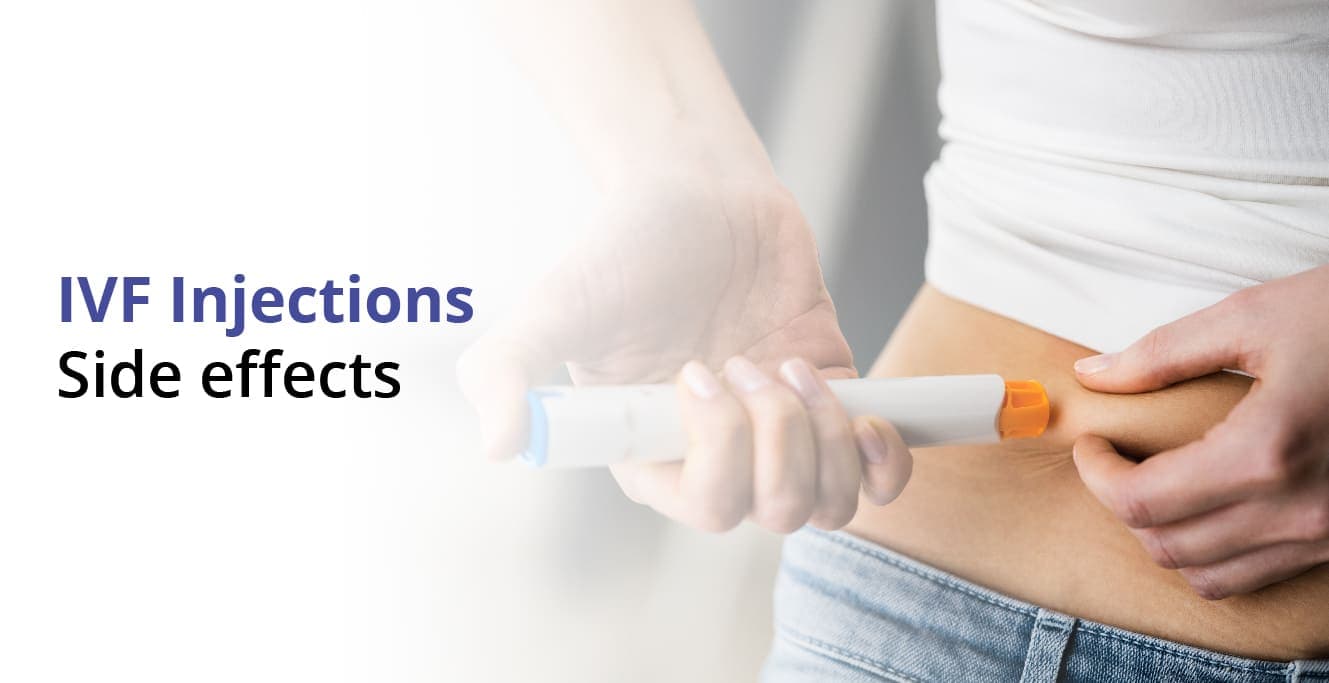
IVF കുത്തിവയ്പ്പുകളുടെ പാർശ്വഫലങ്ങൾ – അപകടസാധ്യതകളും സങ്കീർണതകളും

Embarking on an in vitro fertilization (IVF) journey is exciting. However, the process of having to undergo a variety of injections can be a source of anxiety for many. While these injections are crucial for stimulating the ovaries and increasing the chances of a successful pregnancy, they can have a number of side effects.
Here, we will explore the different types of IVF injections and their potential side effects. We will also discuss strategies for dealing with these IVF injection side effects throughout your fertility journey. But before that, let’s answer some basic questions about why you might need IVF injections and what types of IVF injections are commonly given :
Why are IVF injections necessary?
IVF treatment involves several steps, one of the most important of which is the use of fertility drugs through injections. These drugs are designed to stimulate the ovaries to produce multiple eggs, increasing the chances of retrieving healthy eggs for fertilization. Without these injections, the egg retrieval process will not be effective, leading to a lower success rate.
What you probably want to know!
Are IVF injections painful?
Most people find the pain associated with IVF injections to be tolerable. You may experience some discomfort or mild pain at the injection site. However, using the correct technique for giving the injection and using ice packs to numb the area before and after the shot can help reduce your discomfort. Over time, most patients overcome the “injection anxiety” they experience.
Types of IVF injections
Throughout your IVF journey, you may encounter several types of injections, each serving a specific purpose. These include the following:
Trigger shots
- Once the eggs have developed sufficiently, their final growth spurt will trigger their release.
- Common trigger shots include Novarel/Pregnyl®, Ovidrel®, and Leuprolide.
Progesterone injections
- Used in the final stages of IVF to support successful embryo implantation and maintain a healthy pregnancy.
- Can be taken as intramuscular injections or vaginally in the form of suppositories and capsules
Estrogen injections
- Sometimes prescribed with or instead of progesterone
- Can be given topically as patches, orally, vaginally, or as injections
Follicle-stimulating hormone (FSH) and human menopausal gonadotropin (hMG)
- Used to stimulate the ovaries to produce multiple eggs
- Often used in combination with other drugs, such as Clomid (clomiphene), to enhance their effects.
Side effects of IVF injections
Although necessary, IVF injections, including hormone injections for IVF, can cause side effects. The side effects of IVF injections can be categorized into physical, mental, and emotional effects . It is important to remember that each woman’s experience is unique, and not everyone will experience all of these side effects.
Physical side effects of IVF injections
Side effects of physical IVF injections can include the following:
- Injection site reaction : Pain, redness, or mild bruising at the injection site is common. Rotating injection sites and icing the skin before intramuscular injections can help reduce these side effects.
- Nausea and vomiting : Nausea is a common side effect of IVF injections. It can be caused by the medication or the needle injection.
- Hot flashes : Hormonal fluctuations can cause hot flashes, which are sudden feelings of heat throughout the body.
- Headaches : Headaches are common, especially after injections. They can be controlled with paracetamol, but not NSAIDs, as they can interfere with ovarian development.
- Abdominal pain and bloating : Abdominal bloating is similar to menstrual cramps and can last for several days. Abdominal pain may occur during or after ovulation, similar to menstrual cramps.
- Breastfeeding Hormonal medications can cause breast cancer, just as some women experience when taking birth control or having a menstrual cycle.
- Weight gain : Hormonal changes can increase appetite and weight gain during the IVF process.
- Allergic reactions : Some women may experience allergic reactions such as skin itching or redness at the injection sites.
Mental and emotional side effects of IVF injections
IVF is a very emotional journey, and some of the mental and emotional side effects that can result from it may include:
- Mood swings : Hormonal fluctuations can cause mood swings, irritability, and restlessness.
- Emotional stress : The emotional rollercoaster of IVF, especially if the cycles are unsuccessful, is very significant. It is important to have support throughout the journey.
- Fatigue : Physical symptoms like hot flashes and hormonal shifts can disrupt sleep and lead to fatigue.
Rare but serious complications
Some of the rare side effects of IVF injections include the following:
- Ovarian Hyperstimulation Syndrome (OHSS) : OHSS is an overreaction to ovarian stimulation, leading to fluid leakage into the abdomen. Mild cases can be treated with rest and hydration, while severe cases require hospitalization.
- Pelvic infections : Pelvic infections are rare but can occur after egg retrieval. Symptoms include fever, pelvic pain, and vaginal discharge.
The table below shows some specific side effects caused by common IVF injections . Side effects of hormone injections for IVF :
|
Medicines |
Side effects |
|---|---|
|
Clomid (clomiphene) |
Hot flashes, mood swings, headaches, bloating, nausea, breast tenderness |
|
Gonadotropins (FSH, hMG) |
Ovarian hyperstimulation syndrome (OHSS), bloating, constipation, mood swings, headaches |
|
Lupron (leuprolide) |
Hot flashes, headaches, mood swings, fatigue, muscle and joint pain |
|
Progesterone is |
Bloating, breast tenderness, mood swings, fatigue, constipation |
Trigger shot side effects
Trigger shots containing hCG are usually given 36 hours before egg retrieval, which helps the eggs mature and loosen from the follicle wall. Common side effects of trigger shots include:
-
- Injection site reactions (pain, swelling, redness)
- Stomach ache or abdominal pain
- Nausea and vomiting
- Headache
- Fatigue
- Mood Swine
How to cope throughout the journey
Coping with the side effects of IVF injections can be challenging, but there are several strategies that can help:
- Be informed: Be more prepared by understanding the purpose of each injection and its potential side effects.
- Communicate with your partner and doctors in advance : Share your experiences and concerns to get support and guidance. Know that you are not alone in this journey.
- Practice relaxation techniques : Deep breathing, meditation, or gentle yoga can help manage stress and emotional side effects.
- Maintain a healthy lifestyle : Eat a balanced diet, stay hydrated, and engage in light exercise (with your doctor’s approval) to promote overall well-being.
- Join a support group : Connect and connect with others who are going through similar experiences. This can provide community and understanding and help you cope better with your situation.
A word from the expert
IVF injections are a crucial step in many fertility treatments, but it’s essential to understand the possible side effects. By communicating openly with your healthcare provider, you can navigate the process with more confidence and strength. ~ Prachi Benara
Our Fertility Specialists

Gurgaon – Sector 14, Haryana
Dr. Rashmika Gandhi
MBBS, MS, DNB

Gurgaon – Sector 14, Haryana
Dr. Prachi Benara
MBBS (Gold Medalist), MS (OBG), DNB (OBG), PG Diploma in Reproductive and Sexual health
Meerut, Uttar Pradesh
Dr. Madhulika Sharma
MBBS, DGO, DNB (Obstetrics and Gynaecology), PGD (Ultrasonography)
Chandigarh
Dr. Rakhi Goyal
MBBS, MD (Obstetrics and Gynaecology)
Lajpat Nagar, Delhi
Dr. Muskaan Chhabra
MBBS ,MS ( OBGYN ) , FRM
Kolkata, West Bengal
Dr. Swati Mishra
MBBS, MS (Obstetrics & Gynaecology)
Related Blogs
To know more
Birla Fertility & IVF aims at transforming the future of fertility globally, through outstanding clinical outcomes, research, innovation and compassionate care.


Had an IVF Failure?
Talk to our fertility experts