
 Our Centers


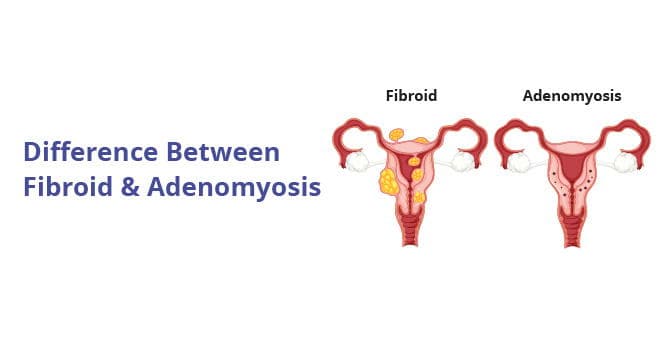
Understanding the Difference Between Fibroids and Adenomyosis

Table of Contents
Adenomyosis and fibroids are two common conditions that can cause heavy periods, pelvic pain, and fertility challenges.
But they affect the uterus in very different ways.
Understanding adenomyosis vs fibroids is important because the right diagnosis can guide you toward the most effective treatment.
While both conditions may seem similar, the difference between fibroids and adenomyosis lies in how they form, where they grow, and how they impact your daily life.
In this blog, we have explained the meaning and differences in a simple way to help you understand your symptoms and make informed decisions about your reproductive health.
What is Adenomyosis?
When tissue resembling your uterine lining (endometrium) begins to grow into your uterine muscle wall (myometrium), it is known as adenomyosis. Your uterus thickens and enlarges as a result, sometimes doubling or tripling in size. Abdominal/pelvic pain, heavy or extended menstrual bleeding with clotting, and painful periods can all be symptoms of adenomyosis. Because adenomyosis doesn’t usually create symptoms, many women are unaware that they have it.
However, it is said to be more common in people:
- Who went through a procedure on their uterus
- Are more than 40 years old
What are Fibroids?
Growths of muscle and tissue that develop in or on the uterine wall are known as uterine fibroids. Medically, it is also called leiomyomas. These abnormal growths are the most prevalent noncancerous tumours in females and are typically benign.
Many symptoms, including pain and heavy, irregular vaginal bleeding, can be caused by uterine fibroids. Sometimes a person with fibroids is unaware that they have them and has no symptoms. Your symptoms usually determine how you are treated for fibroids.
Difference Between Adenomyosis & Fibroid
|
Features |
Adenomyosis |
Fibroids |
|
Meaning |
They are the endometrial tissue growth inside the uterine muscle wall |
They are non-cancerous tumours that grow on or inside the uterus. |
|
Cause |
The exact cause is unknown; it is generally linked to hormonal imbalance, uterine inflammation, and childbirth |
They are caused by abnormal muscle-cell growth and are influenced by hormones and genetics |
|
Location |
Within the uterine muscle. |
It grows inside the cavity within the wall, or outside the uterus |
|
Uterus Size |
The uterus becomes enlarged and tender |
The uterus may increase in size depending on the size and the number of fibroids |
|
Pain |
More severe, cramp-like pain, often worse during periods |
Pain may vary depending on the fibroid size and location |
|
Bleeding |
Women face heavy periods with clots, they have longer menstrual cycles |
Heavy bleeding is possible in fibroids but the pattern varies from woman to woman |
|
Fertility Impact |
They affect implantation and can cause recurrent miscarriages |
They may block tubes or distort the uterus. This makes conception difficult. |
|
Diagnosis |
MRI or transvaginal ultrasound |
Ultrasound |
|
Treatment |
Hormonal therapy, pain relief, adenomyomectomy, hysterectomy |
Medication, minimally invasive procedures, myomectomy, hysterectomy |
|
Age |
35-50 |
25-50 |
Symptoms of Adenomyosis & Fibroids
Adenomyosis and fibroids often share similar symptoms, which can make it difficult for women to understand what’s causing their discomfort. However, each condition has some distinct signs.
Symptoms of Adenomyosis
- Severe pelvic pain, particularly during menstruation
- Large clots and heavy menstrual bleeding
- Longer menstrual cycles
- Tender, enlarged uterus
- Persistent soreness or pressure in the pelvis
- Pain during sexual activity
- Cramps that tends to worsen by age
Symptoms of Fibroids
- Prolonged or severe menstrual bleeding
- A sensation of fullness in the abdomen or pelvic pressure
- Visible expansion of the abdomen or bloating
- Pain in the legs or back (due to nerve pressure)
- Frequent urination as a result of bladder pressure
- Constipation if the bowel is compressed by fibroids
- Pain during sexual activity (depending on location)
- Sometimes there are no symptoms at all (silent fibroids)
Causes of Adenomyosis & Fibroid
Researchers don’t know why some people develop adenomyosis or what causes it. However, some research suggests hormones, genetics, inflammation, or trauma may contribute to adenomyosis.
The exact cause is unknown, but healthcare providers believe the hormones estrogen and progesterone play a role. Most fibroids happen in people of reproductive age. Studies show that fibroids tend to grow when hormone levels are higher (like during pregnancy) and shrink when hormone levels are low (like during the transition to menopause).
The cause of adenomyosis is not entirely understood, nor is the reason why some people develop it. Adenomyosis, however, may be influenced by hormones, genetics, inflammation, or trauma.
The same is true for fibroids as well. Although the precise cause is uncertain, medical professionals think progesterone and oestrogen may be involved. The majority of fibroids occur in individuals who are of reproductive age. Fibroids typically enlarge during periods of high hormone levels, such as pregnancy, and contract during periods of low hormone levels, such as the menopausal transition.
Treatment for Adenomyosis & Fibroid
The treatment process is different for both adenomyosis and fibroids. Here we have explained it to you briefly:
Treatment for Adenomyosis
- Pain Management- NSAIDs (painkillers) to reduce cramps and pelvic pain.
- Hormonal Therapies- Another treatment for adenomyosis is birth control pills, progesterone therapy, or hormonal IUDs. These help to reduce heavy bleeding and pain.
- Gonadotropin-releasing Hormone (GnRH) Agonists- This treatment is generally used for severe cases. They temporarily shrink adenomyosis by inducing a reversible menopausal state.
- Uterine Artery Embolization (UAE)- It is a minimally invasive method of cutting off blood flow to the uterine tissue that is impacted.
- Ablation of the Endometrium- This treatment aids in bleeding control, but it is not appropriate for women who intend to become pregnant.
- Hysterectomy- When symptoms are severe and a future pregnancy is not wanted, the only effective treatment is advised.
Treatment for Fibroids
- Watchful Waiting – It is recommended for small fibroids that don’t cause any symptoms.
- Drugs- GnRH agonists to temporarily reduce fibroids; tranexamic acid for heavy periods; hormonal birth control to regulate bleeding.
- Minimal Invasive Process – To reduce fibroids, uterine fibroid embolization (UFE/UAE) is used.
- MRI – It is used to guide focused ultrasound (FUS) in specific situations.
- Options for Surgery- A myomectomy, which is favoured for women who wish to become pregnant, removes fibroids while keeping the uterus intact.
- Hysterectomy- For extreme cases, a complete removal of the uterus is advised.
Impact of Adenomyosis & Fibroids on Pregnancy
Uterine fibroids and adenomyosis both have an impact during pregnancy. Here, we will first discuss the impact of adenomyosis:
- Difficulty Conceiving– Adenomyosis affects the uterine lining, which makes implantation harder.
- Higher Risk of Early Miscarriage– Due to the inflammation in the uterine lining, it becomes difficult for the embryo to be implanted after fertilisation.
- Preterm Birth– Increased likelihood because the uterus may not support a full-term pregnancy.
- Placental Complications – There is a higher risk of placenta previa or placental insufficiency.
- Severe Pain During Pregnancy– In some cases, women experience persistent cramping even when they are pregnant.
- Increased C-Section Rate – Adenomyosis also affects normal labor due to uterine changes.
Now, let’s understand how fibroids impact pregnancy:
- Infertility– In some cases, where the fibroids are located near the fallopian tubes or cervix, they block sperm entry or cause difficulty in embryo implantation.
- Miscarriage– There is a high risk of miscarriage, especially when fibroids distort the uterine cavity.
- Preterm Labour– In case of large fibroids, there can be difficulty for the growing baby because of the reduced space.
- Breech Presentation- Fibroids may alter fetal positioning.
- Placental Problems– Increased risk of placental abruption or previa.
- Degeneration and Pain– During pregnancy, fibroids may exceed their blood supply, resulting in severe abdominal pain.
- Increased Chance of a C-section– This is because of an abnormal foetal position or occlusion of the birth canal.
Prognosis of Adenomyosis & Fibroids
Here is the detailed prognosis of adenomyosis & fibroids:
|
Factor |
Adenomyosis Prognosis |
Fibroid Prognosis |
|
Nature of Condition |
Chronic and often progressive, but manageable |
Benign tumours, usually stable or slow-growing |
|
Symptom Course |
Symptoms may persist for years; vary in intensity |
Symptoms may remain mild or worsen depending on the size/number |
|
Impact of Menopause |
Significant improvement after menopause |
Fibroids usually shrink after menopause |
|
Fertility Outlook |
Fertility may be affected; higher miscarriage risk |
Good fertility outcomes; improve after myomectomy |
|
Response to Treatment |
Medicines relieve symptoms but don’t cure; a hysterectomy is the definitive treatment |
Medical, minimally invasive, and surgical treatments are highly effective |
|
Chances of Recurrence |
Adenomyosis does not “regrow,” but symptoms return if hormones trigger it |
Fibroids can regrow, especially multiple or large ones |
|
Long-term Outcomes |
Good quality of life with proper management; symptoms persist without treatment |
Excellent long-term outcomes with treatment; most women live symptom-free |
|
Need for Definitive Surgery |
Hysterectomy is often required in severe cases |
Myomectomy or hysterectomy, depending on severity |
Bottom Line
Understanding the difference between fibroids and adenomyosis is important in order to identify symptoms early and select the best course of action. Both disorders influence the uterus and can result in pelvic pain, excessive bleeding, and problems with conception, but they differ in how they manifest and how they affect long-term health.
Most women can effectively manage their symptoms and maintain a high quality of life with the right diagnosis, individualised therapy, and prompt medical assistance. Consult a fertility specialist at Birla Fertility & IVF if you’re having trouble getting pregnant, unexplained bleeding, or ongoing pain. In addition to providing insight, early intervention empowers you to take charge of your future and reproductive health.
Our Fertility Specialists


Varanasi, Uttar Pradesh
Dr. Deepika Mishra
MBBS, MS (Obstetrics & Gynaecology)


Lajpat Nagar, Delhi
Dr. Muskaan Chhabra
MBBS, MS (OBGY), DNB (OBGY), MNAMS, MRCOG1

Kolkata, West Bengal
Dr. Swati Mishra
MBBS, MS (Obstetrics & Gynaecology)

Gurgaon – Sector 14, Haryana
Dr. Prachi Benara
MBBS (Gold Medalist), MS (OBG), DNB (OBG), PG Diploma in Reproductive and Sexual health
Related Blogs





To know more
Birla Fertility & IVF aims at transforming the future of fertility globally, through outstanding clinical outcomes, research, innovation and compassionate care.


Had an IVF Failure?
Talk to our fertility experts