
 Our Centers
 Select City


 Select City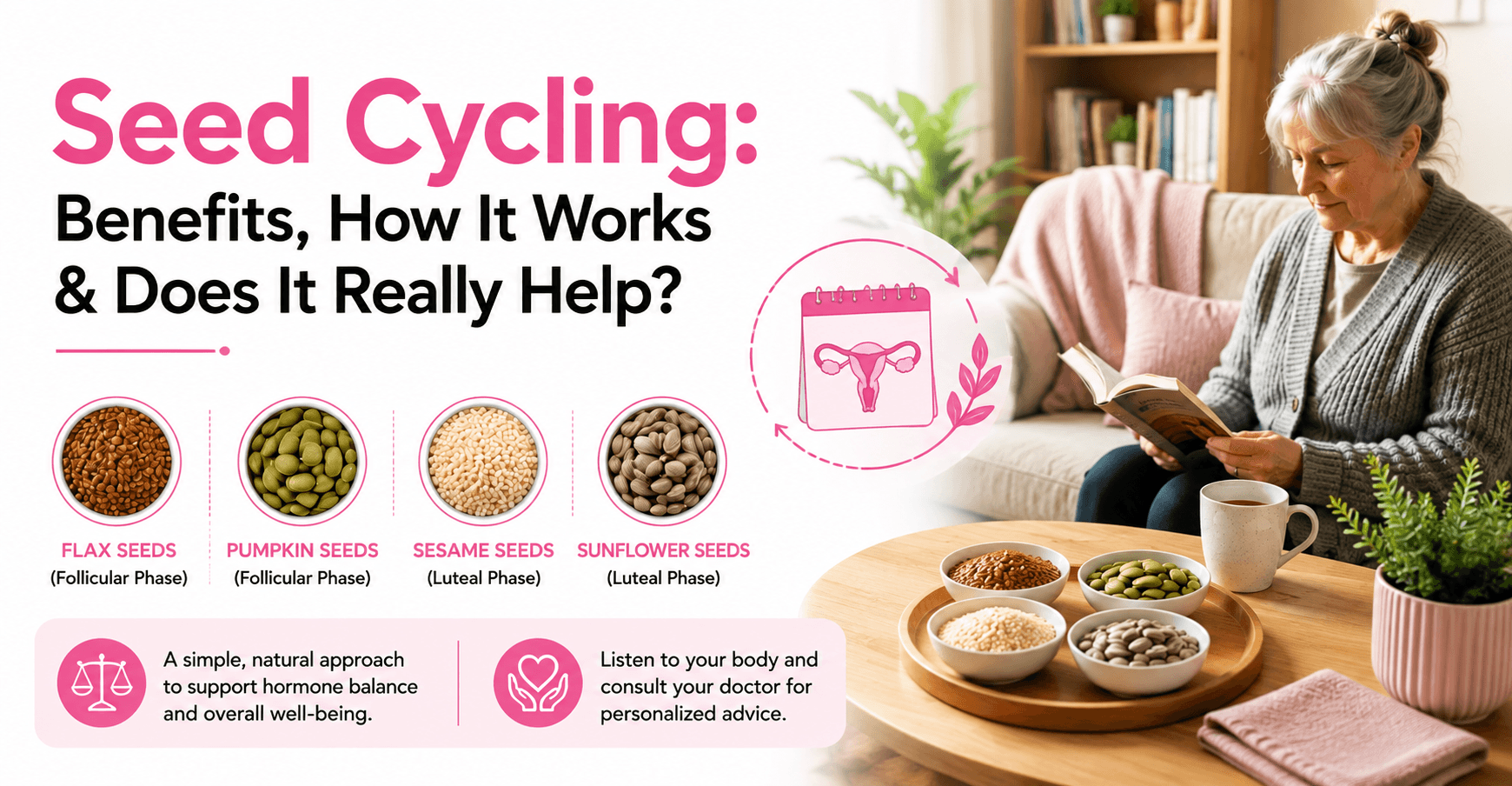
Seed Cycling: Benefits, How It Works & Does It Really Help?
Table of Contents
- What Is Seed Cycling?
- How Does Seed Cycling Work?
- Which Seeds Are Used in Seed Cycling?
- Seed Cycling Schedule
- Potential Benefits of Seed Cycling
- Who Can Try Seed Cycling?
- Are There Any Risks or Side Effects?
- Seed Cycling and Fertility: Is There a Connection?
- When Should You Consult a Doctor?
- Frequently Asked Questions (FAQs)
- What is seed cycling?
- Can seed cycling regulate hormones?
- Does seed cycling improve fertility?
- Which seeds should I eat during each phase of my cycle?
- Can women with PCOS try seed cycling?
- How long does it take to see results from seed cycling?
- Is there scientific evidence supporting seed cycling?
- Can I continue seed cycling during pregnancy or breastfeeding?
Hormones play a crucial role in the human system’s regular operation. They have a significant impact on how well the human reproductive system operates. Hormones play a major role in the female reproductive system and the menstrual cycle, and any disturbance of the delicate hormonal balance can result in problems with conception.
The most prevalent cause of infertility in women is hormonal imbalance. While hormonal abnormalities can be treated by advanced medicine, holistic approaches have their own set of advantages that aid in the treatment and healing of the endocrine system and the human body as a whole. One such all-encompassing strategy that has gained popularity recently is “seed cycling.”
What Is Seed Cycling?
Consuming flax, pumpkin, sunflower, and sesame seeds throughout the follicular and luteal phases of the menstrual cycle is known as “seed cycling.” It enhances female fertility and aids in hormone balance.
How Does Seed Cycling Work?
The idea of seed cycling for periods and seed cycling for PCOS gained popularity among women because it helps maintain the equilibrium of the two main hormones, progesterone and estrogen, which fluctuate throughout the menstrual cycle. Nutrients from these seeds are known to have important roles in hormone production, liver detoxification, and reproductive health, even if the process underlying seed cycling is still mainly theoretical.
Which Seeds Are Used in Seed Cycling?
When it comes to seed cycling, the four primary seeds are:
- During the follicular phase (days 1–14 of the menstrual cycle), flax seeds are used. Omega-3 fatty acids and lignans are abundant in them.
- During the follicular phase, pumpkin seeds are also utilized. They are an excellent source of healthful fats, zinc, and magnesium.
- During the luteal phase (days 15–28), sesame seeds are used. They have healthful fats, calcium, and lignans.
- During the luteal phase, sunflower seeds are also utilized. They are high in selenium and vitamin E.
Seed Cycling Schedule
Phase of Follicles (Days 1–14):
- One tablespoon of flax seed powder
- One spoonful of pumpkin seeds
Phase Luteal (Days 15–28):
- One spoonful of sesame seeds
- One spoonful of sunflower seeds
Some people start the follicular phase on the first day of menstruation or synchronize seed cycling with the moon cycle if they have irregular periods.
Although seed cycling is widely used as a natural wellness technique, there is currently little scientific proof that it can improve fertility or balance hormones. Nonetheless, these seeds can be a beneficial complement to a well-balanced diet because they are high in nutrients.
Potential Benefits of Seed Cycling
For a variety of reasons, women attempt seed cycling. While some are managing perimenopause or moderate cycle irregularity, others seek assistance with PMS. The advantages of this approach may differ from person to person. It’s also important to realize that this is a straightforward dietary adjustment, so the effects might not be as significant. This approach shouldn’t take the place of medical care if your hormones are producing unsettling symptoms. One benefit of seed cycling is that it can be used in conjunction with medical care.
Hormonal Balance
The concept behind seed cycling is that you may maintain the balance of progesterone and estrogen by alternating particular seeds between the two stages of your menstrual cycle. Lignans and zinc found in flax and pumpkin seeds, which are consumed during the follicular phase, are thought to promote a proper metabolism of estrogen. Selenium and vitamin E from sesame and sunflower seeds, which are consumed during the luteal phase, are believed to promote the generation of progesterone. It’s important to note that although these nutrients do have an impact on hormone health, there is still a dearth of solid clinical studies that directly demonstrate the benefits of seed cycling for hormone balance.
Menstrual Cycle Support
Seed cycling is a common way for women to encourage more consistent and regular periods. Healthy fats, fiber, and minerals included in these seeds can promote reproductive health in general, which may indirectly aid in regular cycles. However, irregular periods can result from a variety of underlying causes (such as PCOS, thyroid problems, or stress), thus seed cycling is best used in conjunction with treating any underlying causes with a medical professional.
PMS Symptom Management
Seed cycling helps people with PMS symptoms, including bloating, breast soreness, mood swings, and more. It is because of the good fats and vitamin E found in sesame and sunflower seeds. You also find anti-inflammatory omega-3s in flax and pumpkin seeds, both of which have some evidence suggesting a decreased PMS pain independent of the seed cycle.
Fertility Support
Since ovulation and a healthy uterine lining depend on balanced hormones, seed cycling is frequently advised for women attempting to conceive. While flax’s lignans may help control estrogen levels, pumpkin seeds’ zinc promotes the development of reproductive hormones. However, if you’re having trouble getting pregnant, seed cycling should be considered a supporting dietary habit rather than a primary intervention. It shouldn’t be used in place of medical fertility screening or treatment.
Menopause Symptom Relief
Hormone fluctuations can lead to hot flashes, mood swings, and disturbed sleep during perimenopause and menopause. Because the phytoestrogens in flaxseed, in particular, have been shown to have moderate estrogenic effects that may help alleviate some menopausal symptoms, some women continue seed cycling (or modify it) during this transition. The outcomes differ significantly from person to person.
Who Can Try Seed Cycling?
Women who enjoy the thought of gently supporting their hormones with diet tend to be drawn to seed cycling. It is used along with medication to support any hormonal issues or to treat minor hormonal difficulties using natural treatment. People with the following symptoms should try seed cycling:
- Skin breakouts or changes that seem to follow their cycle
- Early perimenopausal symptoms like mood swings or less sleep stress interfering with their regular pattern
- PMS that feels uncomfortable or disruptive
- Periods that fluctuate slightly from month to month
Are There Any Risks or Side Effects?
Here are some of the common side effects of seed cycling:
- Gas, bloating, or gastrointestinal distress
- Cause adverse responses in those who are allergic to seeds, such as sunflower or sesame seeds.
- Increases the number of calories if taken in high amounts.
- Flax and other high-fiber seeds may have an impact on how well some drugs are absorbed.
- Without medical advice, it might not be appropriate for those with certain medical issues.
- There is little scientific proof that it improves fertility or hormone balance.
- Shouldn’t take the place of medical care for hormonal or reproductive issues.
Seed Cycling and Fertility: Is There a Connection?
Based on the theory that rotating particular seeds can maintain the hormone balance required for ovulation and implantation, seed cycling is popular among women attempting to conceive. Lignans and zinc from flax and pumpkin seeds are believed to support estrogen and egg quality throughout the follicular period. Sesame and sunflower seeds provide vitamin E and selenium, which are thought to support progesterone and the health of the uterine lining during the luteal phase.
Although there are significant connections between these specific nutrients and reproductive health, no extensive clinical research has shown that seed cycling alone enhances fertility results. It should not be used in place of medical care, but rather as a low-risk, nutrient-rich supplement to your diet. See a fertility specialist if you’ve been trying to conceive for 12 months (6 months if you’re over 35).
When Should You Consult a Doctor?
Before attempting seed cycling, speak with a medical expert if you:
- Are either nursing or pregnant.
- Possess an allergy to seeds.
- Possess a digestive ailment like inflammatory bowel disease.
- Take any drugs that may interfere with foods high in fiber.
- Have ongoing irregular menstruation or reproductive issues that require medical attention.
All things considered, seed cycling can be a nutrient-dense dietary practice, but it’s better seen as an addition to a healthy lifestyle rather than a scientifically validated remedy for hormonal or reproductive problems.
Frequently Asked Questions (FAQs)
What is seed cycling?
Consuming flax, pumpkin, sunflower, and sesame seeds throughout the follicular and luteal phases of the menstrual cycle is known as “seed cycling.”
Can seed cycling regulate hormones?
There is little scientific proof that hormones are regulated by seed cycle. Nonetheless, the seeds are high in nutrients that promote general wellness.
Does seed cycling improve fertility?
There is no scientific evidence as such that shows that seed cycling improves fertility, however, it may complement a healthy lifestyle but should not replace medical fertility care.
Which seeds should I eat during each phase of my cycle?
Consume pumpkin seeds and flax throughout the follicular phase. Change to sunflower and sesame seeds during the luteal phase.
Can women with PCOS try seed cycling?
As part of a balanced diet, seed cycling is an option for women with PCOS. It shouldn’t, however, take the place of medical care or doctor-recommended lifestyle modifications.
How long does it take to see results from seed cycling?
Due to the paucity of scientific evidence, there is no set timetable. Consistency throughout a few menstrual cycles is usually advised if you decide to give it a try.
Is there scientific evidence supporting seed cycling?
There is currently little scientific data to support seed cycling. To validate its impact on hormone balance and fertility, further excellent study is required.
Can I continue seed cycling during pregnancy or breastfeeding?
Although there is no proof to support seed cycling during pregnancy or lactation, seeds are generally healthy when included in a balanced diet. Before proceeding, speak with your healthcare physician.
Our Fertility Specialists
To know more
Birla Fertility & IVF aims at transforming the future of fertility globally, through outstanding clinical outcomes, research, innovation and compassionate care.


Had an IVF Failure?
Talk to our fertility experts