
 Our Centers
 Select City


 Select City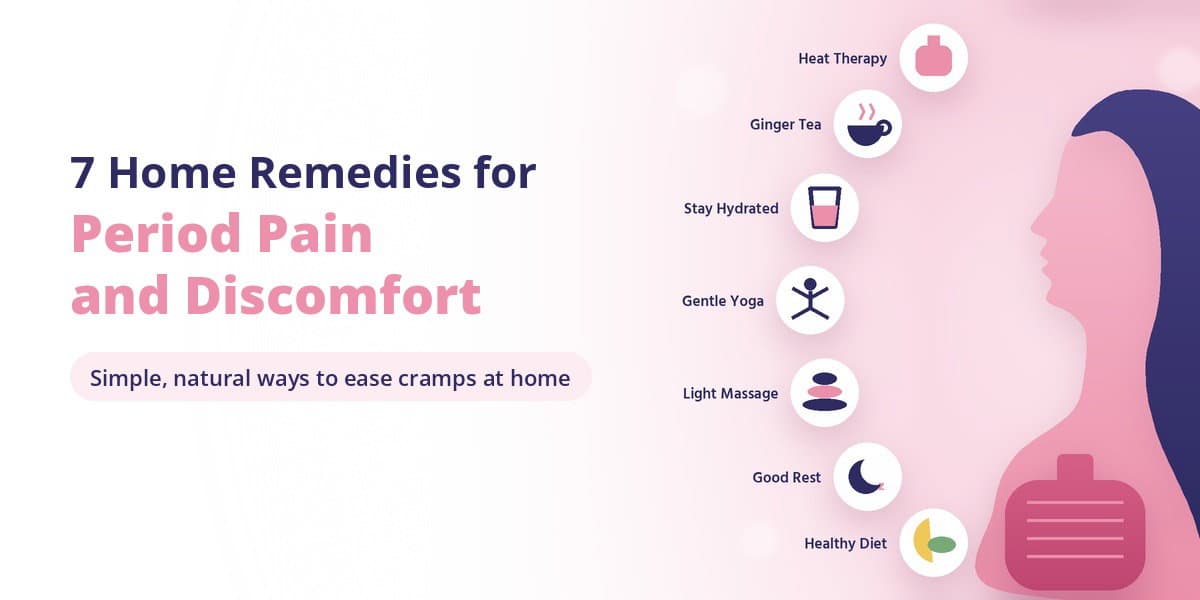
7 Home Remedies to Relieve Stomach Pain During Menstruation

Table of Contents
- What Is Menstrual Pain (Dysmenorrhea)?
- 7 Home Remedies for Period Pain
- Causes of Stomach Pain During Periods
- What Is the Difference Between Normal and Severe Period Pain?
- Can Period Pain Be a Sign of an Underlying Health Condition?
- What Foods Can Help Relieve Period Pain?
- When Should You See a Doctor for Period Pain?
- What Else Can I Do to Reduce Menstrual Cramps?
- Conclusion
- Frequently Asked Questions (FAQs)
Period pain can feel different for everyone. Generally it is a mild, throbbing ache, and other times it can be severe enough to make day-to-day activities impossible. Due to the high production of prostaglandins, the pain is felt sharper. The following article covers easy home remedies that can help women to reduce period pain.
What Is Menstrual Pain (Dysmenorrhea)?
“Dysmenorrhea” is the medical term for painful menstrual periods. Physiologically, the uterus contracts to shed its lining. Menstrual cramps are common on the first day of one’s period or the day before. For most individuals, symptoms subside after about 2-3 days. Mild to moderate menstrual cramping is normal. However, extreme pain is felt by many women during their period that affects their daily activities.
What Does Normal Period Pain Feel Like?
The pain may feel like aching with a feeling of pressure in the abdomen. Some women may also experience lower back pain.
Certain symptoms of period pain may include the following:
-
Cramps in the lower abdominal area
-
Lower back pain
-
Pain spreading to the thighs
-
Headache or tiredness
How Long Does Period Pain Usually Last?
Period pain may start shortly before bleeding. Most period pain lasts up to three days. The intensity usually decreases as menstruation continues.
Period pain that lasts much longer needs attention. The same applies to progressively worsening cramps.
7 Home Remedies for Period Pain
Below mentioned are the most effective home remedies that relieve a women from period pain are as follows:
1. Apply a Hot Water Bag
Heat may relax the muscles around the uterus. It can also decrease the feeling of cramping in the lower abdominal area.
2. Try Gentle Exercise or Yoga
Gentle exercise and yoga can sometimes lower the intensity of cramps in women. Walking, stretching, and yoga are also useful options.
3. Take a Warm Bath
A warm bath can relax any stiff muscles in the body. It can provide temporary pain relief during menstrual cramps.
4. Gently massage your lower abdomen
A gentle massage can help relax stiff muscles in the body. It may reduce discomfort around the lower abdomen. Lower back massage can also be helpful.
5. Stay Hydrated and Try Warm Drinks
Drinking water throughout the day really helps. It keeps the body from feeling heavy and reduces that puffy, bloated feeling that sometimes shows up during periods. Adding foods like watermelon or cucumber can make it easier to stay hydrated.
6. Practise Relaxation and Get Enough Rest
Stress can make pain feel harder to manage. Relaxation may therefore support natural relief for period cramps. Slow breathing can also help your body relax.
7. Choose Foods That Support Menstrual Comfort
Making sure that there is adequate vitamin D intake during menstrual cramps as it helps one’s body to absorb calcium and reduce inflammation. Other supplements, including omega-3 fatty acids, vitamin E and magnesium, can help reduce inflammation and might even make your periods less painful.
Causes of Stomach Pain During Periods
Most period cramps result from the contractions in the uterine wall. The intensity of the pain can vary a lot from woman to woman.
The uterus contracts to shed the menstrual lining. Most of the time, this process causes manageable symptoms, but when the contractions become too strong or last longer than usual, blood flow is temporarily reduced. That fall in circulation is what causes those deep, dragging cramps that can be hard to ignore.
These contractions are also linked to the prostaglandin level in the body. When one’s body produces more prostaglandins than usual, the cramps are felt sharper.
Medical conditions that can cause menstrual pain are:
-
Primary dysmenorrhoea
-
Endometriosis
-
Pelvic inflammatory disease
What Is the Difference Between Normal and Severe Period Pain?
Normal cramps are usually manageable, but a pain is considered severe when it does not improve after taking over-the-counter pain medicines, the pain interferes with the daily activities and are often accompanied by heavy bleeding or clotting.
The difference often depends on the intensity and impact of the contractions.
When Is Period Pain Considered Severe?
If one finds the period pain tiresome to bear, it can be alarming. Pain that is getting worse and preventing a woman from their regular work needs evaluation.
How Can Severe Period Pain Affect Daily Life?
Severe cramps can affect all daily-life activities, reducing productivity and affecting mental and emotional well being. They may interfere with work, studies and sleep. Some women may also avoid doing even normal activities like eating and walking because of pain.
Can Period Pain Be a Sign of an Underlying Health Condition?
Period pain and cramps from secondary dysmenorrhea can be due to certain conditions affecting the reproductive organs in women. Conditions that can cause cramping include:
Endometriosis and Period Pain
Endometriosis is a pathological condition in which the tissue lining the uterus (the endometrium) grows outside of the uterus.
Adenomyosis and Menstrual Cramps
A pathological condition in which the tissue lining of the uterus grows inside the muscle of the uterus.
Uterine Fibroids and Period Pain
A fibroid growth on the inside, outside or in the walls of the uterus. They can contribute to severe menstrual cramps too.
What Foods Can Help Relieve Period Pain?
The underlying cause of painful periods is thought to be inflammation, so anything that reduces it and improves blood flow to the uterus may help with symptoms during the menstrual cycle.
Foods Rich in Magnesium
Including foods rich in magnesium in one’s diet can make a difference over time. Bananas, nuts, dark chocolate and spinach support muscle relaxation and may keep cramps from becoming intense and painful.
Anti-Inflammatory Foods
Anti-inflammatory foods that are rich in omega-3s, magnesium, and antioxidants, such as green leafy vegetables, nuts and seeds, ginger and turmeric, dark chocolates, berries, and citrus fruits, help in reducing inflammation.
Foods to Avoid During Periods
It’s important to avoid certain foods that can worsen bloating and contractions. Highly processed fried foods, refined grains such as white breads, pastries, refined cereals, and animal products are on this list. Also, one should consider limiting excessive caffeine and alcohol if they’re experiencing severe menstrual cramps.
When Should You See a Doctor for Period Pain?
Certain home remedies can help with mild cramps. However, one should not delay any medical assessment, especially when symptoms are unusual and the pain continues.
Seek medical advice when pain is severe, persistent or worsening.
Severe or Persistent Menstrual Pain
Consider seeing a healthcare professional if pain repeatedly affects daily life. Pain that begins much earlier than expected or the pain that becomes progressively worse also needs assessment.
Heavy Bleeding Along With Pain
Heavy bleeding with severe cramps should be evaluated. Seek prompt medical care if bleeding is unusually heavy.
Very heavy bleeding can require urgent assessment. Do not assume it is normal period pain.
Pain That Does Not Improve With Home Remedies
One should contact their doctor if they have painful periods that prevent them from doing their usual work. Mild cramps are normal. However, extreme pain that prevents an individual from going to school or work may need medical treatment.
It can also be helpful for a doctor to keep track of their periods and mark the days on which the pain is the worst. Telling these details to the treating doctor is important
What Else Can I Do to Reduce Menstrual Cramps?
Intake of healthy home cooked food and using a hot water bag (heat therapy) with enough rest and hydration may help reduce menstrual cramps to some extent.
One should keep track of their symptoms each month, such as pain intensity, duration and bleeding changes. This information can help your healthcare provider. If home measures do not work, medical options are available.
Conclusion
Mild menstrual cramps are common, and there are several home remedies that can help manage them. Heat therapy remains one of the simplest options. Gentle exercise and yoga may also provide relief.
Massages, warm water baths and relaxation can help with the patient’s comfort. Hydration and balanced meals are also useful. You can try these home remedies to manage usual menstrual cramps, but never ignore them when the pain becomes really hard to manage.
Frequently Asked Questions (FAQs)
Q1. Which Foods Can Increase Period Pain?
Foods such as white breads, pastries, animal products, drinks, caffeine, etc. have worsen cramps during menstrual cycles.
Q2. Does Period Pain Get Worse at Night?
Period pain creates sleep disturbance, which lowers the ability to bear pain. This is the reason why the pain feels much worse at night.
Q3. Should I Consult a Doctor for Period Pain?
One should contact their healthcare provider if they have painful periods that prevent them from doing their normal tasks, such as going to school or work.
Q4. What Sleeping Position Can Help Relieve Period Pain?
Choosing a comfortable sleeping position for period pain may help reduce discomfort and make it easier to rest. Sleeping on your side with your knees slightly bent can help you feel more comfortable during menstrual cramps. Placing a pillow between your knees can provide additional support and help maintain a comfortable sleeping posture.
Our Fertility Specialists
To know more
Birla Fertility & IVF aims at transforming the future of fertility globally, through outstanding clinical outcomes, research, innovation and compassionate care.


Had an IVF Failure?
Talk to our fertility experts