
 Our Centers
 Select City


 Select City

Hypergonadotropic Hypogonadism and Extremely Low AMH Leading to the Birth of Healthy Twins
After five years of primary infertility, this couple came to Birla Fertility & IVF after being told that their chances of conceiving were extremely limited. The female partner had hypergonadotropic hypogonadism, prolonged amenorrhea, and an AMH level below 0.01 ng/ml, indicating an almost absent ovarian reserve. In addition, a small uterus and thin endometrium further complicated the possibility of a successful pregnancy. With meticulous uterine preparation, donor oocyte IVF, and personalised treatment planning, the couple achieved a successful twin pregnancy and welcomed two healthy baby boys.

Case Snapshot
Journey Timeline

1. Complex Challenges

2. Personalised Plans

3. Safe Retireval & Transfer

4. Guided Transfer

5. Successful Pregnancy
The Barriers They Faced

Hypergonadotropic Hypogonadism
Severe hormonal imbalance significantly impaired ovarian function, making natural conception highly unlikely.

Extremely Low Ovarian Reserve
An AMH level below 0.01 ng/ml, along with markedly elevated FSH (110 mIU/ml) and LH (27 mIU/ml), indicated negligible reproductive potential using self-oocytes.
Primary Amenorrhea
Long-standing absence of menstrual cycles further complicated fertility treatment.

Small Uterus and Thin Endometrium
Both the uterine cavity and endometrial lining required extensive optimisation before embryo transfer.
Advanced Maternal Age
At 39 years, age added another layer of complexity to treatment planning.

Need for Careful Synchronisation
Donor treatment, endometrial preparation, and embryo transfer had to be precisely coordinated to maximise implantation success.
Doctor's Quote
“The key was to tailor every aspect of care to this patient's unique needs, balancing safety, comfort, and clinical effectiveness.”— Dr. Pramod Madhukar Yerne
The Treatment Plan that made the Difference
Comprehensive Uterine Preparation
The patient underwent six months of hormone replacement therapy (HRT) to prepare the uterus for embryo transfer and improve endometrial receptivity.
Endometrial Optimisation
Hysteroscopy and Platelet-Rich Plasma (PRP) therapy were performed, resulting in a significant improvement in endometrial thickness to 8.4 mm before embryo transfer.
Donor Oocyte IVF with ICSI
A donor oocyte programme was planned, with seven mature donor oocytes fertilised using ICSI, leading to the development of seven high-quality Grade 4AB blastocysts.
Blastocyst Transfer
Two high-quality blastocysts were transferred during a carefully planned fresh embryo transfer cycle, while four additional blastocysts were cryopreserved for future use.
Close Pregnancy Monitoring
Following successful implantation, the pregnancy was closely monitored by a multidisciplinary team. When pregnancy-induced hypertension (PIH) and abnormal Doppler findings developed later in pregnancy, timely intervention ensured the best possible maternal and neonatal outcomes.
A Story of Possibility Despite Extremely Low Ovarian Reserve
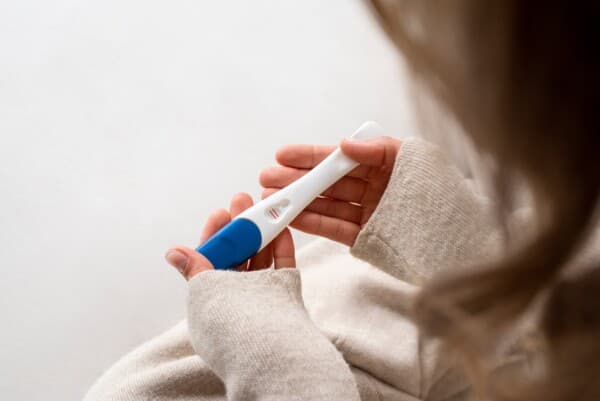
The Outcome
The personalised treatment approach resulted in:
Positive β-hCG of 2207 mIU/mL, confirming successful implantation Successful twin pregnancy Careful management of pregnancy-related complications Delivery of two healthy baby boys at 32 weeks by emergency caesarean section Short NICU stay followed by successful discharge of both newborns in stable condition