
 Our Centers
 Select City


 Select City

Azoospermia, Tubal Factor Infertility, and Haemorrhagic Cyst Leading to an Ongoing Twin Pregnancy
After three years of primary infertility, this couple came to Birla Fertility & IVF after discovering that both partners were facing fertility challenges. The female partner had a blocked fallopian tube and a haemorrhagic ovarian cyst, while the male partner was diagnosed with azoospermia, requiring surgical sperm retrieval. The couple strongly wished to conceive using the husband's own sperm, making treatment planning especially important. With advanced surgical sperm retrieval, personalised IVF treatment, and expert embryology support, they achieved a successful twin pregnancy.
Case Snapshot
Journey Timeline

1. Complex Challenges

2. Personalised Plans

3. Safe Retireval & Transfer

4. Guided Transfer

5. Successful Pregnancy
The Barriers They Faced

Tubal Factor Infertility
A blocked fallopian tube prevented natural fertilisation, making assisted reproduction necessary.

Haemorrhagic Ovarian Cyst
The presence of an ovarian cyst required careful monitoring during ovarian stimulation and treatment planning.

Azoospermia
The male partner had no sperm present in the ejaculate and required Testicular Sperm Aspiration (TESA) for sperm retrieval.
Uncertainty Around Sperm Retrieval
As a diagnostic TESA had not been performed previously, there was uncertainty about whether viable sperm would be available on the day of egg retrieval.
Desire to Use Self-Sperm
The couple expressed a strong preference to achieve pregnancy using the husband's own sperm rather than donor sperm.

Need to Maximise Embryo Development
Given the potential limitations in sperm quality, every opportunity to achieve healthy embryo development had to be optimised.
Doctor's Quote
“The key was to tailor every aspect of care to this patient's unique needs, balancing safety, comfort, and clinical effectiveness.”— Dr. Payal Jaiswal
The Treatment Plan that made the Difference
Personalised Ovarian Stimulation
The patient responded well to ovarian stimulation, resulting in the retrieval of 25 oocytes, including 19 mature (MII) oocytes suitable for fertilisation.
Surgical Sperm Retrieval with TESA
On the day of treatment, Testicular Sperm Aspiration (TESA) was successfully performed, and viable sperm were retrieved despite abnormal sperm characteristics.

ICSI and Blastocyst Culture
The retrieved sperm were used for ICSI, allowing successful fertilisation. The embryos showed excellent developmental potential, progressing from Grade A compacting morulae to the blastocyst stage.
Selection of High-Quality Embryos
A total of 15 blastocysts were successfully developed, with eight high-quality blastocysts cryopreserved on Day 5 for future use.
Personalised Frozen Embryo Transfer
Two Grade 5AA blastocysts were transferred during a carefully planned frozen embryo transfer (FET) cycle after optimising the uterine environment for implantation.
A Story of Teamwork in Managing Combined Infertility
The Outcome
The personalised treatment approach resulted in:
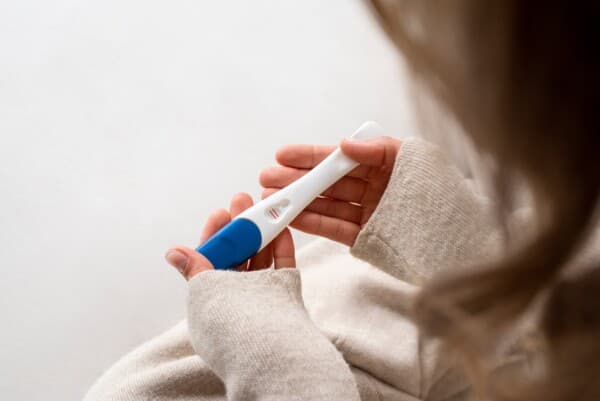
Positive β-hCG confirming successful implantation Ongoing twin pregnancy Healthy progression of pregnancy Expected due date in October 2026