
 Our Centers
 Select City


 Select City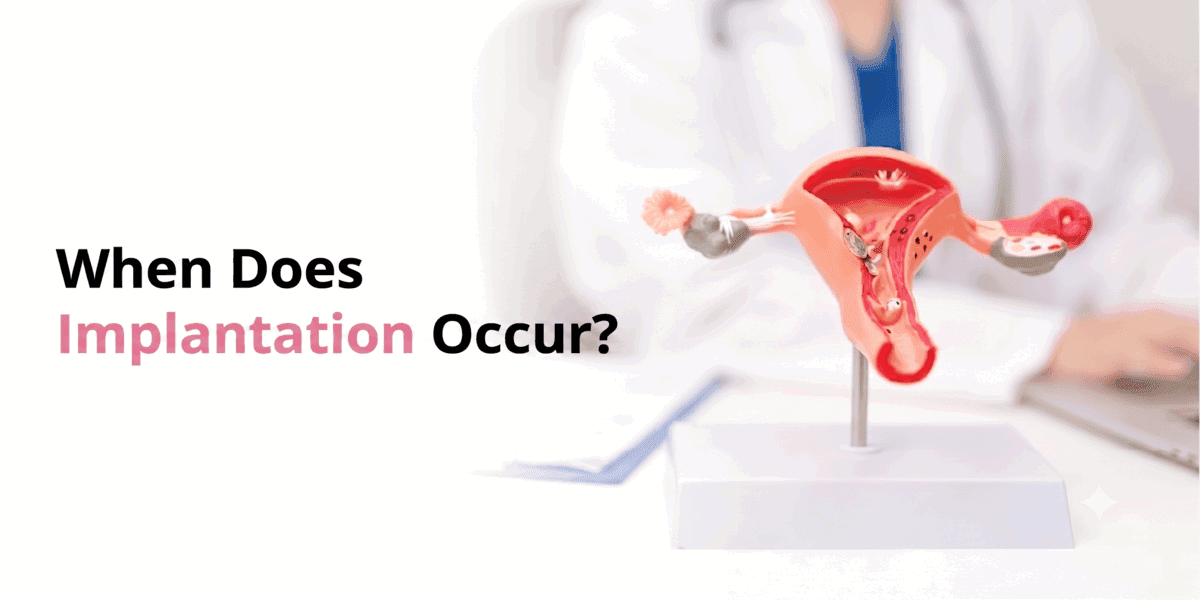
When Does Implantation Occur? Timeline, Symptoms & What to Expect

Table of Contents
- What Is Implantation?
- When Does Implantation Occur?
- What Happens During Implantation?
- What Are the Signs and Symptoms of Implantation?
- Can Implantation Occur Without Symptoms?
- Implantation vs. Ovulation vs. Menstrual Period
- Factors That Can Affect Implantation
- Implantation After IVF
- The Bottom Line
- Frequently Asked Questions (FAQs)
- How many days after ovulation does implantation occur?
- Can implantation happen earlier or later than expected?
- Does implantation always cause bleeding?
- How long does implantation bleeding last?
- Can you feel implantation happening?
- When should I take a pregnancy test after implantation?
- What are the first signs of successful implantation?
- Can implantation fail without symptoms?
For many couples who are planning to have a baby, the days after ovulation feel like a waiting game. Tricky and overwhelming. You may find yourself noticing every tiny change in your body and wondering if it’s a sign of early pregnancy. The stage that follows fertilisation is implantation, in which a fertilised egg attaches to the uterine lining.
But how do you know if implantation occurred?
Some women may experience specific implantation symptoms, while others may not feel anything at all. In this blog post, we’ll look at what implantation is, what symptoms you could notice, when it normally happens, and when you should get a pregnancy test.
What Is Implantation?
Implantation happens when a fertilized egg, known as a blastocyst, moves from the fallopian tube and attaches to the uterine wall. This procedure usually begins 6 to 10 days after ovulation or, more specifically, after the date of embryo transfer. Once implanted, the embryo starts receiving nourishment and oxygen from the mother’s body.
Some people confuse fertilization symptoms with implantation symptoms, although they are not the same thing. Fertilization occurs earlier, when sperm meets egg, whereas implantation initiates pregnancy. Changing hormone levels might also produce fertility problems. These symptoms frequently overlap with implantation symptoms.
When Does Implantation Occur?
Implantation typically takes place 6-10 days following ovulation, with 8-9 days being the most common time. This occurs when the fertilized egg (blastocyst) adheres to the uterine lining, indicating the start of pregnancy.
For a 28-day menstrual cycle, implantation usually occurs between days 20 and 24.
What Happens During Implantation?
Many people wonder what happens during an implantation. To answer the same, here is the day to day process after fertilisation has happened. This can differ slightly from person to person. Let’s get a brief look:
Day 1–3: Fertilisation and Cell Division
Fertilisation generally takes place between 12-24 hours of ovulation when a sperm encounters an egg in the fallopian tube. As it travels to the uterus , the fertilised egg which is also known as zygote begins to divide into several cells.
Within the first few days:
- The embryo develops into two cells, then four, eight, and finally as a dense cluster of cells.
- It continues to migrate via the fallopian tube and into the uterus.
- Implantation has not yet started, there are no visible signs.
Day 4–5: Blastocyst Development
By day 4-5 after conception, the embryo has grown into a blastocyst. It is mainly a hollow ball containing 100-200 cells.
A blastocyst contains:
- An inner cell mass that develops into a baby.
- The placenta finally arises from an outer layer (trophoblast).
Once it is inside the uterus, the blastocyst sheds its outer shell that is for protection. This process is known as hatching which allows the blastocyst to adhere to the uterine lining.
Day 6–10: Implantation Begins
Most pregnancies begin with implantation following ovulation. During this time, the blastocyst begins to attach itself to the thicker uterine lining by releasing specialised cells that softly embed into the endometrium.
Across the stage:
- The embryo begins to receive blood from its mother.
- Hormones help to keep the uterine lining healthy during the pregnancy.
- Some women may suffer mild symptoms, whereas others may not.
If there is any implantation bleeding, it occurs during this period. Typically, implantation bleeding includes:
- Light pink, brown, or light red spotting.
- Lighter than a menstrual period blood.
- Can last from a few hours to two hours..
Day 10–12: Implantation Completes
By days 10-12 after fertilization, implantation is usually complete. The embryo is securely linked to the uterine lining, and the placenta begins to grow.
At this point:
- The pregnancy hormone hCG begins to increase.
- Early pregnancy symptoms may arise in some women.
- Home pregnancy tests become more reliable after a few days as hCG levels rise.
If you’re wondering when implantation occurs in a 28-day cycle, it usually takes place between days 20 and 24, assuming ovulation occurs around day 14. However, cycle length and ovulation timing can vary, thus implantation may occur somewhat earlier or later in different people.
What Are the Signs and Symptoms of Implantation?
No two women experience the same signs and symptoms during an implantation. While some feel minor indications, there are others who do not feel any symptoms at all. These can result due to hormonal changes as the blastocyst happens inside the uterine lining. Here are some of the common symptoms:
- Women can have spotting, light pink or brown which can last 1 to 2 days. These are generally lighter than normal.
- One can help mild cramps while there can be pulling sensations in the lower abdomen that too just on one side.
- Due to hormonal shifts there can be swollen or painful breasts. There can be some nipple tingling as well.
- Elevated progesterone levels can make even routine activities more tiring.
- One faces constant mood swings that can cause irritation and emotional sensitivity.
- Mild headaches can result from increased blood volume and hormonal imbalances.
- Slight uterine movement may cause a sensation of bloating.
Can Implantation Occur Without Symptoms?
Yes. Implantation can occur without any symptoms, which is perfectly normal. In fact, many people who become pregnant do not experience any symptoms of implantation. The embryo adhering to the uterine lining is a tiny process that frequently occurs without creating visible alterations.
Some people may experience modest symptoms around the time of implantation, while others feel no different than they would during a normal menstruation cycle.
Implantation vs. Ovulation vs. Menstrual Period
There is a thin line that differentiates between implantation from ovulation and menstrual period. Here is a table that will help you explain it:
Factors That Can Affect Implantation
Implanting, which occurs when a fertilised embryo attaches to the uterine lining, is dependent on a complex interaction of biological factors. Here are the factors that can influence its success:
1. Hormonal Balance
Implantation necessitates timely changes in hormonal and immune activities, both locally in the uterus and at the systemic level.
2. Embryo Quality
Even in a healthy uterine environment, not every embryo is chromosomally normal or developmentally ready to implant. Age, oxidative stress, and genetics all have an impact on egg and sperm quality, whereas chromosomal abnormalities rise with maternal age. In IVF, the embryo’s developmental stage during transfer, as well as laboratory circumstances, can all affect implantation.
3. Endometrial Receptivity
Endometrial receptivity occurs 6 days after the post-ovulatory progesterone surge and lasts about 2 to 4 days. However, in some women, the receptivity window is displaced, occurring a few days before or after that expected period. If embryos are implanted outside the woman’s endometrial receptivity window, implantation will not occur.
4. Lifestyle Factors
Some common variables, such as smoking, drinking, and obesity, can have a major impact on implantation success. Stress, poor sleep, an inadequate diet, and excessive coffee intake have all been associated with reduced implantation rates.
Implantation After IVF
If a couple has undergone IVF treatment then the implantation after IVF can be a little different. After IVF, minor spotting can happen which is the result of an embryo transfer technique or hormone drugs. However, it cannot be a reliable indicator of successful implementation. A beta hCG blood test is the most accurate way to confirm implantation and pregnancy, and it is often advised 9-14 days following embryo transfer, depending on the advice of your fertility specialist.
The Bottom Line
One of the most crucial early pregnancy milestones is implantation, which marks the beginning of new life in the uterus. Understanding how long it takes for implantation and what happens during the process will help you detect typical changes in your body and minimize your concern about early pregnancy.
Supporting your body with appropriate nutrition, light exercise, stress management, and healthy lifestyle choices offers the ideal environment for implantation. Understanding and caring for your body at this vital period lays the groundwork for not only a pregnancy, but also the beginning of a healthy journey for both you and your future kid.
Frequently Asked Questions (FAQs)
How many days after ovulation does implantation occur?
Implantation generally happens after 6-10 days after ovulation. However, the exact timing can differ from person to person.
Can implantation happen earlier or later than expected?
Yes, while implantation most commonly occurs 6-10 days after ovulation, it can happen earlier at times or even as late as 12 days in some pregnancies.
Does implantation always cause bleeding?
No, it is not necessary to bleed during an implantation. Along with that, the absence also does not mean that something is affecting the chances of a healthy pregnancy.
How long does implantation bleeding last?
Implantation bleeding lasts for a few hours to two days at most. It is much lighter and shorter than a regular menstrual period.
Can you feel implantation happening?
Most people do not feel implantation. Some people may suffer moderate cramps or light spotting, although these symptoms are not common.
When should I take a pregnancy test after implantation?
To improve the accuracy of a home pregnancy test, wait at least 10-14 days after ovulation or after you missed your period.
What are the first signs of successful implantation?
Early indicators may include light spotting, moderate cramping, breast discomfort, exhaustion, or a missing menstruation. However, many people experience no symptoms at all.
Can implantation fail without symptoms?
Yes. Implantation can fail without causing any noticeable symptoms, and many early implantation failures occur before a pregnancy is detected.
Our Fertility Specialists
To know more
Birla Fertility & IVF aims at transforming the future of fertility globally, through outstanding clinical outcomes, research, innovation and compassionate care.


Had an IVF Failure?
Talk to our fertility experts